🎞️ Digitize your legacy in ultra-HD—because your memories deserve the best!
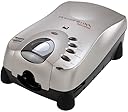
The PrimeFilm XAs is a professional 35mm film and slide scanner featuring a unique auto roll feeder that scans up to 40 frames continuously. It delivers ultra-high 10,000 dpi resolution with 4.2 dynamic range and includes precision optical autofocus for sharp, detailed images. Designed for efficiency, it offers 30% faster scan speeds than its predecessor and bundles SilverFast SE8 software for advanced image processing. Compatible with Mac and PC, it’s the ideal tool for serious film archivists and digital imaging pros.


| ASIN | B07K2GCRRY |
| Best Sellers Rank | #543,940 in Office Products ( See Top 100 in Office Products ) #207 in Slide & Negative Scanners |
| Brand | PACIFIC IMAGE ELECTRONICS |
| Color Depth | 48 |
| Connection Type | USB |
| Connectivity Technology | USB |
| Customer Reviews | 3.3 out of 5 stars 34 Reviews |
| Manufacturer | Pacific Image Electronics Inc. |
| Media Type | Filmstrip, Mounted Slide, Roll Film |
| Minimum System Requirements | Windows 7 |
| Model Name | PrimeFilm XAs |
| Optical Sensor Technology | CCD |
| Paper Size | A6 or 4x6 inches |
| Resolution | 10000 dpi |
| Scanner Type | Film |
| Standard Sheet Capacity | 40 |
| UPC | 649899001929 |
| Wattage | 18 watts |
G**Z
Muy buen scanner, ideal para digitalizaciones desatendidas
Este equipo hace lo requerido para realizar digitalizaciones de alta calidad desatendidas, muy buen sistema de autofoco y excelente integración con silverfast.
P**!
Excellent scanner, but you need to know some things about it
Let me start by saying, this is probably the best 35mm scanner you can get without spending thousands on a commercial grade product (and if you need that kind of quality you might as well just send your film to a lab to scan on a Noritsu or Fuji). Also, yes, I see a lot of negative reviews on this scanner. It doesn't have the weight and quality feel of the Plustek 8200i. However, I did a lot of testing and came to the conclusion that, for me, the PrimeFilm XAs does work very well. Ok, so if you are buying this thinking you are going to batch scan a whole 36 exp. roll of film through it while you do something else, then this may not be the scanner for you. The scanner just seems to get confused about frame spacing with a whole roll. It also seems to prefer feeding film with a matte emulsion side, in comparison to something like Tmax 100 that has a pretty much shiny emulsion side. However, this is not a problem for me, because I don't want to drag my whole roll of negatives across the tabletop anyway. I prefer to cut my negatives in strips of 5 and put them in plastic sheets, then let them sit in the book so they get flattened. This scanner DOES seem to work great with mostly flat strips of 5 (you may have to manually line of the first frame) and the strip doesn't touch anything but stays suspending while scanning, so that's good for dust and scratches. The included Silverfast has a neat little preview for the 5 frame strip loaded in, and it seems to work just fine. You can then click on the little photo and go to the pic you want to scan. This feature seems to work good as far as a batch scan. However, I don't scan everything, I pick out the pics I want to scan, then do a pre-scan, adjust, then scan at high quality. In the darkroom days I only printed one at a time, and adjusted for each photo, or else the quality wasn't as good. The only issue with this scanner, which isn't an issue for me, is autofocus. If you just want to make some scans and use on the web, autofocus will probably work fine for you. However, I wanted to make some prints for the wall, so I did some pixel peeping. Holy smokes, my Plustek 8200i scan was way better. I must need to send this Primefilm back! After all, that's why I bought it from Amazon - easy return policy! Thankfully, I tried manual focus in Silverfast, which is cool that this scanner has that feature (the Plustek does not). Wow! That made all the difference, and now I just leave it set manually since I mainly use Tmax for everything. The PrimeFilm XAs scan was now noticeably better than the Plustek 8200i. I did a side-by-side comparison and attached the photo. The Plustek 8200i scan is on the left, and the PrimeFilm XAs scan is on the right. I attached an overall scan with the Primefilm so you could have an idea of how far in I cropped. You can see better detail in the cow and trees. Shadow detail is also a little better, and it should be as the XAs has a 4.2 Dmax which is higher than the plustek. Autofocus may be just fine for previews, web sharing, etc., but if you want max detail, you need to manual focus. That's what we do in the room on the enlarger, right? Bottom line, it may be worth it for you to get the Plustek if you don't need max quality and don't want to pay an extra $150. You will get good scans from the Plustek, and the difference may not be worth it to you. However, if you are like me, and don't mind evaluating each frame so you can get max detail, then the XAs may work for you. I almost sent it back but I'm glad I didn't, because now I know I am getting probably the best quality I can at home. I enjoy evaluating each frame and trying to get the best scan of the images I want to keep.
Y**N
Broken after 2 months
Unit arrived with bad colors, got a bad test results in front of the tech support. after a while the scanner stopped advancing the film. not recommended!
A**W
Inconsistent results
When it works... it REALLY works. Unfortunately, it rarely works. Pros: • Capable of producing very sharp scans • Theoretically capable of batch scanning • Good color • Focus!!! Both auto and manual Cons: • Slow scanning • Although it can batch scan - the results tend to suffer • Film transport issues • Random visual/optical issues like vertical and horizontal banding - these are inconsistent which is worse in my book • Possible MacOS compatibility issues - or maybe the scanner is just quirky I shoot a combination of 35mm, Medium, and Large format. I bought this scanner, knowing that it wasn't going to help me with the medium or large format, but hoping that it would be something that would help me squeeze the very best possible results from my 35mm work, and sometimes... it did just that. The problem is that the scanner also provided a never-ending string of quirks, inconsistent results, and downright problems. Prior to purchasing this scanner, I scanned with an aging Canon flatbed or occasionally used a digital camera, macro lens, and light table. And this scanner was certainly an upgrade over those tools. When I started using the scanner, I was a bit surprised at how slow and noisy it was compared to my old canon flatbed, but my first roll came out impressively sharp and the colors were better than anything I had ever been able to get before. I never got along with the copy of SilverFast that came with the camera, but I have Vuescan, which works quite well. The problems with this scanner, however, started on day 1. I quickly realized that there was a VERY specific order in which I needed to do things in order to get this scanner to work. I am not sure if this is an issue with MacOS, or with the scanner in general. When I wanted to scan something, I found that I would have to plug the scanner into the computer, power the scanner on, wait for it to warm up, THEN turn on Vuescan (same issue with Silverfast as well). If I did any of these things out of order, the scanner wouldn't be detected by the software. Additionally, any interruption at all would mean that I had to repeat the process, which took around 5 minutes in total on average. This wouldn't have been much of an issue, except the scanner would very often quit in the middle of scanning, and I would have to stop everything and go back to the 5 minute startup process. Batch scanning on this scanner is very well documented, so I won't belabor the point here. Suffice it to say that you can batch scan, but doing so tends to save very little time. Two reasons for this: 1. The scanner is fairly slow, especially at higher resolutions. 2. The film transport is not always super accurate which can throw the entire roll off by a few milimeters per frame... this casscades and causes other issues with everthing from the exposure and color balance, to focus issues, to framing issues, etc. If you value the time that you spend post-processing (and even rescanning) than, it makes a lot more sense to scan frame-by-frame. I have also had weird intermittent issues with banding. The worst tends to be a dark band, approximately 10% of the frame in width, running down the center of my scans. This appears seemingly at random, usually removing the film and rescanning will resolve the issue, but not always. I have had this issue in both Vuescan and Silverfast... sometimes I will scan half of a strip with no issues, then the issue will start happening, and it wont go away no matter what I try. Its particularly problematic, because it is sometimes not very noticeable in the scan itself, but will show up once I apply some contrast in post. There is also some horizontal banding or other digital artifacts that appear from time to time. Usually, this is in the highlights - the more dense parts of the film. I have found that increasing "Analog Gain" in the scan software sometimes helps me overcome the issue, but not always, and often at the expense of the thinner spots in the negative. This is problematic for me because I tend to develop slightly dense negatives for my enlarger's sake. The other BIG issue that I have with the scanner is how it handles curved or curled negatives. If there is even a bit of curvature in the film, it can cause havoc in the scan. The scanner has a very narrow range of focus - so a small variation in distance between the sensor and film due to curvature can cause a HUGE issue with focusing. There are also issues with color or exposure shifts. This is, to an extent, an issue with most scanners, but it is particularly pronounced with the XAs. I have taken to flattening my negatives for 2-3 days after developing to mitigate against the issue. Even still, its a problem. In the end, I got an Epson V850 for my medium and large format work... and honestly, I like it just fine for 35mm as well. The XAs does deliver sharper results and arguably nicer colors... but only when everything is just so. The Epson does a better, and faster job at scanning batches, and although the detail isn't quite as fine as the XAs, it more than makes up for it with consistency. I really wanted to love this scanner, but the juice just isn't worth the squeeze.
D**Z
Great quality possible, but there are some issues
If you have good quality slides or negatives the scan quality can be excellent. But I ran into a few issues that run the gambit of annoying to show stopper. Version of Silverfast included doesn’t support Kodachrome with scratch and dust removal. This is a huge deal with old film and a $50+ upgrade. Occasional weird distortion or cropping during scan that requires a lot fiddling with software to get a proper scan. And finally the biggest issue for me. Film strips/rolls must be pretty flat or they jam loading. Rolls are never flat and I gave up trying to load them because they jam every time. I now see why most negative scanners have historically had film strip holders.
C**W
Incredible results with old color slides
Glad I read the many positive reviews on specialty sites, else I may not have purchased this unit. I bought this after coming across many boxes of family slides from the 60's through the 80s. Having now scanned several hundred I am highly impressed. Even old slides in bad shape have scanned pretty well. I am using Vuescan instead of the included silverlight. Google for settings and you won't be disappointed. One thing that sets this unit apart from some others is autofocus vs fixed focus. Also note that units like this are in a whole different class than some of the $150 units you see that are basically a digital lens in a dark box. I can't yet speak to durability but will certainly update this review if I encounter issues. For now, all is good.
D**N
The one you need if you want to use Vuescan on Linux.
Only gave it 4 stars because I wish it were a bit faster but at this price, not gonna happen. I can wish. This was the last model that ran with VueScan on Linux. I have only used Vuescan so far. It takes a while to get used to how this thing behaves. I tested it with Vlad's targets, both a filmstrip and a slide. It eeks out approximately 30 megapixels worth of resolution, so I set the DPI at 4800. The Commercial Noritsu scanner offers approximately 30 megapixels and is very fast and of high quality. However, you'd be hard-pressed to find a used one for under $ 15,000, and you would need training or navigate a significant learning curve. Of course, there is a learning curve with the PrimeFilm XAS as well. One of the interesting factors about this scanner is that the light source is positioned underneath, and the three-line RGB scanning head is positioned above the film. As a result, the emulsion should be facing upward. In Vuescan, I had to tick the 'mirror' checkbox to prevent the image from being reversed. With Vlad's resolution target, I was surprised at how well it worked with the emulsion side down, but note that those targets have a clear base, not an orange one. Here is a scan of a negative short with Royal Gold 400 in July 1994 of an ATK 605. In viewscan I set autolevels and the restore faded setting in VueScan. It works amazingly in spite of my storing negatives rolled up and often not stored on a cool enough environment for longevity.
J**B
Wored great, but then
Worked great for 3 weeks, then the scanner started changing images whenever the scan/pre-scan button was pressed in the editing software. Same issue when connected to other computers.
Trustpilot
2 weeks ago
2 weeks ago