Buy anything from 5,000+ international stores. One checkout price. No surprise fees. Join 2M+ shoppers on Desertcart.
Desertcart purchases this item on your behalf and handles shipping, customs, and support to Netherlands.
๐ Elevate your creative workflow with Dremel 3D45 โ where pro-grade meets effortless innovation!
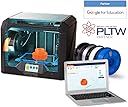
The Dremel DigiLab 3D45 is a professional-grade, award-winning 3D printer designed for both beginners and advanced users. Featuring a high-temp 280ยฐC all-metal nozzle and a 100ยฐC heated glass build plate, it supports a wide range of filaments including PLA, Nylon, PETG, and ECO ABS. Its fully enclosed, quiet design minimizes warping and enhances safety, while a 5-inch full-color touchscreen and RFID filament detection simplify operation. With WiFi connectivity and a built-in HD camera, users can remotely monitor prints, making it ideal for educational, architectural, and engineering applications. Backed by Dremelโs trusted customer support and a 1-year warranty, it delivers reliable, high-quality prints with a 6.7" x 10" x 6" build volume.


| Best Sellers Rank | #224,109 in Industrial & Scientific ( See Top 100 in Industrial & Scientific ) #183 in 3D Printers |
| Brand | Dremel |
| Color | black |
| Compatible Devices | Laptop, Personal Computer, Tablet |
| Customer Reviews | 4.3 out of 5 stars 575 Reviews |
| Item Weight | 42.8 Pounds |
| Material | Abs |
| Product Dimensions | 18.75"D x 23"W x 18.75"H |
E**B
Overall โPretty Awesomeโ
I recently purchased the Dremel 3D45 primarily because of its claim to be a 3D printer for new to advanced users. I did not want to begin with an entry level printer only having to upgrade to a more advanced one down the road. I am new 3D printing. So new that I wasnโt even aware of the fact that printing and designing software are two different things all together. That being said, this review is likely only useful to someone that is in a similar position. Dremel claimed that you could be printing out of the box in 20 minutes. Although I elected not to print the trinkets they provided gcode for. I am certain that claim is true. Set up of the printer was easy. I spent most of my efforts the first few days, obtaining design software and learning how to use it. There is a plethora of information on design software and how to use it available on the internet. I began with Tinkercad which is an amazing little program that is free to use. But that is another review. Suffice it to say I was printing what I consider to be fairly complex designs in a couple of days. To date, I have only used the Dremel brand of filament. Iโve made prints in Nylon, PETG and ECO ABS. The printer can use other brands of filament because the printer allows you to adjust settings to meet the specifications of the other brand filaments. I will continue using the brand name filament until my warranty runs out. This will allow me to get adequate run time under my belt so I am able to know what good looks. If you choose to use another brand of filament, you will have to make a minor modification to use an external spool or manually load it on to a spare Dremel spool. I am quite impressed with the ease of use of the printer and the quality of the prints. You can select the quality of prints and to date, I have only used the low and medium quality options. I was surprised at the time it takes to make prints. Which is determined by the size, complexity, and the quality of prints you are making. Some of my prints using the medium quality print option have taken over 10 hours. I am using the printer to make components that must fit and work when assembled together. This was achievable after adjusting some of the dimensions of my design to allow for clearances I need to maintain within the assembly components. For an example, if you are printing a component that has a hole that needs to be a certain diameter, you must account for the nozzle diameter of the printer and adjust for it in the dimension you specify for the hole diameter. Given that, the printer prints with enough accuracy for my needs and prints reliably consistent. Because of the duration of some print times, the built-in camera is a nice feature that provides an adequate picture quality to determine if your printing has completed or more importantly, gone awry. It would be nice if the remaining print time is provided while monitoring remotely. The printer has an option to print remotely but I have not used it and cannot comment on that only to say I am not sure if I will ever use it because based on the limited experience, it seems the most critical time in the printing process seems to be in the initial stages so I like to be there so I can abort the print if there is a problem. Plus, you have to periodically prepare the build plate. So far, I have experienced very few misprints and I attribute them to poor design of prints on my part and trying to squeeze out one more print before taking the time to clean the build plate and apply another application of glue. If you are new to 3D printing, this sounds like a hassle but it is really quite simple. When you remove the build plate and reinsert it which is really quite simple as well, you should level it. The printer walks you through it and it takes less than a minute. I cannot speak about other printers and cannot make any comparisons but this one is amazingly easy to use. I am incredibly pleased with it and would recommend it to anyone who is new to 3D printing and plans on eventually becoming an experienced printer. My only criticisms are relatively minor and do not impact the functionality of the printer but perhaps Dremel can account for these on future models. 1) The front access door sags a bit when it is opened requiring you to lift up on it slightly when you close and latch it in place. No biggie but sadly it is noticeable every time you open and close the door and takes away from the otherwise nice design of the enclosure. 2) The touch screen is nice except that it displays 4 files at a time which results in the file names being truncated in the display. When you are naming your files keep this in mind and avoid similarly named files. 3) After time, the enclosure collects dust and printing debris so I like to wipe it out with a damp paper towel. At the point where the floor of the printer meets the front access door, there is a raised lip preventing you from easily wiping the dust out of the enclosure. As I said these are very minor criticisms. The only noteworthy complaint I have about this printer is the size of the build volume but I knew how big it was before purchasing it so I really cannot complain about it.
M**N
Great beginner/intermediate printer with fantastic customer support
When the corona virus hit in March 2020, my wife, son and I were stuck at home (five months later we still are). We had never done 3D printing before, but we thought that it would be a great project while waiting for school and work to ramp back up. After a lot of reading and talking with colleagues who do a lot of 3D printing, we selected the Dremel 3D45. Being new to 3D printing, I needed a bit of help getting started, and the customer support was fantastic. Five months and countless projects later, the 3D45 is still running perfectly. If we use the "Mac versus PC" analogy, this printer is definitely on the "Mac" side of the spectrum. It is very user friendly and works great for almost all beginner and intermediate 3D printer users. And they have AMAZING customer support. Seriously, the customer support phenomenal. I think that the superior customer support is something that comes along with buying a product backed by an industry giant like Bosch, who owns Dremel. That being said, like a Mac, it is difficult to make the Dremel 3D45 do something that is outside of its comfort zone. I think that advanced and/or professional users may find that frustrating. Pros: 1.) High quality components and very well built. 2.) AMAZING customer service! 3.) Super easy to use right out of the box. 4.) Very good quality prints using the Dremel-brand filament materials. 5.) Although it will likely invalidate your warranty, you can definitely print with non-OEM filaments and even some materials that Dremel will cautiously tell you "we have not been tested yet". There are sufficient advanced settings that allow you to customize the printer for other filament materials such as the very flexible TPU, or "real" ABS. I have successfully printed both on my 3d45 with no issues. Cons: 1.) The Dremel DigiLab 3D Slicer software does not work on many Macs. I have been told by several customer support experts that the DigiLab software works on "some" Macs, but they have a lot of issues with getting it to work on all. The software definitely does not work on my Mac. The work around is using the Dremel print cloud and the web based Dremel 3D Idea Builder, which is easy to use and works fine for me. However, if I wanted to use some of the more advanced features of the DigiLab software, I would be out of luck on my Mac. 2.) Dremel really pushes you to use their OEM filaments, which are more expensive and can be quite limiting when it comes to color and material selection. For example, their "ECO-ABS" filament is not really ABS, but a modified PLA filament. So if you want to print something out of ABS that will withstand higher temperatures and/or use an Acetone vapor bath to smooth the surface, or you want to print something out of TPU that is much more flexible and "rubber-like", you are not going to get help from customer support. You are going to have to figure that out on your own (but both are definitely doable on this printer in my experience). 3.) You cannot change the print settings in the middle of a print. After five months, I am starting to see why someone might want this option, but it is simply not possible with this printer. Again, not something that a beginner or intermediate level user is likely going to care about, but advanced users will probably be frustrated by this. Bottom line is that I am very happy with this purchase. If you are new to 3D printing, this is a very high quality printer that is guaranteed to please with a minimal learning curve and great customer support. That being said, it is expensive, and the Dremel OEM filament material is much more expensive compared to other brand filaments. You absolutely can use non-OEM filaments, but you will need to set the print conditions manually and this may void your warranty (but eventually you are going to do it anyway...trust me!) Cheers, TMQ
T**L
Easy to use, right out of the box
I bought this printer because I was in a bind, and needed something that would work right out of the box... and I needed is FAST, to complete some orders within a deadline. I also needed something that would print Nylon well, and with no issues, again right out of the box. I use Prusa Mk3s for most of my production- And, if I'd have had time, would have just ordered another one of them. But- I didn't have time for it to arrive and to get it assembled. So, after reading reviews and doing some research, I bought this one. Don't want to read a long review? Here are the Pros and Cons- PROS- -Prints well, right out of the box. -Easy, guided setup. -No assembly, testing, or tweaking -Easy to use touch screen interface, Web based 'cloud' printing through WIFI, and easy to use slicer included -Great US based customer support -Fully enclosed, VERY quiet. -All metal hotend can handle just about any filament Cons- -Build area is on the small side -Designed to use Dremel filaments. You CAN use 3rd party, but you'll have to make some changes. Dremel spools are smaller than 'normal' spools. -A little tough to adjust settings while printing If you still think it might be for you, read on! So- How easy is it REALLY to set up? From opening the box to starting the first print was less than 20 minutes, and most of that time was spent removing all the packing material. This machine is ready to go, right out of the box. All you really have to do (other than remove all of the packaging!) is to put the bed in place and load the filament. Oh, you have to plug it in, too... I switched it on, and it walks you through the setup, first connecting to your WiFi network. I loaded one of the included filament rolls. The printer does not have a self leveling bed, but it uses an assisted leveling process to get everything set. It's quick and painless, the printer tells you EXACTLY what to do. Since my first time leveling, I have not had to relevel the bed yet. I have checked it a few times, but it's always OK. You have several options to control the printer- Using the web interface, the touch screen, or via a USB connected computer. For the first print, I decided to just use one of the files that was preloaded in the printer, with the touch screen. You scroll through a couple of easy to navigate menus using the touch screen interface, hit start, and let it go. The first print turned out nice. For the next print, I used the web-based interface. There is a slicer online, but I chose to use the slicing software that came with the printer, The DigiLab Slicer. Those who are familiar with Cura will immediately recognize it- it's Dremel's own version. It is quick and easy to use, and like other versions of Cura allows you to do a lot of custom setting changes to tweak your prints as needed. I chose to do a 'benchy' so I could compare it to the others I have printed on my other printers. I uploaded it, and sent it to the printer via Dremel's online interface. The really cool thing about printing from the cloud is the video monitoring- I can check in on it any time i want to on my iPhone or computer. And, when the print is done, I get an Email that includes a time lapse video of the entire print. The Benchy turned out great. Not QUITE as nice as the ones that I print on my Prusas, but bear in mind i'm getting this quality of output right out of the box. So- Next thing to try is a more 'exotic' filament- Nylon. I've always had difficulty with nylon, and have avoided it. I read a lot of reviews about this printer that said it did a great job with Nylon. So, I loaded the included spool of Nylon filament and gave it a shot. The first thing that I printed was a simple wall hook. It printed very nicely- Almost flawless. The strength and flexibility of nylon prints is unbelievable. I'm really looking forward to using more of it. The printer is 'optimized' for using Dremel filaments- In fact, the filament spools have RFID chips in them that allow the printer to identify what kind of filament you have loaded. You are not restricted to only Dremel brand, though, it can also use other filaments as well. The Dremel uses a smaller spool size, so you'll have to make some arrangements to use the materials from other manufacturers. You'll also have to tell the printer what the filament type is since there won't be a chip for it to read. I found a new cover for the filament spool opening on Thingiverse that has an opening to feed the filament through, and I mount my filament on a spool holder next to the printer. I have put several spools of 'third party' filament through my 3D45- Mostly PETG. It prints it beautifully. If you're looking for a 3D printer that is going to work right out of the box- With no tinkering or assembly, this is a great choice. If you use just the Dremel Filaments, it will be about as painless a process as 3D printing can be- You will just hit the 'print' button and come back later to take your print off the bed. It is about as easy to use and user friendly as a 3d printer can be. This is where 3D printing needs to go to make it more 'mainstream'... Not everyone enjoys playing with settings and tinkering- Some just want to PRINT! **UPDATE** I've now had this printer up and running for about 3 weeks. I have it going just about 24/7 for about the previous two weeks, producing PETG parts for a machine that I build and sell. It has performed flawlessly, and has produced incredible parts that are both accurate and strong. I decided to try out some other filaments on it, too. The last two pics are items printed with Carbon Fiber PLA. I used SunTop 3d filament, which is available on Amazon. The quality of the prints is incredible- Both of them are right off the build sheet.
J**B
Good for beginners
Im new to 3d printing but not new to CAD and CAM software and CNC equipment/machines so for me it was a huge leap into the unknown. I wanted something that could start working right out of the box and didnโt require a whole lot of fooling with setups and balancing or whatever the cheaper erector set looking printers require. and Dremel 3D45 delivered! Anyone who takes the time to read the instructions can successfully use this printer without any previous 3d printing experience. The machine makes it easy to load and change filament and level out the print bed. The removable print bed or tray is easy to take and will usually go back the exact same way so you dont need to level each time but it is advisable to check if youre working on something important or long print time. The bad.... The front loading USB drive port was damaged right out of the box. The metal housing that goes around it was bent in slightly and i couldnt get a usb drive in it not even the one it came with. I bent it out to the right shape and its fine now but sort of poor quality control. I have yet to get the Printer style USB port on the back side to work with the supplied cord or any I had laying around. Two different computers hooked up to exactly like the directions say and neither will recognize the printer or vice versa. the network connection does work great! I can send files to the printer from my laptop or through Dremels cloud printing site which is kinda neat. The thing I dont like is that the printer wont save the files sent to it over wifi or the cloud printing site. Once its done with the job or you manually stop it the file is gone and it must be resent. This is kinda of annoying but not a huge deal. The next thing that is annoying to me is thereโs no good pause or freeze button while the machine is printing. There is a pause and if you press it while running the printer will finish the line itโs on, lower the print bed all the way, and then move the print head to the back corner, then turn off the heat to the head and bed. Some times when starting a print you might get a little ooze from the nozzle and depending on your part and if thereโs a skirt or brim around it you might need to reach in and grab that bit of ooze before it messes up the start of things. I want a pause feature that just slightly retracts the bed and leaves the print head where itโs at and the heat on. Again not a deal breaker but annoying. Print quality is great and the predetermined settings help a lot for novices like me. Dont buy any Dremel PLA or experimental PLA. I read other reviews on how bad the regular PLA is so I wanted to try Dremels new PLA in purple for my wife and daughter. Its terrible as well. It will print great for a little bit the completely clog up the nozzle no matter how hot or cold I run it or what settings are used. This was fresh right out of the vacuum sealed bag. The ABS, Nylon, and PETG print great! Never had a clogging issue or anything out of them. My printer came with ABS and PETG so maybe Dremel knows how crap there PLA is. Anyway, itโs a good printer and even though it has some annoying things I dont like Iโd probably buy again.
R**R
An incredible easy to use printer.
They're not kidding when they say you can have this thing printing within 10-15 minutes of unboxing it. Once you have it unboxed, all you need to do is plug it in, follow the steps to level the bed, connect wifi, etc. Then, load your first filament and run over to your slicer program and hit print! I can't say enough good things about this printer, but here's the bullet points: Pros: - The RFID system is amazing. It makes it so easy to quickly swap filament types. I'm constantly bouncing between PLA, PETG and ECO-ABS and all I have to do is click change filament, snip the old filament line and feed in the new filament. Once fed it detects the RFID chip on your roll and configures all the temps for you. Very, very, little effort. Half the time you don't even have to consider what type of filament you stuck in, it'll "just work". - When you run out of filament, rather than failing, it automatically pauses and waits for you to add more. So if you run out of filament in an overnight print, no big deal. Just swap out the roll when you wake up. - I've printed several flawless PETG prints, amazing because PETG is usually very difficult to work with. But with this printer, it's no different than PLA. I have not tried Nylon yet, but I'm guessing it'll be the same experience. - You really can set it up in 10-15 minutes. - Bed leveling is so easy it's almost cheating. You just hit the bed level button and wait, if pokes around the bed looking for unleveled surfaces then tells you exactly what knobs to turn and prompts you when you've turned them far enough. A 5 year old could relevel the print bed on this in about 1-2 minutes. - There's no smell at all (unless you open the door obviously), no matter what material I print with. The filter on this is amazing. I print only 3 feet from my desk (and in fact, it's printing right now behind me) and there's no odor of any kind what so ever. - It's very quiet, but not completely silent. I can whisper to my wife on the other side of the room while its running and she can hear me just fine. You know it's running but its not disruptive what so ever. - Love the internal bright lights. Makes it really easy to see your print. - This is the only printer I've used with a heated bed, so I can't say much for how good it actually is. But it seems really good. I've never had issues with it, and the only time I've ever had build adhesion issues is when I missed a spot applying glue (and even then, sometimes its fine anyway). I've also only experienced warping once out of about 50-60 prints thus far, and it may have been my own fault. - Literally every print fail I've had was my fault. - It can do some amazing bridging, I'm shocked what this thing can print without supports. I accidentally printed a model with a *4 inch long* straight overhang in ECO-ABS, and *somehow* it magically printed with no issue. - Touchscreen is very nice and easy to use. - and of course, the print quality is exactly what you would expect from a nearly $2,000 printer. Cons: - Awkward spool size, if you buy third party filament you may need to print yourself a Dremel-sized spool to put the filament on (There's one on thingiverse), or just keep an old Dremel roll around to respool your third party filament to, just remember to rip off the RFID tag. - Official Dremel filaments are very high quality but does cost more. It can cost anywhere from $20-$35/roll, and the rolls are only 0.75kg. Although you can use third party filament anyway, you just lose the benefits of the RFID system. - I had one bug, I believe a firmware glitch, that misreported the Z level of the bed, causing the bed to smack into the extruder when printing. It was an easy fix, simply just rebooted the printer. - The "Dremel" brand slicer program is based on an older version of Cura (1.2.3). But it still works like a champ, and I've really not had any issues with it. It also has a ton of 3D45-specific profiles already setup to use. - Sort of a pro and a con; The printer stubbornly will refuse to print if you have the door open. So make sure you always keep it closed. Up side, you don't want the door open when you print anyway, Down side is you may know it's open and you're just wanting to initiate the print while you're cleaning up your workspace or something, and the printer may be in another room. But you *can* open the door after printing has started. - The camera is nice to have, but admittedly, it's fairly low quality. It's a 720p camera, but the framerate is super low (guessing about 10 FPS). It's perfect for checking your prints, but don't expect to use it to make really cool high-resolution time lapses for Youtube. There's a reason this printer costs nearly $2,000. If you're more interested in printing things than tinkering with the printer, this is the printer for you.
S**U
More to break
I have both a Dremel 3D20 and a Dremel 3D45. I bought the 3D20 first and had good results. I wanted to do more and potentially try other materials so I bought the 3D45. Like other reviews the 3D45 was great out of the box. Everything worked well and being able to adjust different settings and calibrate the machine at the touch screen was a nice feature. Other reviews complained about connecting to the computer but it comes with a flash drive.. just put the files on the flash drive. Eventually after thousands of prints the 3D20 needed to be rebuilt. This was a fairly simple process as the 3D20 is fairly simple. I rebuilt it with a all metal hot end to reduce wear and rebuilds in the future. This was another reason for buying the 3D45 which already has a all metal hot end. Ever since rebuilding the 3D20, it has been plucking along. Eventually after many prints the 3D45 needed to be rebuilt. This was by far a much more needlessly laborious affair than the 3D20. There are so many things more unnecessarily complicated about the 3D45. Rebuilding it has been a nightmare. Then, after rebuilding it, the touchscreen adjustments which were previously so nice, have become more of a hassle than the manual adjustments of the 3D20. Right now as I am typing this my 3D20 is printing. The 3D45 is once again broken down. That's the thing, in the long run, these 3D printers are nothing but a tool. A machine that will wear and break. When that time comes, the simpler, easier to fix machine will be better. A simple work horse that just gets the job done is better than a fancy show horse. The 3D45 never was very successful at printing other materials. I was never able to use the webcam. Everything that was supposed to make the 3D45 so much better than the 3D20 either never worked or has now made things worse. Right now the 3D20 is only $600 on amazon while this 3D45 is $1800. You could get three 3D20's for the price of one of these 3D45's. Right now my $1800 3D45 is nothing but a paperweight while the plucky little $600 3D20 soldiers on. If that wasn't enough, the thing that makes the 3D45 able to print other materials is the all metal hot end. I rebuilt my 3D20 with a all metal hot end for less than $50, bringing the total to $650. Still significantly less than the $1800 for this 3D45 but with the same ability. Don't assume the 3D45 is better than the 3D20 just because it is more expensive. Especially if you are just getting started with 3D printing. Think about what you want to make and what features you actually need. Then, take a second look at the 3D20.
J**A
Great 3D Printer Ready to Go Out of the Box!
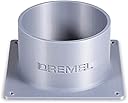
As a mechanical engineer myself, my expectations were extremely high to begin with. I have interacted with 3D printers before and have seen a few different models in action. We even have one in our office (Prusa i3 MK3) and I can honestly say that this 3D printer is a great purchase. I am 100% satisfied. Below is the criteria that was important to me and the basis of my evaluation; Ease of Use: It took me just a few minutes to pull it out of the box, clip the build plate in place and we were up and running. I have seen my colleagues at work struggle putting the Prusa kit together with parts not fitting 100% correct or braking in the process. It was a great experience with the Dremel being ready to go out of the box with not adjustments needed. Prints are easy to setup with the included slicer software and entry level folks can easily print without spending hours trying to make it work. For advanced users, the advanced options are available where every parameter can be adjusted. The slicer is Cura based. Enclosure: One of the big selling points for me was the fact that the printer comes with an enclosure. With other printers that are open you have to worry about breathing the fumes, ultra fine particles, temperature control issues (particularly when printing ABS and Nylon). I have small kids that can inadvertently stick their fingers in the printer while it is operating. Having an enclosure ads an extra layer of safety that was important for me. I have the printer located in my garage where temperatures can get cold but since the enclosure keeps the internal temperature well control, I don't have much of any issues with the prints warping or the first layer not sticking. It just simply works! Filtration: It comes with a built-in filter and fan. The fan is properly sized and built into the electronics. As a result it can be easily controlled. You can easily and quickly adjust whether it turns on or not and the speed. The enclosure comes with mounting provisions already integrated in the event that an external filtration system is desired. The user can also use those same mounting provisions to vent the fan output to the outside by connecting a hose and adapter to the mounting provisions. The printer comes with the file needed for the adapter, you can just print it, bolt it on to the back of the enclosure and hook up a hose. Quality of Print: This printer is just simply amazing. The quality competes with the best in the market for the given price point. Filament: The Dremel proprietary filaments work great. There are a lot of folks that complain about the cost of the filament and the fact that it is half of the amount you get from other filaments. So you pay more for less literally. However, the user can actually use any filament they want. The settings are adjustable and the printer itself has the capability of handling any filament brand. You just need to adjust the settings and the spool itself will have to sit outside of the printer. Not a big deal at all. A simple online search will yield several videos showing how to do this. My understanding is that Dremel no longer disqualifies your warranty for doing this. WiFi/Web Cam/Cloud: These features are just simply great and extremely helpful to setup a que of various prints, monitor prints remotely, and track filament usage. Would I recommend it? Absolutely YES!
A**R
After using a less expensive printer, using the 3d45 feels like cheating!
I have had another 3d printer (Monoprice Maker Select Plus) for 2-3 years. I've enjoyed printing, but have always had SO many problems with getting prints to turn out consistently. Over the past few months I have had a need to be printing parts as much as possible. Parts have started to go bad on my MP printer, so I decided it was time for me to upgrade because my time in messing around with the old priner was valuable enough to justify the upgrade. I received the 3d45, placed it on my desk, and was up and working in just a few minutes. No assembly required. Connect the printer to WiFi, link it to the Dremel PrintCloud, and sent a print. It worked perfectly! As compared to my old printer which lacked any such feature, I LOVE the leveling assist bed. That was a problem 90% of the time - having the bed just perfect. This takes all the guesswork out of it. The removable glass bed is also great. Two clips to pull it out, wash it, or remove stuck parts. I do not use the included glue sticks for adhesion - too messy for me. I use AquaNet and it works great. The removable bed makes this nice - when you need to re-apply, you can remove the bed, clean it off, spray it, then pop it back in and re-level with the wizard. I also really like the auto-filament processing feature.The printer identifies what filament you are using via RFID (or you can tell it) and it will automatically set the settings required for that filament. If you use "custom" filament setting, it will give you a warning that if something breaks, it's on you. I really like the filament settings being on the printer, because with the previous printer some filaments require different temperatures and the temps were coded in the GCODE files. Now it's no longer an issue - I can set the temp on the printer for the filament that's currently in it and prints come out how I want. Just a note that you are able to turn this feature off if you prefer to use the temp settings in GCODE. The Dremel filament seems to work really well. I have done prints using the included Nylon and Eco-ABS (which is NOT ABS - it is a modified PLA, FYI.) They both came out perfect and the printer set the appropriate temps for the filament. The PLA also works well. The filaments seem to have a nice shine to them, but are not as deeply colored as previous manufacturers I've used (Hatchbox.) I have had VERY few failures using Dremel brand filament. The filament does have its' downsides. It is EXPENSIVE! $29 for a half kg spool is well over double other brands. I have been watching Amazon and stocking up when it is cheap - just recently orange, green, and blue dropped to $16 and I bought several rolls of each. I like using the branded filament when possible, because I have had better results with it. The color selection is terrible, though! They do not currently sell yellow filament (really?) I do need to print yellow for my applications, and this almost prevented me from buying the printer. Pre-purchase I contacted support to inquire of using non-Dremel PLA and got a bit of a snarky answer on using non-branded filament, something to the nature of "if you use a premium product you'll get a premium result." All well and good, but if you don't sell the color I need, I don't really have another option. I decided to go ahead with it figuring I would use third party filament for that color and take my chances. I've had mixed successes with non-Dremel filaments. In many cases they are working good - I am printing Hatchbox wood filament and I did a few jobs with TPU and both worked good. One time I had a stuck nozzle with the wood filament but otherwise it has been really good. I used the included 'ramrod' unclogging tool and pushed the filament through when it got stuck and it was good again. Using cheaper PLA I have had more issues. I could usually get one good print after changing a roll and then something would go wrong. I haven't used it recently...but I'm hoping that was just a fluke because I really don't want to go through that every time I have to print yellow. I did have some issues off the bat with the bed not leveling correctly. I worked with support for around an hour on it, and they walked me through a 'hard reset' of the printer (turn it off, unplug the power for a while, turn the power switch ON for like 15 seconds with the power off, turn the switch back off, plug the printer in, turn it back on.) We also updated the firmware and set an extruder offset of .1mm in the settings. Every once in a while, I will see this happen after I level the bed and I'll just do a hard reset of the printer and re-level. Initially I leveled much more often, but now I do it less often and have less issues. I'll only change level after changing filaments or removing the bed. It was REALLY NICE to be able to actually talk to US based support when I had an issue. Good luck with that with a cheaper no-brand printer. This was one of the main reasons I chose this printer...and it had worked out really well for me. After constantly having to tweak my bed and fiddle with slicing to get my old printer to work, this thing is a dream and really does feel like cheating. It has been SO hands off and I have have so few issues I hardly know what to do with all of my time. You get what you pay for!
J**F
Brand name with excellent reputation
After many months of online research, reviewing YouTube and blogs it became obvious that the best choice was to spend a little more money and purchase a quality 3D Printer. This was my first personal printer, but I have had a few years experience with a professional, engineering unit. With a few years of work experience with printers, I had a good understanding on the process to print and the need for a high quality print to achieve necessary results for prototyping etc. The Dremel 3D45 offered not only high quality prints, but an excellent selection of usable resins. After having unpacked my shipment from Amazon, as specified on the Dremel website, the 3D45 was virtually ready to plug in and print. The unit is well manufactured, sturdy (a little heavy) and manufactured with quality parts. This became more evident with the first print, observing the precise automatic palette levelling and electro/mechanical movement. Set-up is easy and straightforward, with clear and well detailed instructions. A first time user would have no difficulty navigating the initial set-up. The only difficulty I encountered was the touch screen size/font for internet set-up, made keying in passwords very difficult for the normal man with normal fingers. (I suggest a touch screen stylist) Set-up was completed in about 90 minutes, and printing a sample model confirmed the print quality. Printing some personal prototype designs with Ultra Quality settings were virtually perfect with minimal surface finishing needed. Change over from the various resin spools was easy and quick. Whether you're an experienced 3D printer, or a novice I highly recommend you consider spending the extra money and ensure yourself a printer that will last a long time, has the backing and guarantee of a well known, respected manufacturer, as well as the peace of mind that Service (if needed) will be available. Many of the complaints I've read about cheaper, 3D printers highlighted the issues about Service and Tech Support. I am confident Dremel will stand behind their 3D printers like all Dremel products. At the end of the day, I have zero regrets or complaints about purchasing this high quality printer.
N**O
Full featured and capable 3D printer
The 3D45 is a capable 3D printer that has out preformed my previous printer in many ways. I use a painters tape on the build platform and get fantastic adhesion. The enclosed design is one of the main reasons I got this model, it provides great stable temperatures for printing more finicky types of filament and has an air filter on the back to reduce some of the odour/gasses. Filament feed as been great and prints come out fairly clean with good layer adhesion. The semi-automated levelling procedure is a DREAM compared to my last printer which was fully manual, this has also been one of my favourite features. The printer also comes with some glue and a scraper plus a couple (full roll) filament types which is a nice touch. The main con is what most people have mentioned, the proprietary spool sizes. If you stick to dremel spools it's very convenient with the RFID chips that provide default print parameters (which have all been good so far) and it tucks away nicely inside the machine (also good for temperatures). But ultimately you're locked in to a specific vendor unless you rewind cheaper filament onto Dremel spools. I've also found the cloud interface a bit lacking, it's clunky to use and difficult to find the portal to access it, and I've never been able to successfully upload a print to the printer through this interface. Luckily the silcer software is very capable and connects with the printer over my local network (I ran cat5 to the printer). Overall I'd definitely recommend this printer to hobbyists/enthusiasts.
Q**G
Great hardware, crappy software
Within 10 minutes of unpacking this thing, I printed off a sample that was so precise that I just had to shake my head. This is one excellent machine, my first. There are some intricacies to it though, most of them dealing with the firmware or the software. Overall the software for slicing STL files is really, really awful., starting with a GUI that has grey text on white background and extremely poor color choices for everything to do with slicing. The stand-alone computer software (Dremel Digilab) is NOT as good as the online cloud version which has more options, but still a crappy GUI. It's hard to read, has ambiguous commands, poor documentation. The filament is more expensive than others but the Dremel filament can be sensed for type and the printer settings set accordingly. Good for starting anyway. It's a beautiful machine, very well constructed, and the two very large plastic covers are great to keep an eye on your printing. Heated bed and cool leveling system is top notch. The local color LCD display is like the software: terrible color choices, with no contrast at all. When your file is loaded a poor rendition of it is shown in orange on the screen but it is so illegible that you have to go by the file name. Dremel can do a LOT better in this area.
J**N
A high-end and user-friendly machine from a reliable company
The Dremel 3D45 is an excellent printer with an easy learning curve and extensive capabilities. Out of the box, the printer was practically ready to use after inserting the filament which was recognized by the RFID chip and configured the printer's settings for optimal use. Upon use, the great quality and speed of its prints impressed me; this machine is truly a workhorse backed by the reliability one can expect from Dremel. With features such as a touchscreen, a large build volume, and a heated printing bed, the 3D45 is ready to tackle advanced materials like Nylon, ECO-ABS, and PETG with ease. Coupled with its focus on usability from the Dremel 3D printing ecosystem and safety from its fully enclosed design it is no surprise why this is one of the best printers on the market. This 3D printer is a great option for beginners or experienced makers alike who are looking for a machine that makes the printing process simple and effective.
D**S
Easy to use, capable, and reliable
After reading reviews, I purchased this as my first 3D printer. I am very happy with the quality of the printer, and the prints it produces. I've tried out PLA, Eco-ABS, Nylon, and PETG filaments from Dremel. The PLA and Eco-ABS filaments are easy to print with and look great; the Nylon can be a bit stringy, but produces tough and flexible parts. I recommend this printer to anyone who wants to get to work, out of the box. This printer has most of the features that people with some experience appreciate: a heated glass build platform, assisted levelling, the ability to use a range of filament materials, both layer and enclosure fans, a generous build volume, and an enclosure. About all I'd wish for now is a multi-extruder version of this machine!
Trustpilot
1 month ago
2 months ago