🚀 Elevate your workspace with pro-grade WiFi that just works—everywhere, every time.
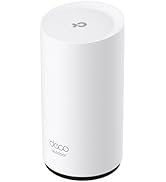
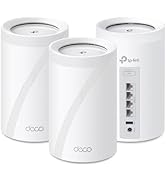
The TP-Link EAP670 V2 is a premium WiFi 6 ceiling-mounted access point delivering ultra-fast AX5400 dual-band speeds, 2.5G multi-gigabit Ethernet with PoE+, and advanced mesh networking. Designed for seamless cloud management via the Omada app, it offers professional-grade reliability, sleek aesthetics, and effortless scalability—perfect for modern offices, homes, and commercial spaces seeking stable, high-capacity wireless coverage.











| ASIN | B0CRLYWHBL |
| Best Sellers Rank | #11 in Computer Networking Wireless Access Points |
| Brand | TP-Link |
| Color | White |
| Customer Reviews | 4.6 4.6 out of 5 stars (351) |
| Date First Available | February 12, 2024 |
| Item Dimensions LxWxH | 8.66 x 8.66 x 1.28 inches |
| Item Weight | 1.52 pounds |
| Item model number | EAP670 V2 |
| Manufacturer | TP-Link |
| Operating System | Omada |
| Product Dimensions | 8.66 x 8.66 x 1.28 inches |
| Series | EAP670 V2 |
| Voltage | 12 Volts |
| Wireless Type | 802.11ac, 802.11ax, 802.11b, 802.11g, 802.11n |
N**L
EAP670 V2 absolutely fantastic access point, works at distance, everything has stable WiFI!
I've had routers from many of the usual manufactures; Asus, Netgear, Tplink, Linksys, etc. They are ok, but have issues, I already have good router and I just need them to work as bridges or for their wifi, but they are pretty poor at doing just this function. In fact, I would say most work ok at routers but I don't need them for that, but are poor at WiFI with unstable, unreliable WiFi connections if they connect to devices at all!! I come across Omada range which is really commercial grade WiFi gear but I focused on their access points specifically the EAP670 V2. They are fairly easy to setup, but there is a learning curve which mobile and web app make reasonably easy to setup if you are familiar with wifi routers in general, if not, the learning videos are quite helpful. I have around 100 wifi devices in the home, and I mean everything connected flawlessly and was stable with EAP670 V2, especially in mesh and roaming mode, they would move to another EAP670 V2 as needed. I would caution not turning on all roaming features, just the core ones only, since some older devices just don't work well but EAP670 basic defaults worked well in most cases. I was so impressed I bought the OC200 to help manage all the EAP670 I had purchased, and place strategically around the home to cover all the blind spots but at the sametime minimize overlaps, ensuring to place each of access points at least 12 meters apart to keep interference low between devices. The software looks like its based on opensource SDN technology (a good thing). I would say that Omada brand has made excellent use of its features/capabilities but the most important thing has maintained a level of quality and reliability that truly shocked me after spending 18+ years working with other wifi routers and expecting another so so slight improvement, but the improvement here in terms of quality, reliability and stability overall is a great leap forwards. I have device on wifi network that parodically just failed to connect or stopped working, these now just stay connected and work flawlessly, that amazing! It should have been this way a long time ago, but I guess you have to wait for large leap forwards in quality, reliability and stability. I've had access points and controller for over a month now, working flawlessly. I highly recommend the EAP670 V2 and OC200 controller. I haven't tried Omada brand switches and routers but if their access points are this good it may worth considering in the future. I use Mikrotik brand of switches, routers and I really like them for their deep level of configurability (not for faint of heart or everyone), quality, stability and reliability, interestingly also based on open source technology.
S**E
The perfect solution!
I've messed around with trying to place my router in my house, moving it around, changing antenna, putting in boosters... everything to try to get a better signal. I had heard about these on a podcast and decided to give them a try and they work really well. I went with the Omada ones because I picked up the OC300 as well. It has been SOOOO easy to add new access points where needed. I have one on each floor and one outside and paired with the OC300 makes setting up a breeze. Pros: * Easy to set up - if you don't get an OC200 or OC300 (or use a Raspberry Pi or computer to run their software for free), you simply log in, set up your WiFi networks and you're on your way. With the OC200/300, you just "adopt" the device and it sets everything up. I now change my WiFi every time I have people over so I can personalize it to them and it keeps them off my primary network. * POE - Don't want to run power to where you want this? No problem! Just run an ethernet cable and power it over that. * Comes with everything you need for mounting * Great signal strength and covers a lot of area. * I've bought all of mine on sale but I would pay full price if needed one in a hurry. Extremely good value for what you get. * There are hidden solutions you can get but people have commented how it looks like I have "professional wireless" in my house. These look just like what you'll find in an office, if that is important to you. Cons: * None - I've been very happy. I've switch everyone in my family to these along with an OC200 to run them. Since they have asked me to help them with their networking stuff in the past, it has made my life really easy to be able to run these. I highly recommend them.
A**N
Great range and speed!
Very happy with this AP. It does a great job filling in a weak spot in our wireless coverage. I run it along with several other EAP245 devices and it works great. I especially love that it can use channels 100-120+ as we were running out of spectrum. Anyway, if you aren't ready for 6GHz yet, this is the device you want. It also puts out the max power that's legal, as far as I can tell.
R**T
Rebuttal Review: The Right Tool for the Right Job
It's clear from a past negative review that frustration played a big role in the experience, but it's important to set expectations correctly. The Omada AX5400 is an enterprise-grade access point, not a plug-and-play home Wi-Fi extender. If you approach it expecting a one-button setup like consumer-grade mesh systems, you’re going to have a rough time. The claim that "even the most seasoned IT person" would find the app confusing is exaggerated. As an actual technician, I found the setup straightforward and well-documented. While the app is an option, it's not the only way to configure the device. The web interface is vastly superior for managing VLANs, multiple SSIDs, and other advanced features—this is an enterprise product, after all. The part about the web address "leading to nowhere" is a prime example of why networking fundamentals matter. The device doesn’t always default to a static address—an ARP scan or checking your router’s DHCP leases would instantly provide the correct IP. This isn't a flaw; it's how networking devices work. Support? Sure, it's not hand-holding tier, but that’s industry standard for prosumer and business-grade equipment. Anyone who has worked with enterprise hardware knows that Tier 1 support is often basic, but the real resources (forums, knowledge base, and community support) are there if you take a moment to look. Ultimately, if you need a simple home Wi-Fi extender, this isn't the product for you. But if you're willing to learn basic networking principles, this is a powerful and reliable access point. If setup was too confusing, it’s not the device—it’s a case of using the wrong tool for the job.
A**R
So far so good. Works well as a general purpose access point in the home office. I’ve noticed much better speeds on this compared to the AC1750 access point, so I am happy with the purchase.
H**.
It has three times the average latency to the router (3 ms) when used as wireless access point compared with my AX92U router directly via wifi(1 ms). Both devices were tested using the 802.11ax (Wi-Fi 6) protocol for connection, with OFDMA and MU-MIMO enabled, yet I could not get the average latency down to 1 ms for the TP-Link, both devices were tested via an AX211 client. I would strongly recommend considering alternatives for gaming such as the Archer AXE75, which has been tested to excel in latency-sensitive applications, including usage as a wireless VR link where latency is key and critical to the experience therefore tested, for the same price, but I had to buy the EAP670 v2 because I wanted POE and the devices aesthetics when mounted on a wall is better with a high WAF.
A**R
Not much to say about this, other than it works exactly as advertised. The mounting hardware is great, they made it easy to mount and dismount if necessary. The POE functionality is great, it simplifies the install and negates the need for a separate power cable. The unit works very well, and integrates with the Omada software controller. Like any wireless AP, it can only work as well as the devices that connect to it (and vice versa). That said, and I've found it to be extremely reliable anywhere within my 2 bedroom home. If i had a much larger space, I would have no problem picking up a second or third one depending on the area i wanted to cover.
L**U
Purchased 4 of these for an office environment, to replace a big brand older system. Paired with an Omada Cloud Controller, they do an amazing job covering our office and providing seamless roaming between APs
J**B
Strong signal on both 2.4 GHz and 5 GHz bands. Good performance too. This is the EAP670 v2 which is physically smaller and looks better than the v1. WiFi 7 access points are still somewhat immature and really expensive as of February 2025. If you need an access point now, I would recommend the EAP670 over the EAP772 or EAP773. If you have money to burn, then I suppose you could buy an EAP783 but its power consumption is high. Alternatively, wait until V2 is released for the WiFi 7 access points.
Trustpilot
1 day ago
1 week ago