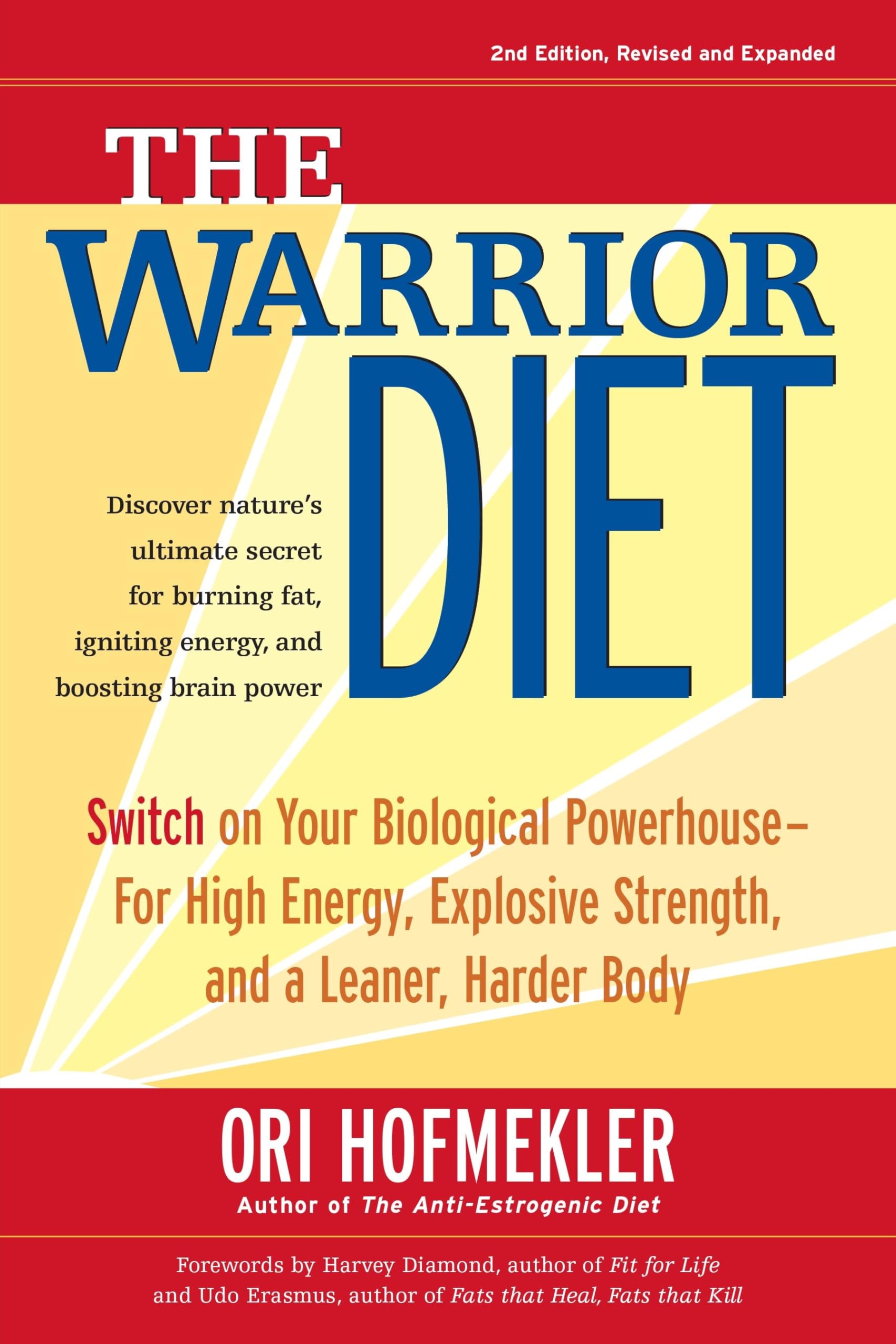
The Warrior Diet: Switch on Your Biological Powerhouse For High Energy, Explosive Strength, and a Leaner, Harder Body [Hofmekler, Ori, Diamond, Harvey, Erasmus, Udo] on desertcart.com. *FREE* shipping on qualifying offers. The Warrior Diet: Switch on Your Biological Powerhouse For High Energy, Explosive Strength, and a Leaner, Harder Body Review: An Exceptional Read! - Thank you, Thank you Mr. Ori Hofmekler! I very much enjoyed reading The Warrior Diet. This was an exceptional read. There was plenty of helpful advice, great tips and knowledge found throughout this work of art. In March 2018; I had decided to really make an effort at improving my physical health and overall wellness. When I started exercising and had been experimenting with different styles of eating; after a few months, I found myself doing my own version of this diet before I even started reading. Once I picked up this book, I was surprised at how much freedom this diet was able to give. Working my way through the book, I have slowly incorporated and tweaked my diet to a more well-rounded one. Since doing so, I feel better and better; and more like my authentic self every day that comes. I thoroughly enjoyed the information, the guidance and Ori's humor as he explains his craft. I have been doing my own bodyweight training routine for almost a year now but will be incorporating more of CFT training and working with my medical care team to improve my use of proper supplements and suggested things to use in this book as well. This diet, this book; has easily changed my life. I feel more and more like a warrior in my everyday life. It feels so strange but empowering nonetheless. It's also fun to watch people gawk at how swiftly I move now and even more so how much I eat in one sitting during my overeating phase. Thank you again, Ori! Review: The diet works, the book has flaws - I give the diet - meant in the broadest sense as a lifestyle/eating pattern - five stars, but the book three or four. I (male, early 30s) successfully lost and kept off 30 pounds of body fat using the main principal explained in the book - controlled fasting consisting of 16-18 hours, including sleep, of little to no food during the day/active cycle, then a generous portion(s) of healthy food in the evening/rest cycle. I usually drank water throughout the morning (when thirsty), a handful of mixed nuts and/or an apple in early afternoon, whatever the family is having for dinner, then breakfast food for second dinner (usually bacon and eggs). I followed a minimalist strength and conditioning program Kettlebell Simple & Sinister 3-4 days a week as well. The book has its own "workout", but I didn't follow it. The book starts with two chapters on the general philosophy of the diet: cultivating a Warrior Instinct and patterning one's life on the Warrior Cycle. For the former, it contrasts the predator/scavenger instinct of mindful, purposeful, useful eating (Predator) against mindless eating (Scavenger), and how the modern Western diet is basically a Scavenger diet of mindless fast and processed food designed to be highly palatable, feel good, and deliver quick but "empty" energy. The Warrior Cycle describes the daily pattern of energy out and energy in: day time is for expending energy, being creative, being productive and useful, and fueling only as much as needed for that (less than you think); night time is for recovery, healing, taking in energy (food), and resting and relaxing. In contrast, a pattern of constant eating minimizes the upside (and maximizes the downside) of both phases. Chapter 10 ("The Warrior Diet Idea") offers more on the philosophy and "why" of the diet. The next several chapters go into greater detail on the Undereating and Overeating phases. The Undereating phase is characterized as "less than a full meal" throughout the day (so around 400-500 calories total), eating only "live" foods such as raw vegetables, yogurt, and light protein such as whey or raw nuts (almonds are recommended). The Overeating phase is typical healthy eating fare: cooked vegetables, meat, and low-glycemic carbs such as rice (generally, it does talk about cycling high-fat and high-carb days). The rules are simply to begin with vegetables, end with carbs (if wanted or needed for performance reasons, though not if one is looking to lose fat), and stopping when more thirsty than hungry. This last trick is a neat hack; I would use it to pace myself by not drinking water during the meal, stopping when I was more thirsty than hungry, drinking a glass of water, and maybe (more often than not) coming back for more 20-30 minutes later. The meals I gorged, scarfing it down, I had an upset stomach. There is a brief chapter on "stubborn fat", which has it's own ebook that I would recommend. Chapter 8 compares the Warrior Diet to other diets. Chapter 9, "Lessons from History", is the historical background underlying the undereating/overeating pattern. It is interesting enough, but lacked references to historical documents, sources, etc. to substantiate the picture he's laying out. It's not a huge deal, I just took it with a grain of salt. I don't doubt the information, and the principles of undereating/overeating make sense even if they weren't widespread practice in ancient times. The remaining chapters on the diet include a Q&A, a discussion on sex drive and potency, and a chapter on women on the Warrior Diet. The second to last chapter is "The Warrior Workout", which is focused on joints and back strength, explosive movement (strength, speed, velocity), training to resist fatigue (but not training to failure), and keeping the session short (but intense). Lots of pictures, exercises, and routines to follow. For an untrained person, almost any exercise will benefit you; for a trained person, there are probably still things to learn here. Being a student of StrongFirst and Kettlebell: Simple & Sinister (referenced above), many of these training principles align with the philosophy of StrongFirst. The last chapter includes recipes and meal ideas, including desserts. So to summarize: The idea is simple (straightforward), but is counter-cultural; you will seem odd to your friends, family, and coworkers for not constantly "fueling" all day. Yet, when you adapt to this eating pattern, they will marvel at your seemingly endless supply of energy, focus, and productivity, while they remain in a fog from "grain brain", ride the sugar high/crash, or just are constantly focused on food. You will enjoy a daily pattern of retiring from the day with a hearty meal (or two), relaxation, recuperation, deep sleep, ready to rise and "get after it" the following day. The flaws of the book are some "quackery" about supplements (conveniently for sale on the author's website), lack of references throughout, particularly in the first two chapters, Chapter 8 (historical), and Chapter 10, and the Warrior Workout program (not principles, which are solid) being overly complex.
| Best Sellers Rank | #241,012 in Books ( See Top 100 in Books ) #106 in Men's Health (Books) #569 in Weight Loss Diets (Books) #1,102 in Other Diet Books |
| Customer Reviews | 4.2 4.2 out of 5 stars (792) |
| Dimensions | 6.03 x 0.75 x 8.98 inches |
| Edition | 2nd Revised ed. |
| ISBN-10 | 1583942009 |
| ISBN-13 | 978-1583942000 |
| Item Weight | 1.1 pounds |
| Language | English |
| Print length | 312 pages |
| Publication date | December 4, 2007 |
| Publisher | Blue Snake Books |
J**N
An Exceptional Read!
Thank you, Thank you Mr. Ori Hofmekler! I very much enjoyed reading The Warrior Diet. This was an exceptional read. There was plenty of helpful advice, great tips and knowledge found throughout this work of art. In March 2018; I had decided to really make an effort at improving my physical health and overall wellness. When I started exercising and had been experimenting with different styles of eating; after a few months, I found myself doing my own version of this diet before I even started reading. Once I picked up this book, I was surprised at how much freedom this diet was able to give. Working my way through the book, I have slowly incorporated and tweaked my diet to a more well-rounded one. Since doing so, I feel better and better; and more like my authentic self every day that comes. I thoroughly enjoyed the information, the guidance and Ori's humor as he explains his craft. I have been doing my own bodyweight training routine for almost a year now but will be incorporating more of CFT training and working with my medical care team to improve my use of proper supplements and suggested things to use in this book as well. This diet, this book; has easily changed my life. I feel more and more like a warrior in my everyday life. It feels so strange but empowering nonetheless. It's also fun to watch people gawk at how swiftly I move now and even more so how much I eat in one sitting during my overeating phase. Thank you again, Ori!
S**M
The diet works, the book has flaws
I give the diet - meant in the broadest sense as a lifestyle/eating pattern - five stars, but the book three or four. I (male, early 30s) successfully lost and kept off 30 pounds of body fat using the main principal explained in the book - controlled fasting consisting of 16-18 hours, including sleep, of little to no food during the day/active cycle, then a generous portion(s) of healthy food in the evening/rest cycle. I usually drank water throughout the morning (when thirsty), a handful of mixed nuts and/or an apple in early afternoon, whatever the family is having for dinner, then breakfast food for second dinner (usually bacon and eggs). I followed a minimalist strength and conditioning program Kettlebell Simple & Sinister 3-4 days a week as well. The book has its own "workout", but I didn't follow it. The book starts with two chapters on the general philosophy of the diet: cultivating a Warrior Instinct and patterning one's life on the Warrior Cycle. For the former, it contrasts the predator/scavenger instinct of mindful, purposeful, useful eating (Predator) against mindless eating (Scavenger), and how the modern Western diet is basically a Scavenger diet of mindless fast and processed food designed to be highly palatable, feel good, and deliver quick but "empty" energy. The Warrior Cycle describes the daily pattern of energy out and energy in: day time is for expending energy, being creative, being productive and useful, and fueling only as much as needed for that (less than you think); night time is for recovery, healing, taking in energy (food), and resting and relaxing. In contrast, a pattern of constant eating minimizes the upside (and maximizes the downside) of both phases. Chapter 10 ("The Warrior Diet Idea") offers more on the philosophy and "why" of the diet. The next several chapters go into greater detail on the Undereating and Overeating phases. The Undereating phase is characterized as "less than a full meal" throughout the day (so around 400-500 calories total), eating only "live" foods such as raw vegetables, yogurt, and light protein such as whey or raw nuts (almonds are recommended). The Overeating phase is typical healthy eating fare: cooked vegetables, meat, and low-glycemic carbs such as rice (generally, it does talk about cycling high-fat and high-carb days). The rules are simply to begin with vegetables, end with carbs (if wanted or needed for performance reasons, though not if one is looking to lose fat), and stopping when more thirsty than hungry. This last trick is a neat hack; I would use it to pace myself by not drinking water during the meal, stopping when I was more thirsty than hungry, drinking a glass of water, and maybe (more often than not) coming back for more 20-30 minutes later. The meals I gorged, scarfing it down, I had an upset stomach. There is a brief chapter on "stubborn fat", which has it's own ebook that I would recommend. Chapter 8 compares the Warrior Diet to other diets. Chapter 9, "Lessons from History", is the historical background underlying the undereating/overeating pattern. It is interesting enough, but lacked references to historical documents, sources, etc. to substantiate the picture he's laying out. It's not a huge deal, I just took it with a grain of salt. I don't doubt the information, and the principles of undereating/overeating make sense even if they weren't widespread practice in ancient times. The remaining chapters on the diet include a Q&A, a discussion on sex drive and potency, and a chapter on women on the Warrior Diet. The second to last chapter is "The Warrior Workout", which is focused on joints and back strength, explosive movement (strength, speed, velocity), training to resist fatigue (but not training to failure), and keeping the session short (but intense). Lots of pictures, exercises, and routines to follow. For an untrained person, almost any exercise will benefit you; for a trained person, there are probably still things to learn here. Being a student of StrongFirst and Kettlebell: Simple & Sinister (referenced above), many of these training principles align with the philosophy of StrongFirst. The last chapter includes recipes and meal ideas, including desserts. So to summarize: The idea is simple (straightforward), but is counter-cultural; you will seem odd to your friends, family, and coworkers for not constantly "fueling" all day. Yet, when you adapt to this eating pattern, they will marvel at your seemingly endless supply of energy, focus, and productivity, while they remain in a fog from "grain brain", ride the sugar high/crash, or just are constantly focused on food. You will enjoy a daily pattern of retiring from the day with a hearty meal (or two), relaxation, recuperation, deep sleep, ready to rise and "get after it" the following day. The flaws of the book are some "quackery" about supplements (conveniently for sale on the author's website), lack of references throughout, particularly in the first two chapters, Chapter 8 (historical), and Chapter 10, and the Warrior Workout program (not principles, which are solid) being overly complex.
R**N
THE BEST WAY TO EAT, PERIOD!
This book is THE BEST book on how physical active people should approach their nutrition. I am a very active person and have read my share of nutrition books over the years, but the Warrior Diet is the only "diet" (if I may use the word "diet", I prefer the word "lifestyle") that I believe I can sustain for life. It is easy and sustainable. There are no forbidden foods on this diet, except for sugar and artificial sweeteners of course, which makes it easy to adhere to. You can eat pizza or burgers or whatever you like as long as you eat it as part of the "overeating" phase (4 hour window). During the "undereating" phase (20 hour window) I like to have 1-2 cups of coffee or tea before my early morning cardio workout, one apple around mid-morning, 2 hard-boiled eggs for lunch, one handful of nuts in the late afternoon-hours and then, after my evening strength-workout, I like to top off my day with a big, satisfying dinner with a nice glass of milk before bed. This is how I practice the Warrior Diet on a daily basis and it has become a lifestyle for me. Like I said earlier, I have read many books on diets/nutrition over the years, but the Warrior Diet is the one book that I keep coming back to. I don't want to eat any other way, but the Warrior-way!
B**N
Great Diet - Medicore Book
I would like to start off by saying this life style diet is legit. Once you learn to be free, eat instinctively, and be satisfied you will learn so much about your body and be able to drop weight, gain weight, and lean mass, instinctively. Ori made this eating style popular it's not exactly fair to call it his diet. The book succeeded at was motivating me to eat this way. Constantly bringing up the same topic on a chapter really got it in my head. However nothing in this book is new information. If you have ever read a health book before then you won't benefit to much from reading this book other then learning the philosophy and the basics of this diet. I really don't like the writing style of Ori either. I think he has a small problem staying on topic, he repeats stuff to often to the point that it's boring and includes a bunch of useless information. Due to the small community of this diet there are not to many books about it. So if you have absolutely no background knowledge of this kind of eating this book is probably the best bet on this wonderful eating style.
P**R
Amazing
C**N
La dieta me ha funcionado hasta el momento, aunque el libro podría ser un poco mas claro en cuanto a que ingredientes son los integrantes de la dieta.
M**0
Excellent livre pour pousser plus loin l’étude du jeune intermittent pour le sportif et le citoyen soucieux de sa santé. Après adepte du paléo/cétogène je relativise les conseils de l’auteur en matière de glucide. :)
M**O
Ottimo libro e consigliato a chi non riesce a trovare la sua dimensione di peso/forma
D**K
Ich habe das Buch vor mehr als 2 Jahren gekauft... hatte es sozusagen im Langzeittest: Das Buch hat mir sehr gut gefallen, weil es mal eine ganz andere Sichtweise auf das Thema Ernährung wirft. Durch diese Ernährungsform, die ich selber nun seit gut 2 Jahren praktiziere(allerdings nicht durchgehend),habe ich gelernt unabhängiger vom Essen zu sein. Früher war mein Tagesablauf nach meinem Essen ausgerichtet, jetzt richtet sich mein Essensplan nach meinem Leben. Viel besser :) Untertags nur leichte Kost, weil ich den ganzen Tag aktiv sein muss und Abends die Speicher wieder ordentlich auffüllen. Mit dem alten Ernährungsdogma, dass es nur einen Weg gäbe richtig zu essen und das Abends viel zu essen schrecklich ungesund sei wird hier ordentlich aufgeräumt. Es geht eben auch anders. Sicherlich nicht für jeden geeignet, manche fühlen sich unwohl wenn Sie Abends viel essen, gerade wenn man kein so gutes Verdauungssystem hat, dafür enthält das Buch aber auch Tipps wie man die Verdauung optimieren kann. Auch muss man sagen, dass sein Schreibstil und seine Argumentationsweise sicherlich nicht jedermanns Geschmack ist. Mir gefielen die Vergleiche mit antiken Kriegern und dies motivierte mich auch im Alltag, wenn ich mich von Fast Food Restaurants oder anderen Snacks herausgefordert fühle, dachte ich immer "Sowas hat ein Krieger nicht nötig!" ;) Für mich hats optimal funktioniert, deshalb 5 Sterne. Ich fühle mich wohler, habe abgenommen, nicht an Kraft verloren und spare viel Zeit weil ich nicht mehr so oft ans Essen denken muss
Trustpilot
1 week ago
2 weeks ago