Desert Online General Trading LLC
Dubai, United Arab Emirates
Desert Online General Trading LLC
Dubai, United Arab Emirates
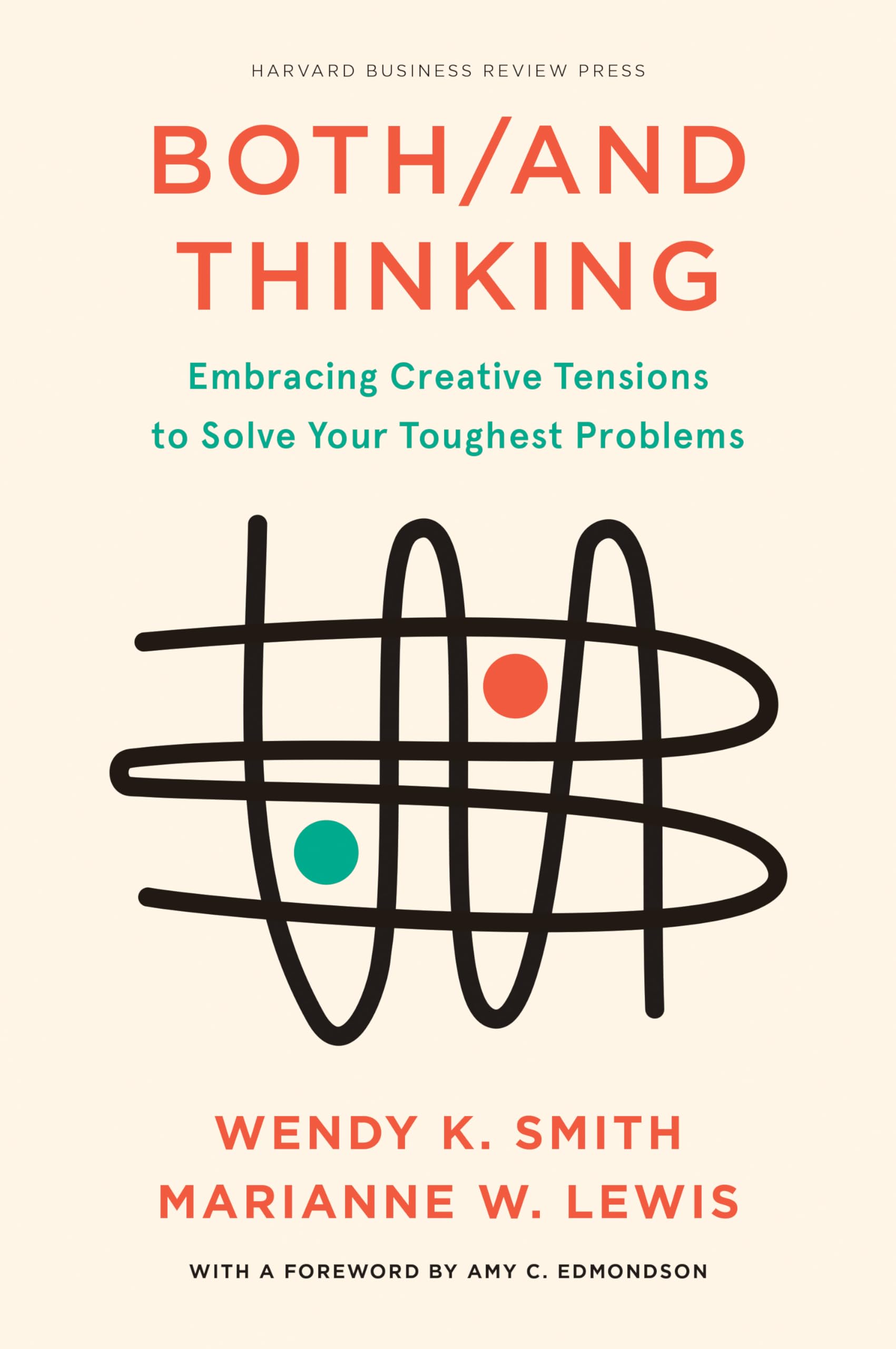
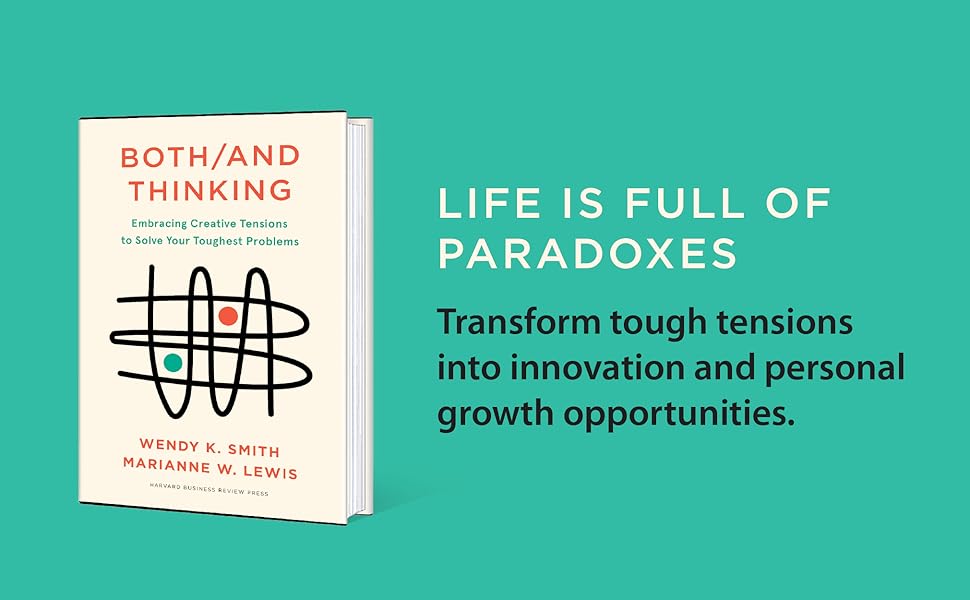
Both/And Thinking: Embracing Creative Tensions to Solve Your Toughest Problems
K**Y
A great new perspective
While this book is written by business school professors, the language and narratives are accessible to the non-business minded. I found myself sucked in by the story of Fogo Island and how they were going to solve their dilemma by identifying the underlying paradox (plus now I need to go there to see it for myself). I can see how with some practice, I can use this kind of both/and thinking to get to the root of my challenging decisions and solve them in a new way. I appreciate the perspective.
U**S
Loved this book
This book is chuck full of useful actionable ideas that I can apply to both work and my personal life. Very readable and thought-provoking.
M**T
Eye Opening Read
Lewis and Smith do a masterful job opening our eyes to new ways of understanding our business, our lives, and the world. An enjoyable read and enlightening on so many levels. Sharing with my network openly and frequently.
J**Z
Both/And Thinking
This is a terrific book with practical insights on understanding and managing life's paradoxes, reflecting deep and actionable insights from two impressive careers. It offers essential lessons to address tensions in our polarized societies.
J**N
Every leader and manager should read this book!
Drs. Wendy Smith and Marianne Lewis have spent many years honing, refining, teaching AND living the amazingly helpful ideas in this book. Every leader and organizational manager should read this book-- and share it with their teams. Wendy Smith has brought these ideas about paradoxical thinking to our clients with immense skill and with outstanding results, helping CEOs and their teams manage the paradoxes inherent in leading for today while also strategically leading innovation for tomorrow. I can't recommend this book, this work, or these authors highly enough!
S**D
Too much on why and too complicated on how
For people familiar with the oriental concept of Yin and Yang, the powerfulness of thinking “And” over “Or” and “Paradox” over “Dilemma”, you can simply skip this book. For the rest, you may give this overstretched and clumsily written book a try. Nevertheless, it reminds me of the saying by Charles Bukowski, “An intellectual says a simple thing in a hard way. An artist says a hard thing in a simple way.”p.s. Below please find some favorite passages of mine fyi.It is both possible and necessary to see the paradoxes, the ambiguities, the gray areas, the absurdities sometimes, of life, but not be paralyzed by them. – President Obama pg12Ying-yang: an image of paradox. Contradiction. Interdependence. Persistence. (B/W portions reflect opposing duality. Define and mutually reinforce one another. Consistently flow from smaller to larger, while the opposing dots within each portion convey how one force seeds its opposite, suggesting ongoing movement.) pg23The paradox system. Creating BOUNDARIES to contain tensions. Finding COMFORT in discomfort. Enabling DYNAMICS that unleash tensions. Shifting to both/and ASSUMPTIONS. Pg39If you cannot make a change, change the way you have been thinking. You might find a new solution. – Maya AngelouToday’s successful business leaders will be those who are most flexible of mind. An ability to embrace new ideas, routinely challenge old ones, and live with paradox will be the effective leader’s premier trait. Further, the challenge is for a lifetime. – Tom PetersWe practice single loop learning regularly and nearly automatically. We make a decision, try it out, get feedback and use the new knowledge to improve our future decisions. Double loop learning challenges our embedded assumptions, mental models, and decision rules that led us to our decision in the first place. – Chris ArgyrisRather than think as politician, preacher, or prosecutor – defending our stance, ideology, or case, respectively – Adam Grant in his book Think Again, calls for us to think as scientists, questioning our questions as well as our evidence, and seeking competing data and views. A dynamic approach to navigating competing demands means being willing to learn how to unlearn; it allows us more flexibility to oscillate on the tightrope. It might even mean being willing to ask ourselves if we are on the right tightrope. Pg193Both/and thinking begins with shifting our underlying assumptions in 3 areas: Knowledge (multi truth can coexist). Resources. (from scarcity to abundance). Problem solving. (from control to coping) pg123
A**R
academic style
pros- academic- intellectually stimulatingareas of improvement. To make the book better- make it more actionable (If not, highlight in the book description that it is an academic book)- include more examples from organizations- make the tone of the book easier to understand (less academic)
M**B
Excellent insights and ideas!
This book is outstanding! It's beautifully written and so applicable to so many fields and spheres of life--I enjoyed every page!
Trustpilot
5 days ago
3 weeks ago