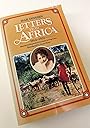
Letters from Africa, 1914-1931
Product ID: 41245302
Desertcart purchases this item on your behalf and handles shipping, customs, and support to Netherlands.
desertcart.com: Letters from Africa, 1914-1931: 9780226153117: Dinesen, Isak, Lasson, Frans, Born, Anne: Books Review: I highly recommend this collection of letters. It was moving and intriguing. - This is a must read for anyone interested in her life, or anyone interested in that period in history. I have been fascinated by Karen's story since I first watched "Out of Africa." I have since read several books about her and Denys. What I found especially intriguing about these letters was that I had to keep reminding myself of the time period in which they were written. She was a very liberal and a liberated woman. More than once, she remarked that woman were free to do whatever they wanted and how wonderful that freedom was, but she felt that with it, came responsibility. Her views on marriage, womanhood and even birth control were very modern. Most of the letters were written to her mother and brother with some that were written to other relatives and friends interspersed. They are detailed accounts of her day to day and year to year struggles and successes while running this farm in Africa. Her relationship with her mother was very close and very beautiful and interesting to follow. They didn't see eye to eye on everything and from the one letter that is included from her mother to her brother, her mother revealed that she had showed great restraint over the years in telling Karen her true feelings about her life choices. That letter was a bit of a disappointment in some ways, but perhaps in the context of when it was written (near the end of Karen's time in Africa, it is understandable. As a mother, she just wanted to have her daughter come home where she could take care of her, and keep her from going off on any more wild adventures that would further deteriorate Karen's health and deplete their funds further. I hadn't realized until reading this book how often she was very ill, to the point of being hospitalized, during her years in Africa. One of the Baroness' greatest joys was the visit her mother made to her farm. It's also touching to hear about how the natives revered her as well. Many aspects of her character that had been hinted at in the movie were fleshed out in this collection of letters. I admire her lack of prejudice and her love of the native people. Her letters also opened a window on the shameful and even criminal way other people treated the natives. There is less about Denys than I had hoped, but I supposed, based on who the letters were meant for, maybe that is understandable. She did often express her great pleasure and satisfaction in having Denys as a friend and companion. He was, in many ways, a live saver. One of my favorite stories she related was about the time when two lions came onto the farm and were causing trouble by stealing cattle and scaring the natives. The foreman refused to go after them citing his responsibilities as a father and husband and not wanted to run the risk of injury or death. Karen and Denys promptly grabbed their rifles, flashlights and headed out to find and kill the lions and said that they were both expendable. She never shirked her duty or ran away from a challenge and just based on those qualities is a fine role model. Her years of soul searching and evaluation are laid bare in this collection of letters. You can almost feel like you are going along with her on this extraordinary adventure of discovery and life. I have recommended this book to several of my friends because of the topics covered, the historical backdrop and the sheer courage of this amazing woman. Review: Very revealing...... - I actually did not expect to find these letters interesting. My only real interest in anything having to do with Karen Blixen was her home in Africa. However, in reading this book of her letters I learned a great deal more of her, the natives, the diseases they coped with, the lack of good medical care and how primitively even she lived. It surprised me the sometimes torturist conditions that she for some reason chose to live in or subject herself to. I never did understand why it (the drudgerist difficult life) seemed to appeal to or be important to her. I recommend the book because it is much more revealing about her day to day life, her relationships with the British colonials, her Danish family & their financial interest in her farm from a business standpoint, the natives & the many men. I was surprised to learn she didn't even meet Finch Hatton until 4 years after her arrival in Africa and that with the exception of contracting sphyhlis from Bror shortly after arriving that the two of them were very actively engaged in running the farm, going on safaris and maintaining a happy full social life. According to her letters Bror was thoughtful, reliable, caring & attentive. It was her family that was displeased with him and pressured her to divorce him. Which, she resisted. I was also surprised to learn of her many miscarriages of I guess what must have been Bror's children and the abortion of Denys' child because of the unstablness of his relationship with her. When you get into the latter half of her time in Africa her letters become longer as she falls into a depression and dark time in her life. Her despair and preoccupation because of Denys' long spells away from her eventually cause her to become suicidal like her father. It became evident that she really did not practice Christianity even though raised Presbyterian and that she thought nothing of engaging in light mohammadism and keeping their religious statues etc in her home. The woman dabbled in things she should have left be. She was plagued the entire time in Africa with misfortune, disease & suffering yet, for some reason she is considered now to be some sort of heroine. Baffling to say the least. I can see too why Denys gave her the boot. As far as I can tell she was a hopeless neurotic romantic with a very distorted understanding of her circumstances. The farm could have possibly thrived if she and her family knew what the hell they were doing or gotten themselves into. Another thing this book reveals is how she complains of being financially strapped. In one letter early on she talks about having to sell some of her clothing to a Jewish lady. Another letter years later she talks about being in Paris and how badly she needs to go shopping because her clothes are ragged and shoes have holes in them. The very next sentence she talks about traveling here and there in eastern Europe and dining at fine restaurants and staying in the best hotels. There is even a letter to her mother telling of being invited to the Governor's home in Nairobi for a dinner and party but not being able to attend because she had nothing to wear. These letters are intriguing because of what they reveal about her & her family. She was interesting in a mental sort of way but in my opinion she was certainly no one to consider a roll model or hold in high esteem. Karen Blixen for me was more of a case study. Odd story of an odd woman in my opinion. I wish I could call her eccentric but she really wasn't. She was just very odd. Especially for the era she lived in. In some respects she was mature beyond her years and in other respects immature. She was unable to properly set her priorities with the managing of the farm, her finances, her social life and her relationship TO Denys. Off on safaris for months at a time or traveling back and forth to Europe & Denmark and entertaining guests. A lot of wasted money & time that should have gone towards the farm. I don't even like the house now that I've really read about.. They are not kidding or exaggerating when saying the movie was based loosely on her book Out Of Africa & these letters. Very loosely.
| Best Sellers Rank | #1,172,051 in Books ( See Top 100 in Books ) #2,339 in European Literary History & Criticism #4,213 in Author Biographies #4,352 in Historical European Biographies (Books) |
| Customer Reviews | 4.5 4.5 out of 5 stars (69) |
| Dimensions | 6 x 1 x 9 inches |
| Edition | 1st |
| ISBN-10 | 0226153118 |
| ISBN-13 | 978-0226153117 |
| Item Weight | 1.7 pounds |
| Language | English |
| Print length | 516 pages |
| Publication date | April 15, 1984 |
| Publisher | University of Chicago Press |
P**S
I highly recommend this collection of letters. It was moving and intriguing.
This is a must read for anyone interested in her life, or anyone interested in that period in history. I have been fascinated by Karen's story since I first watched "Out of Africa." I have since read several books about her and Denys. What I found especially intriguing about these letters was that I had to keep reminding myself of the time period in which they were written. She was a very liberal and a liberated woman. More than once, she remarked that woman were free to do whatever they wanted and how wonderful that freedom was, but she felt that with it, came responsibility. Her views on marriage, womanhood and even birth control were very modern. Most of the letters were written to her mother and brother with some that were written to other relatives and friends interspersed. They are detailed accounts of her day to day and year to year struggles and successes while running this farm in Africa. Her relationship with her mother was very close and very beautiful and interesting to follow. They didn't see eye to eye on everything and from the one letter that is included from her mother to her brother, her mother revealed that she had showed great restraint over the years in telling Karen her true feelings about her life choices. That letter was a bit of a disappointment in some ways, but perhaps in the context of when it was written (near the end of Karen's time in Africa, it is understandable. As a mother, she just wanted to have her daughter come home where she could take care of her, and keep her from going off on any more wild adventures that would further deteriorate Karen's health and deplete their funds further. I hadn't realized until reading this book how often she was very ill, to the point of being hospitalized, during her years in Africa. One of the Baroness' greatest joys was the visit her mother made to her farm. It's also touching to hear about how the natives revered her as well. Many aspects of her character that had been hinted at in the movie were fleshed out in this collection of letters. I admire her lack of prejudice and her love of the native people. Her letters also opened a window on the shameful and even criminal way other people treated the natives. There is less about Denys than I had hoped, but I supposed, based on who the letters were meant for, maybe that is understandable. She did often express her great pleasure and satisfaction in having Denys as a friend and companion. He was, in many ways, a live saver. One of my favorite stories she related was about the time when two lions came onto the farm and were causing trouble by stealing cattle and scaring the natives. The foreman refused to go after them citing his responsibilities as a father and husband and not wanted to run the risk of injury or death. Karen and Denys promptly grabbed their rifles, flashlights and headed out to find and kill the lions and said that they were both expendable. She never shirked her duty or ran away from a challenge and just based on those qualities is a fine role model. Her years of soul searching and evaluation are laid bare in this collection of letters. You can almost feel like you are going along with her on this extraordinary adventure of discovery and life. I have recommended this book to several of my friends because of the topics covered, the historical backdrop and the sheer courage of this amazing woman.
B**A
Very revealing......
I actually did not expect to find these letters interesting. My only real interest in anything having to do with Karen Blixen was her home in Africa. However, in reading this book of her letters I learned a great deal more of her, the natives, the diseases they coped with, the lack of good medical care and how primitively even she lived. It surprised me the sometimes torturist conditions that she for some reason chose to live in or subject herself to. I never did understand why it (the drudgerist difficult life) seemed to appeal to or be important to her. I recommend the book because it is much more revealing about her day to day life, her relationships with the British colonials, her Danish family & their financial interest in her farm from a business standpoint, the natives & the many men. I was surprised to learn she didn't even meet Finch Hatton until 4 years after her arrival in Africa and that with the exception of contracting sphyhlis from Bror shortly after arriving that the two of them were very actively engaged in running the farm, going on safaris and maintaining a happy full social life. According to her letters Bror was thoughtful, reliable, caring & attentive. It was her family that was displeased with him and pressured her to divorce him. Which, she resisted. I was also surprised to learn of her many miscarriages of I guess what must have been Bror's children and the abortion of Denys' child because of the unstablness of his relationship with her. When you get into the latter half of her time in Africa her letters become longer as she falls into a depression and dark time in her life. Her despair and preoccupation because of Denys' long spells away from her eventually cause her to become suicidal like her father. It became evident that she really did not practice Christianity even though raised Presbyterian and that she thought nothing of engaging in light mohammadism and keeping their religious statues etc in her home. The woman dabbled in things she should have left be. She was plagued the entire time in Africa with misfortune, disease & suffering yet, for some reason she is considered now to be some sort of heroine. Baffling to say the least. I can see too why Denys gave her the boot. As far as I can tell she was a hopeless neurotic romantic with a very distorted understanding of her circumstances. The farm could have possibly thrived if she and her family knew what the hell they were doing or gotten themselves into. Another thing this book reveals is how she complains of being financially strapped. In one letter early on she talks about having to sell some of her clothing to a Jewish lady. Another letter years later she talks about being in Paris and how badly she needs to go shopping because her clothes are ragged and shoes have holes in them. The very next sentence she talks about traveling here and there in eastern Europe and dining at fine restaurants and staying in the best hotels. There is even a letter to her mother telling of being invited to the Governor's home in Nairobi for a dinner and party but not being able to attend because she had nothing to wear. These letters are intriguing because of what they reveal about her & her family. She was interesting in a mental sort of way but in my opinion she was certainly no one to consider a roll model or hold in high esteem. Karen Blixen for me was more of a case study. Odd story of an odd woman in my opinion. I wish I could call her eccentric but she really wasn't. She was just very odd. Especially for the era she lived in. In some respects she was mature beyond her years and in other respects immature. She was unable to properly set her priorities with the managing of the farm, her finances, her social life and her relationship TO Denys. Off on safaris for months at a time or traveling back and forth to Europe & Denmark and entertaining guests. A lot of wasted money & time that should have gone towards the farm. I don't even like the house now that I've really read about.. They are not kidding or exaggerating when saying the movie was based loosely on her book Out Of Africa & these letters. Very loosely.
D**Z
Priceless. Brilliant. Respectful.
Beginning with the very well-written introduction, it's readily apparent that much scholarship, respect, thought, forethought, expansive research, love went into this book. The timeline is very helpful in gaining a foothold in the sequence of events, and the people in her life. There are annotations, as well, that are immensely helpful and which give even further depth of appreciation for the material. There's nothing more intimate and insightful than the epistolary. Having the intimacy of Karen's thoughts, unveiled in the kind of narrative is pure gold. Better. That it is part of a much larger and expansive collection of writings by and about her makes it worthy of further scholarship for those hungry for more.
D**E
parfait
S**#
Read this years ago and loved it. If you enjoyed Out of Africa, you would love this. It is beautifully written with a good insight into the times.
S**B
Enjoyed
A**R
I wanted some further insight into Meryll Streep's character and Robert Redford's - So the book is on the boring and slow going side - Didn't finish it - More of a flick and thumb read.
J**8
Your either a fan of hers or not, Im ploughing thru all her books, and this is one I didnt finish.
Trustpilot
2 months ago
3 weeks ago