
DOWNLOAD THE APP


Customer Services
Copyright © 2025 Desertcart Holdings Limited
DOWNLOAD THE APP
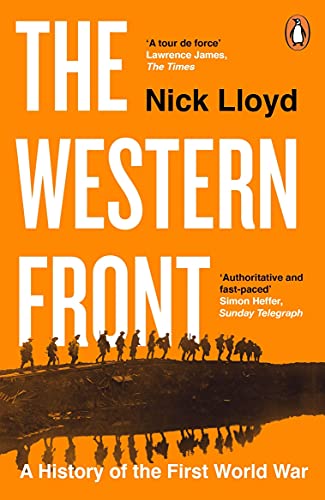
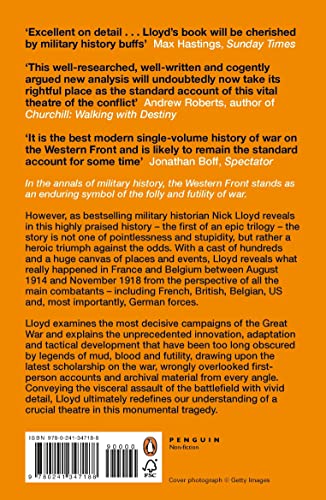
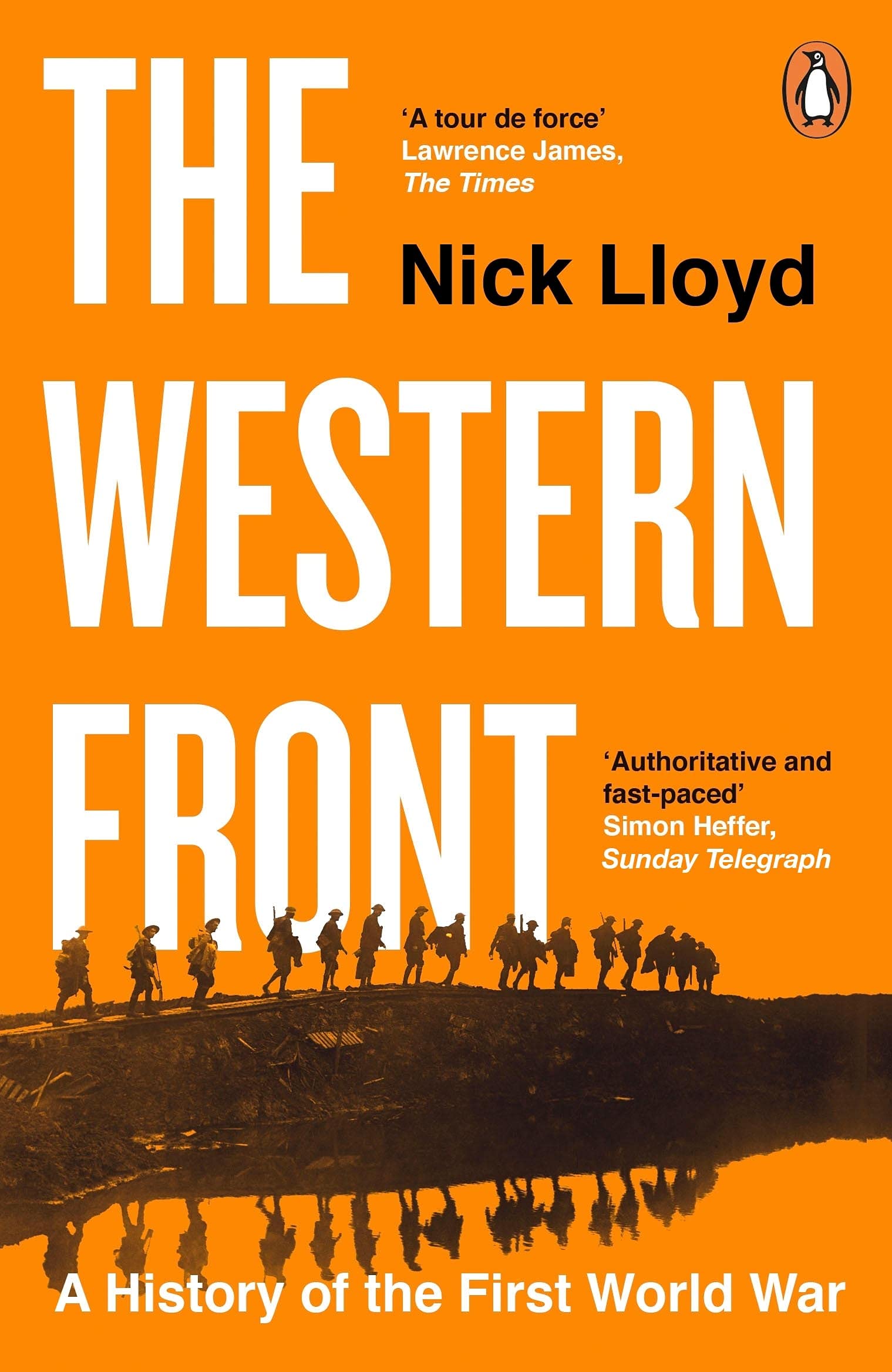
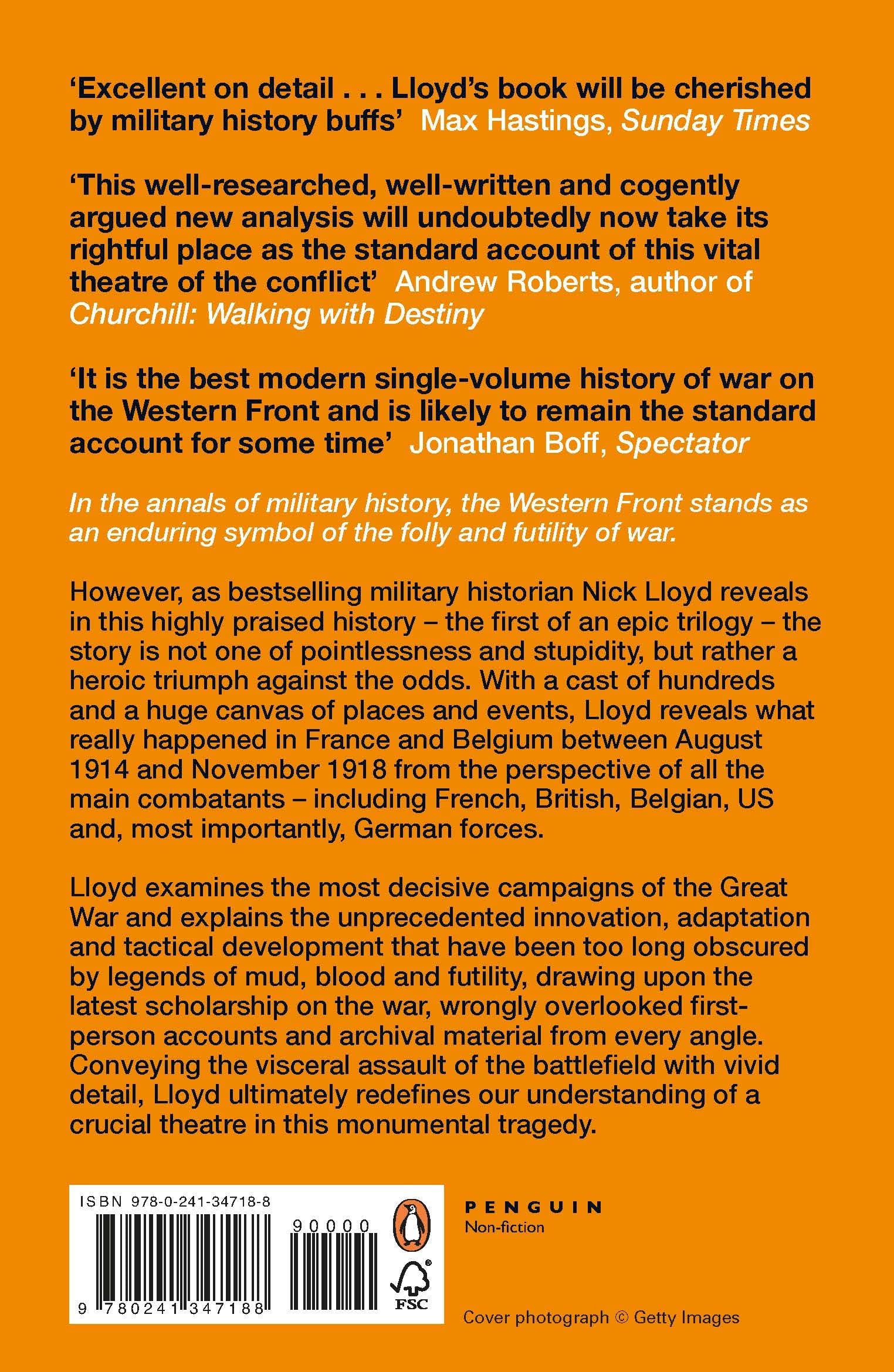
Buy The Western Front: The authoritative history of world war one from the acclaimed author of Passchendaele 1 by Lloyd, Nick (ISBN: 9780241347188) from desertcart's Book Store. Everyday low prices and free delivery on eligible orders. Review: Great overview - There is a certain type of military history book exemplified by Max Hastings and Anthony Beevor in which the author selects a subject with high “brand awareness” such as Stalingrad, the Vietnam War, D-Day etc and creates a “soup to nuts” overview of the subject. The Western Front is certainly well within this particular canon – as it were. Although the canvas is usually large – you will never find a volume on rifle grenades of the British Army 1914-18 by this type of author, by confining it to one albeit large volume, of necessity the reader won’t find much by the way of granular detail. The issue is not so much what goes in but what is left out. Thus Nick Lloyd will spend forty or so pages on the 1918 German Offensives; generally the narrative is at Army level with occasional refences to small actions so the overall effect is that the book acts as a very good primer if the reader was coming to the subject without knowing too much. There are some curious omissions such as the 1915 Shell Scandal and only a passing reference to Jutland surely a major influence on the course of the Western Front given that it allowed a ruinous naval blockade of Germany. On the other hand there is a paragraph on the A7V in action at Villers-Bretonneux possibly out of proportion to it’s significance however I suppose it does add a bit of flavour to the “5th Army moved here, 3rd Army moved there” narrative. Because this has a top down approach there is a concentration on the major players both political and military, this is not really an account of life in the trenches, there are other books to cover that. It is very good at putting the Western Front in the context of the First World War, there are frequent references to what was happening elsewhere both militarily and politically. Do we learn anything new here after all the First World War is awash with books both narrative and analytical on the subject. If you are familiar with the Western Front then there are unlikely to be any revelations nonetheless it’s an immensely readable book. The layout with full pages of a reasonably sized typeface unburdened by footnotes matches perfectly with Nick Lloyds pacey, literate style that at times reads like a thriller is in stark contrast to some of the more turgid and dry military history books so it reads effortlessly. I can imagine this book selling well alongside the latest Beevor/Hastings volumes. Frankly if you want to delve deeper then there are other more specific books available Review: History scrutinised - This is a great insight into WW1. I grew up only looking at the British perspective of history, but this tells the whole story of the Western Front. We need to consider that much of the damage (Western Front) was done on French land, so we it's important to understand their perspective. We also get to hear the German perspective. Most of this is through the eyes of senior leaders, military and political. But we also get snippets of the lower ranks. All in all it was a horrendous piece of history. Technology and weaponry advanced during this time and manifested into what we now see as modern warfare, with tanks, planes, machine guns and so on. The death toll and future implications were also unspeakable. But going forward, when I wear my poppy in November and attend my local remembrance service, this book will help me contemplate all those deaths and sacrifices by the many and not just the British. One final thing, Field Marshall Robertson is my relative, so it meant a lot to me to hear about his involvement (whether he made right decisions or not)! Thank you to the author and I look forward to the next book which will focus on another area of WW1.
| Best Sellers Rank | 94,854 in Books ( See Top 100 in Books ) 2,110 in World History (Books) 22,927 in Society, Politics & Philosophy |
| Customer reviews | 4.6 4.6 out of 5 stars (777) |
| Dimensions | 13 x 4.4 x 19.8 cm |
| Edition | 1st |
| ISBN-10 | 0241347181 |
| ISBN-13 | 978-0241347188 |
| Item weight | 500 g |
| Language | English |
| Print length | 688 pages |
| Publication date | 4 Nov. 2021 |
| Publisher | Penguin |
M**T
Great overview
There is a certain type of military history book exemplified by Max Hastings and Anthony Beevor in which the author selects a subject with high “brand awareness” such as Stalingrad, the Vietnam War, D-Day etc and creates a “soup to nuts” overview of the subject. The Western Front is certainly well within this particular canon – as it were. Although the canvas is usually large – you will never find a volume on rifle grenades of the British Army 1914-18 by this type of author, by confining it to one albeit large volume, of necessity the reader won’t find much by the way of granular detail. The issue is not so much what goes in but what is left out. Thus Nick Lloyd will spend forty or so pages on the 1918 German Offensives; generally the narrative is at Army level with occasional refences to small actions so the overall effect is that the book acts as a very good primer if the reader was coming to the subject without knowing too much. There are some curious omissions such as the 1915 Shell Scandal and only a passing reference to Jutland surely a major influence on the course of the Western Front given that it allowed a ruinous naval blockade of Germany. On the other hand there is a paragraph on the A7V in action at Villers-Bretonneux possibly out of proportion to it’s significance however I suppose it does add a bit of flavour to the “5th Army moved here, 3rd Army moved there” narrative. Because this has a top down approach there is a concentration on the major players both political and military, this is not really an account of life in the trenches, there are other books to cover that. It is very good at putting the Western Front in the context of the First World War, there are frequent references to what was happening elsewhere both militarily and politically. Do we learn anything new here after all the First World War is awash with books both narrative and analytical on the subject. If you are familiar with the Western Front then there are unlikely to be any revelations nonetheless it’s an immensely readable book. The layout with full pages of a reasonably sized typeface unburdened by footnotes matches perfectly with Nick Lloyds pacey, literate style that at times reads like a thriller is in stark contrast to some of the more turgid and dry military history books so it reads effortlessly. I can imagine this book selling well alongside the latest Beevor/Hastings volumes. Frankly if you want to delve deeper then there are other more specific books available
S**Y
History scrutinised
This is a great insight into WW1. I grew up only looking at the British perspective of history, but this tells the whole story of the Western Front. We need to consider that much of the damage (Western Front) was done on French land, so we it's important to understand their perspective. We also get to hear the German perspective. Most of this is through the eyes of senior leaders, military and political. But we also get snippets of the lower ranks. All in all it was a horrendous piece of history. Technology and weaponry advanced during this time and manifested into what we now see as modern warfare, with tanks, planes, machine guns and so on. The death toll and future implications were also unspeakable. But going forward, when I wear my poppy in November and attend my local remembrance service, this book will help me contemplate all those deaths and sacrifices by the many and not just the British. One final thing, Field Marshall Robertson is my relative, so it meant a lot to me to hear about his involvement (whether he made right decisions or not)! Thank you to the author and I look forward to the next book which will focus on another area of WW1.
T**N
Concise Overview Of The Great War
I did struggle somewhat with Nick Lloyd's The Eastern Front and did wonder if that might be down to me being uninformed about many of the key battles and campaigns. Off the top of my head I could name the battles of Tannenberg and the Masurian Lakes in 1914 and the Brusilov Offensive of 1916 and the wider outcomes of these battles but I did find myself struggling with the rest of the book which felt like information overload With this book things were much easier to follow and understand if only because Britons of my generation with even the most rudimentary knowledge of military history will know of the battles and prime movers of the Western Front 1914-18 and if you don't this book will be a simple reminder. There's nothing radically in-depth about the analysis and several days after finishing the book what I remember most about the book is 1) The astronomical amount of ordnance produced and expanded by all sides 2 ) The author didn't think much of Haig's Generalship 3 ) General Henry Rawlinson was probably the most effective allied General if only because of his tactic of "Bite and hold" There's nothing much that will make you gasp "I never knew that" while your jaw hits the ground but we should all be suspicious about books that "challenge the mainstream narrative of the Great War" such as Mosier's The Myth Of The Great War and Wawro's Sons Of Freedom and Lloyd has written a very readable book on the Western Front 1914-18
P**C
Look to the West on FWW history
Great Authoritative text covering as it says on the tin the Western Front Well referenced with a good index If studying the Great War conflict this text needs to be on your shelf
C**.
Ottimo
C**N
this book presents mainly the human side of the main and very much critizised generals of the WWI. We can understand their fears and limited information that made them send thousands of soldiers to a certain death in useless offensives. In this sense it is kind of exculpatory, which makes the book both interesting and limited. The book does not explain, for example, why for years the main allied offensives in the western front were always so predictible and restricted to a narrow area around Flanders, of both difficult terrain and strong enemy defences
A**R
Many vivid descriptions of the trenches from a plainly British point of view (sometimes naming men with the title VC), and apparently more emphasis on the French army than other works. Much of the text is quoted reports and diaries of commanders and officials.
J**W
A very good telling of the collapse of Nazi Germany
R**K
I am not a big military history reader, except for the American Civil War. But I found this expansive (514 pages of text and 75 of notes) study of the Western Front during the first war to be excellent. This is the first volume in the author's trilogy of studies covering all fronts. One of the author's techniques is to quote from postwar memoirs and books written by some of the participants. This allows for them to state what they hoped to accomplish by their strategy, what actually happened and why. The author's research is extensive, and his writing so realistic that the reader actually feels like he is in the trenches with the troops. All the major battles are covered, including Champagne, Verdun, Ypes, the Marne and Flanders. The author introduces the concept of three-dimensional battles. That is, infantry, artillery, and the brand new air power. As always, he focuses upon careful analysis of each side's strategies--every one guaranteed to produce victory, except they didn't for three years of fighting. The key actors are present: Joffre, von Hindenburg, Moltke, Kitchener, Falkenhayn, and for the first time the American Pershing. New weapons are introduced such as tanks, poison gas, and better rifles--but the result is consistent stalemate and unbelievably high casualties. Specifically 1,493,000 Germans dead;1,383,000 French killed; 300,000 Brits lost in one month; and 117,000 Americans lost in their short war. Why didn't the citizens of these nations put their feet down and demand cessation of this mutual annihilation conducted by inept commanders? The reason appears to be that the military controlled the politicians and checked their power. The war ended because of mutual exhaustion and the impact of American troops. I have only one bone to pick with the author. Like most British military historians, he declines to give full coverage to the American contributions to victory. We read hundreds of pages of military incompetence by the allied commanders, and yet the author gives only half a page to the American key victory at Belleau Wood, where green army and especially marine soldiers decisively stopped the German army on its way to Paris --something neither the French or Brits ever did so thoroughly. Pershing emerges from the incompetent mayhem as the greatest general on the field; and the Yanks as the finest soldiers. If you like good military history and have an interest in the First War, this by god is the best book for you.
Trustpilot
2 weeks ago
5 days ago