Desert Online General Trading LLC
Dubai, United Arab Emirates
Desert Online General Trading LLC
Dubai, United Arab Emirates
Full description not available
R**.
Incisive and clear
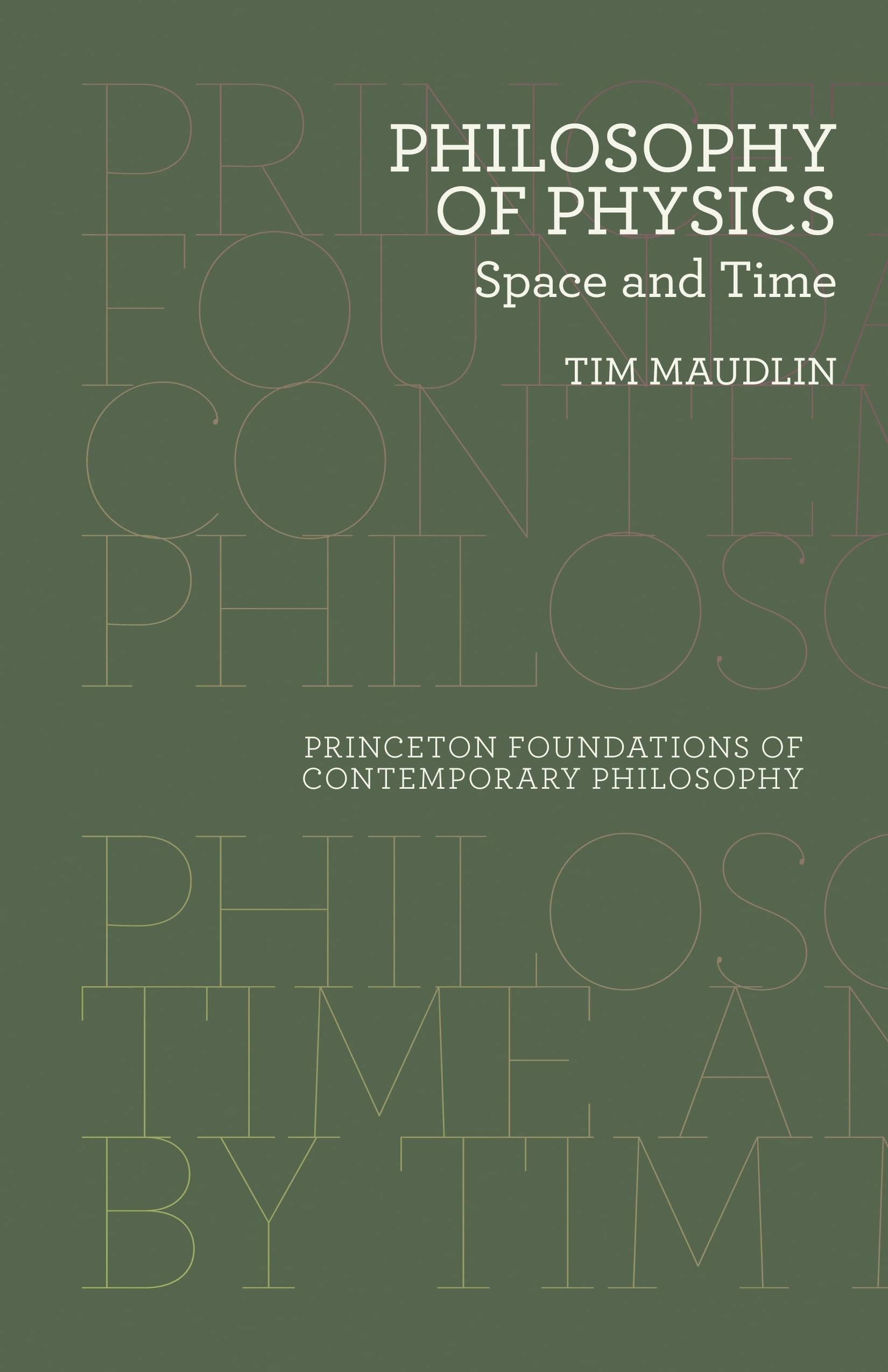
I appreciate Maudlin's books because he cuts to the heart of confusing issues in physics and draws clear distinctions that improve understanding greatly. I've been a fan since I found Quantum Non-Locality and Relativity a couple of years ago. I eagerly await volume 2.Others have commented that this is physics for philosophers, not philosophy for physicists. Coming at it from the physics side, I gained a lot as well. I've long felt that doing physics properly requires a certain amount of explicit philosophy. The challenge is getting the important insights without getting bogged down. This book manages pretty well.One problem for me as a reader, coming at it from the physics side, was his use of language. I must have read each page six times and marked up my copy extensively to make it more comprehensible to me (that this book is worth the effort shows how highly I think of it.) But I had to add the word "absolute" in pencil before nearly every instance where he used "speed" or "velocity" because without that his statements all seemed wildly incorrect and brought my train of thought to a screeching halt.The tone is very challenging in places, almost harsh. He is correcting common misconceptions about relativity even among physicists, and makes his points forcefully. I definitely felt that there was something of a language barrier as viewed from the physics side. You really have to trust that he knows what he's talking about (he does) despite the way his statements first appear. It reminds me why I don't care for straight philosophy, but it is a gem of philosophy of physics. I learned important things from it.
K**G
Will help sharpen your thinking about space and time
Back in my student days, one of my housemates was a philosophy student. When we'd talk physics I'd invariably start writing equations, and he'd always pepper me with questions about what was *really* happening behind all that math. His questioning on the fundamentals really helped sharpen my thinking about physics.Tim Maudlin's "Philosophy of Physics" will similarly hone your thinking, at least for the narrow part of physics it covers (space, time, relativity, and kinematics). The issues of inertial versus non-inertial frames, the postulates of relativity, time dilation, and Lorentz contraction are "simple" in the sense that any good physics undergraduate can do calculations with them competently, but the careful definition and interpretation of these concepts has sometimes stumped even first-rate physicists. Maudlin does a nice job of clearing up some of the misconceptions about these topics found in popular physics texts.Very little math is used. Certainly any physics, math, or engineering student will find this book "easy" in the sense of not needing any mathematical heavy lifting. Don't let that simplicity fool you into thinking it's a mindless read, or worse, not worth reading at all: this is a book about clear thinking about subtle concepts, not about struggling through mathematical complexities.It's a well-written book with clear explanations. I highly recommend it to every scientist who wants to understand relativity and mechanics at a deeper level.
L**N
Interesting and intelligent book.
I am no expert in Physics, but I am considered one in Philosophy. This book does not deal that much with what is normally understood as the latter, because most of the people think Philosophy plains deals about ideas related to the psychic dimension of the human existence. That, nevertheless, is just an incomplete understanding of that which Philosophy is.This book deals a lot about Geometry, Cartesianism, Newton and Leibnitz. All of them though of themselves as Philosophers of nature and not as scientists. Thus, this book is about TRUE ontology, and TRUE methapysics, the way the illustrated philosophers understood them to be.It's not an easy book to read and requires a good level of intelligence from the reader, thus it is a VERY GOOD book.I really liked it and I learned a lot.
C**E
An excellent, concise survey of thought on space and time
A concise, accessible, enjoyable, responsible and rewarding survey of the historical development of the physicist's conception of space and time.I say it's concise because this volume weighs in at about 200 pages and covers spatial/temporal geometries from Aristotle, Newton, Galileo and Einstein.There's certainly a bit of math in the book, but not so much as to exclude the layperson. The descriptions and diagrams provided are about as clear as they can be, given the subject.I say it's responsible because the author makes use of clear arguments, makes assumptions and missing pieces clear and follows up with recommended readings.The text is rewarding because it clears up many misconceptions about the theories it covers and gives a fresh, clean take on the subject. I can certainly say this book helped sharpen my understanding of special & general relativity.There's more physics than philosophy in this text. It serves as an excellent description of space and time for a philosopher. I don't see that it would give the physics student a strong philosophical hook, though it's certainly more philosophical than the average physics text. (The exception would be a relatively sizable discussion of the correspondence between Leibniz and Clarke on Newtonian absolute space, which I enjoyed having studied that debate previously.)Overall a worthwhile read for anyone looking for an introduction to philosophy of physics, or anyone who could stand to improve their understanding of the theories presented.
Trustpilot
1 week ago
2 weeks ago