
DOWNLOAD THE APP


Customer Services
Copyright © 2025 Desertcart Holdings Limited
DOWNLOAD THE APP




📘 Empower your family with expert-backed BPD skills — don’t miss out!
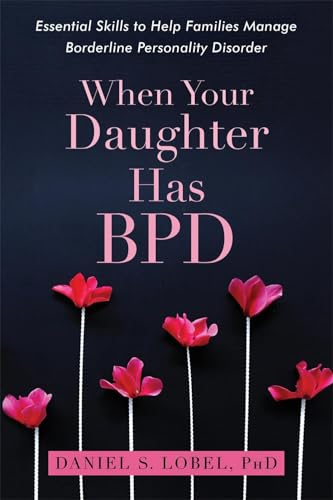
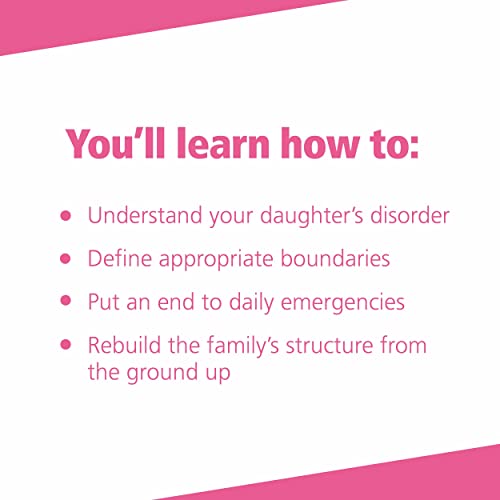
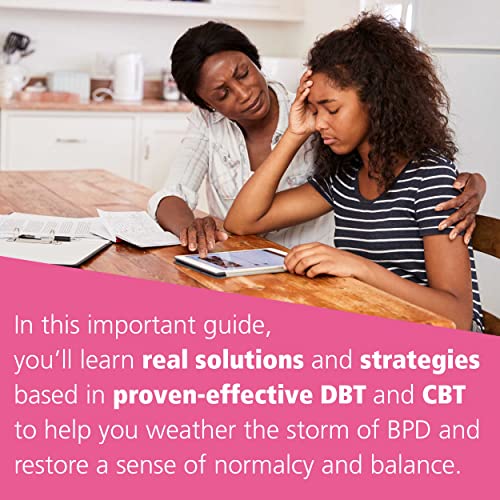
When Your Daughter Has BPD is a clinically respected guide by Dr. Daniel S. Lobel offering essential, actionable skills for families managing Borderline Personality Disorder. With a 4.6-star rating from over 600 reviews and top rankings in Personality Disorders and Pediatric Medicine categories, this book delivers trusted strategies to improve communication and support within families. Available with fast, free shipping and easy returns, it’s a must-have resource for proactive caregivers.
| ASIN | 1626259569 |
| Best Sellers Rank | #116,222 in Books ( See Top 100 in Books ) #52 in Personality Disorders #119 in Pediatric Medicine #129 in Mood Disorders |
| Customer reviews | 4.6 4.6 out of 5 stars (642) |
| Dimensions | 15.24 x 1.12 x 22.86 cm |
| Edition | 1st |
| ISBN-10 | 9781626259560 |
| ISBN-13 | 978-1626259560 |
| Item weight | 1.05 Kilograms |
| Language | English |
| Print length | 200 pages |
| Publication date | 25 January 2018 |
| Publisher | New Harbinger Publications |
L**R
This book takes a confrontational approach. It advocates the liberal use of hospital visits to defuse the outcomes. The book doesn’t hold out hope of a cure from what I could see.
G**M
This is the book I absolutely needed and have been searching for after purchasing a couple of others (another dedicated to teens and then a more general one for families which includes BPD patients of all ages). I went straight to parenting skills needed and "Step 1: Stop the Bleeding" chapters and this alone was worth it's weight in gold. These chapters provide specific examples of what to say and what not to say, how to handle situations, and how to navigate the delicate balance of promoting independence without the threat of abandonment. There are also some things that I needed to hear loud and clear to help me continue meeting my own needs and living my life while she is on HER journey. I have not read the entire book so I cannot ascertain to what degree it is helpful for older daughters (discussed by one previous reviewer.) I suspect that a lot can be applied with thoughtfulness. The examples in the Step 1 chapter do demonstrate examples with teenage daughters. I would also believe that all of the advice would pertain to sons with BPD as well, (and those parents would just have to get over the focused language/examples for daughters.) I completely disagree with the one reviewer who was sensitive to the "monster" analogy. On pg. 52 the author includes advice of "Starving the Monster." He writes: "A well-fed monster, a severe disorder that drives your daughter's unhealthy behaviors, is the result of giving in to unrealistic demands. If you are like most parents of children with BPD, the giving in usually occurs after your child ramps up her aggressive behavior toward you every time she does not get what she wants when she wants it." In my opinion, the author is clearly stating that the child is not a monster, it is THE DISORDER. He also writes: "starving the monster" will be met with resistance in the form of escalating aggression, and a three step restorative process is provided to weather the resistance and transition. The descriptive language that my spouse and I used in the past included "rollercoaster behavior" and "Jekyll and Hyde." In my opinion, this is not a negative book, it is reality. The monster term I find reinforcing to help parents stick with the new parenting communication and boundary skills so that your child's behavior improves instead of staying the same or getting worse. I am concerned with seeing the number of helpful comments for that paticular negative review, that maybe some people are not giving the content a fair chance after reading all of the 4 and 5 star reviews. My constructive criticism for the author would be to include an example list of detailed boundaries for both parents and child with BPD. It would be best to have one example for a teenage daughter with BPD and another for an adult daughter with BPD. I was hoping to avoid inventing the wheel, but not having any luck finding a good starting point anywhere on the internet specific to teenagers with BPD. The really rough draft I received from a family therapist is heavily one-sided on the part of the child and it is important for the child to see how the parent is adhering to certain (and maybe new) boundaries/tasks/practices/strategies as well.
M**U
Excellent book to help you cope
A**R
In his book, Dr. Lobel covers the challenges of dealing with a daughter with BPD, and also goes on to offer ways in which to effectively deal with these challenges. Depicting a wide variety of scenarios, Dr. Lobel provides the essential skills necessary to combat BPD, using the most pragmatic and simple-to-follow techniques. And there’s no medical jargon here. Every chapter is written in well thought-out, layman terms for the reader to easily understand. Dr. Lobel’s book also looks at the effects of this disease from all sides. How it affects the parents, any siblings and, of course, the child herself, and he goes out of his way to blame the disease and not the child. When Your Daughter Has BPD, by Dr. Daniel S. Lobel, is a must-read, not only for parents whose daughters suffer from this illness, but for all parents dealing with children with behavioral issues.
J**G
Very insightful book on border line personality disorder
Trustpilot
2 months ago
5 days ago