

Desert Online General Trading LLC
Warehouse # 7, 4th Street, Umm Ramool, Dubai, 30183, Dubai
Desert Online General Trading LLC
Warehouse # 7, 4th Street, Umm Ramool, Dubai, 30183, Dubai
Full description not available
K**T
Not at all dissapointed
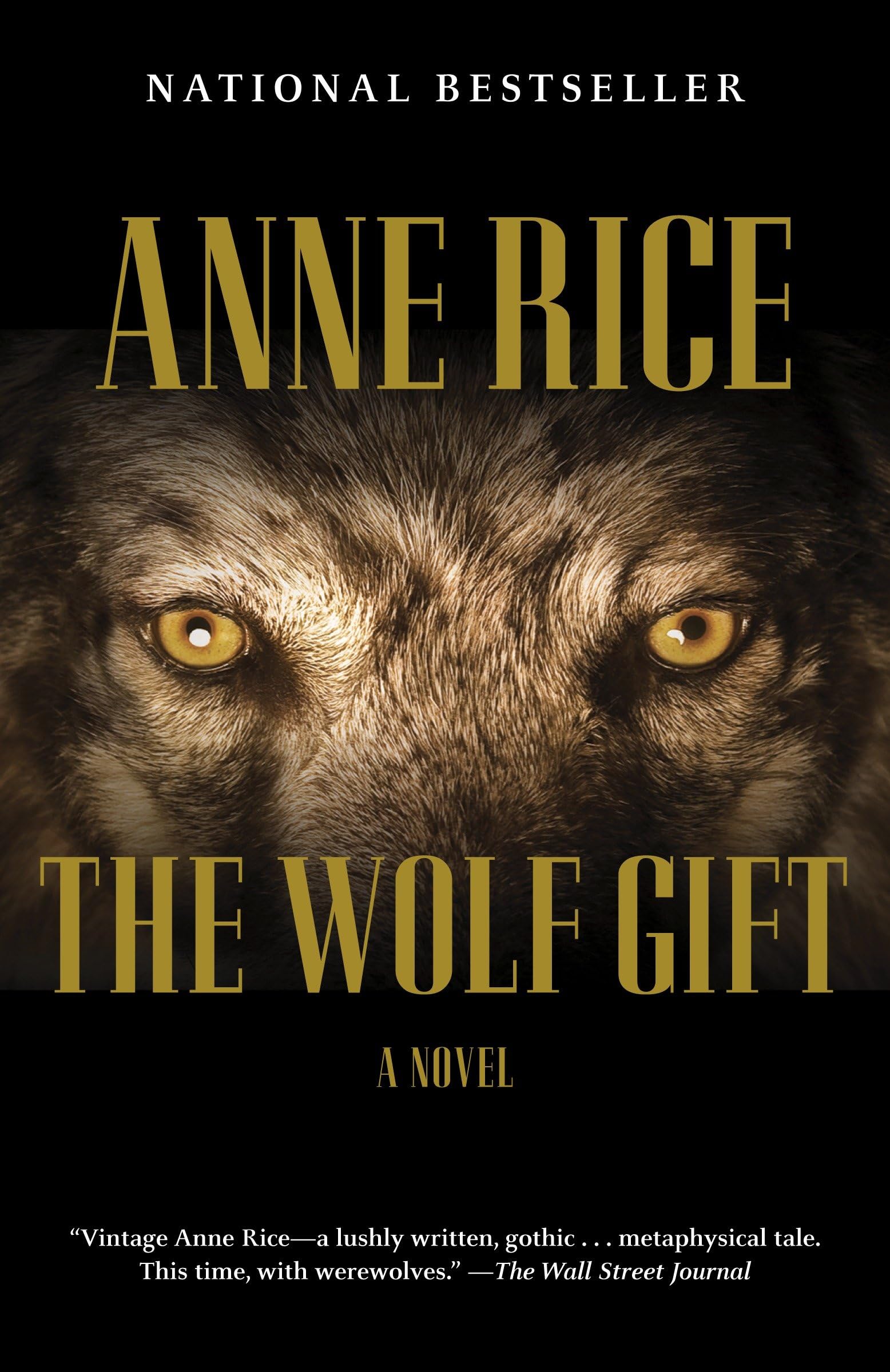
I am not Anne Rice's number one fan, I have not waited with baited breath for each and every book she has written, as a matter of fact, I have only read Interview with the Vampire. I remember reading interview when it was first published, in it Ann Rice had taken something mythical and brought it into the modern age like no one had ever done or could ever do. Vampires were more believable after interview and I began to see the author as being one of the best I had ever read. Why didn't I continue to read her work? Because I felt that she had reached perfection with interview and that any sequel would only water down her perfect vision. When I first heard that Ann Rice was writing a werewolf story, that story moved to the top of my to read list.I opened The Wolf Gift expecting the author to do with werewolves what she had done with Vampires, I expected her to rejuvenate them, to add new life to an old tale, She did not accomplish this with The Wolf Gift. This is neither a retelling of the original myth or "new and improved" version. This story ( in my opinion) could have been told without any mention of a werewolf. We could have just as well read about young writer Ruben as he purchases an old mansion and discovers it's hidden secrets. The story could have been about a new vampire in which case the story may have been better received.The author attempted to create a new species or werewolf that while not on the scale of "Sparkly Vampires" had a very similar effect on me as I read. There didn't seem to be any transformation between the happy youth and the killing beast, Ruben excepted the beast and it's murdering rage too easily. The werewolf in this book drives a car at one point and even uses a cell phone, this sounds idiotic but it works as well in this story as music from Queen and David Bowie worked in a Knights Tale. There was nothing in the story that didn't seem to fit other than the fact that everyone on the story has blue eyes without a tie in or explanation. The Characters weren't as well developed as I had hoped and I couldn't really identify with Ruben who seemed too young and yet acted too old to be very interesting, simply put, he was boring.As I expected, Anne Rice's writing is better than I would have thought and her descriptions placed me right at the scene as if I were watching the events unfold before my eyes, I still feel that she is the most talented author that I have ever read. I can almost feel the mist on my face and smell the redwood as I stand on the balcony on my own room within the mansion. The descriptions of the creatures actions were magnificent but a little too short, I would have enjoyed more time with the beast and less time with Ruben. The mysteries within the house were enjoyable an I can imagine spending time in the secret rooms. The story ties up almost everything in the last two chapters but I didn't particularly enjoy the ending and I felt that the history of the werewolves to be a last minute add in.In an earlier review someone refereed to this as a comfort read, I have never understood what a comfort read was before reading The Wolf Gift but I did find it a relaxing and comfortable read. This book is not an action packed horror with a werewolf killing everything in sight, it is a story about someone becoming a werewolf like creature who wants to use his abilities for good. The story draws you in, gets you comfortable and then slaps you in the face before offering you a nice Iced tea and a bit of Belgian Chocolate.The Wolf Gift is a wonderful story about a werewolf who wants to do good, it is an adventure, a mystery and a romance all tied together. I am sure that the authors fans will enjoy it as well as true werewolf fans like myself but horror fans should probably move on to something else. Altogether I feel that this is worthy of Anne Rice and although it might not be the werewolf story I had hoped for, it is among the best I have ever read and deserving of the highest ratings and praise.
J**E
Read this book.
On finishing Anne Rice's The Wolf Gift I had to step away. I had questions. I've read much of her fiction and asked myself if this was different. These werewolves are not just vampires who walk in daylight, nor are they a sort of shamanic Mayfair redux. They certainly aren't angels, or the Christ. Had she invented something new with Reuben Golding and his Man Wolf? To be sure there are echoes of past ideas, past books and past discussions.It is a beautiful story. Almost saccharine in some places and brutal in others. The stylized Anne Rice dialogue remains, as ever, something both romantic and modern; natural and yet, paradoxically, it always leaves me saying to myself "No one talks this way in real life." There is action in this story, and myth-making, and beauty. There is love, and sex, and certainly violence. There is also a subtle kind of activism, a gentle observation of Rice's personal causes and perhaps her politics, such as gay rights, the environment and the stem cell debate.I think the answer to my question is yes. Yes, this is something new. It is a considered, interesting, engaging approach to a genre. It is a meditation on the human condition, as all her books are. Perhaps all literary engagement with the supernatural is a method of engaging with the human condition. The story, and Reuben himself, is concerned with Good and Evil, Heaven and Earth (though perhaps not Hell) and in the existence of G-d. The Man Wolf is drawn to people crying out against malice and cruelty in The Wolf Gift. He is drawn to acts of violent evil and the stink of evil permeates those who perpetrate it. The question of whether this is a metaphysical judgment of innocence and guilt or merely hormonal response to the pheromones released in moments of aggression, fear, and hatred is never fully settled, but rather remains an open question and perhaps it should. The book doesn't preach or moralize, really, and at any rate not near any terribly controversial ground except perhaps among theologians and philosophers.I found the climax a bit anticlimactic. The denouement was, perhaps, a bit forced. The ending definitely insinuates a sequel. There were moments where I found things to be just a bit too easy, a bit too convenient. Occasionally, sticky matters seem to be handled a bit too handily. Despite that, it's a fun and interesting book that captures the imagination and any flaws are very forgivable. The characters are rich and interesting, particularly the characters that haunt the book but whom we really only meet towards the end.I will spoil nothing here, but the creation story of the "morphenkind" as they call themselves, is original and fascinating and every bit as seductive as Akasha ever was. What makes it different may be what makes Rice's writing different in this book: Akasha, when she rose to destroy all but a few of the men in the world in Queen of the Damned, was full of certainty and roiling gender feminism and violence. The Wolf Gift, on the other hand, is a book where those with the most knowledge are filled with the deepest doubts personally and metaphysically. It reminds me of Yeats' "The Second Coming", "the worst are filled with passionate intensity while the best lack all conviction." That may be a result of Rice having converted to and then walking away from the Catholic Church. It may be a discussion of what we all grapple with when we, as thinking people, examine beliefs that require faith alone. Reuben Golding's brother, Jim, is a Catholic priest and the interplay between them is, for me, cause for rumination. The rituals of the Church function almost legally, rather than mystically, during the course of the narrative. Jim's priesthood is a calling, to be sure, but perhaps to ethics rather than to a living G-d. This is a complaint often leveled at the Church which may be embodied in the sympathetic but ultimately tragic Jim Golding.There is a heroine in this story, Laura, and her motivations are a bit of a mystery to me. She is painted as beautiful, scarred by tragedy, intelligent, strong and loyal. It never becomes clear to me why she responds as she does to otherwise frightening or horrifying situations that arise in the book. When first encountered she lives alone in the woods, the last survivor of a family tragically cut short. Her instant and complete love for Reuben is hard to understand and left me scratching my head. It is never explained, but at some point it must be taken for granted by the reader. Accepting her love and devotion to Reuben makes her decisions at the end of the book all the more puzzling, as is the tantalizingly unanswered question regarding her ultimate fate. I assume this is a matter with which the next book will concern itself, but I can't help but wonder if it's simply that Anne Rice has never really embraced her female characters as she has her men. She has, I think, loved them from a distance. Even Pandora, the vampire who got her own book of the same name, is not as vibrant as Marius, her maker. Gabrielle, Lestat's mother, disappears into the primeval forest and never again really assumes any narrative strength (though we can always hold out hope for another book). Perhaps Merrick was as adored a female character as Anne Rice's supernatural fiction has known, but I digress.It was occasionally jarring for me that internet websites like Youtube and Facebook, technology such as Reueben's iPhone and television news featured so often and by name. This seemed out of place for something as gothic as werewolves. In time I got more comfortable with it, and in retrospect as we consider the project of the novel, these contemporary trappings with which most of us negotiate every day are really just a necessary element to telling a modern werewolf story.Movies like "Wolf" with Jack Nicholson and "Teen Wolf" with Michael J. Fox, even "The Howling" were invoked directly. The old cliché of the werewolf having his first change and marveling in the bathroom mirror takes place early on. All this surprised me because it seemed so self-conscious of the author, aware that she was entering into something already a part of the popular culture and canonized by various other books and forms of media. Nevertheless, as obscure (and not so obscure) werewolf legendry and literature is mentioned during the progression of the story it feels more like these old ideas and images must be acknowledged if progress is going to be made in crafting a new mythology.Finally, no review of this book would be complete without a discussion the house. The house in this story is another character. It is as mysterious and beautiful and perfect a house as any literary character in the history of good houses could ask for. Reuben Golding is supposed to be a very good-looking man and I suppose that means something a bit different to all of us but the images of the house were so clear and vibrant that it's the features of the house I'm left with at the end of the story, much more than any other physical description of any other character. The big beautiful house by the cliffs and set deep in the redwood forest is the place for werewolves. If I didn't think so before I do now, but it seems now so obvious that I must always have though so and not realized it. That's good writing.I say read The Wolf Gift.P.S. I had the good fortune to get my copy of The Wolf Gift signed by the author in San Francisco (appropriate for this book, I thought) during her book tour. She was concerned about any children that might be cold in the San Francisco evening and despite the line around the block asked that people with little ones come to the front of the line so the kids wouldn't catch a chill. Let it be known she is a kind, considerate person even when she doesn't have to be and I think that counts for a lot. I think it's something people should know about the artists they choose to support.
Trustpilot
5 days ago
1 month ago