
DOWNLOAD THE APP


Customer Services
Copyright © 2025 Desertcart Holdings Limited
DOWNLOAD THE APP
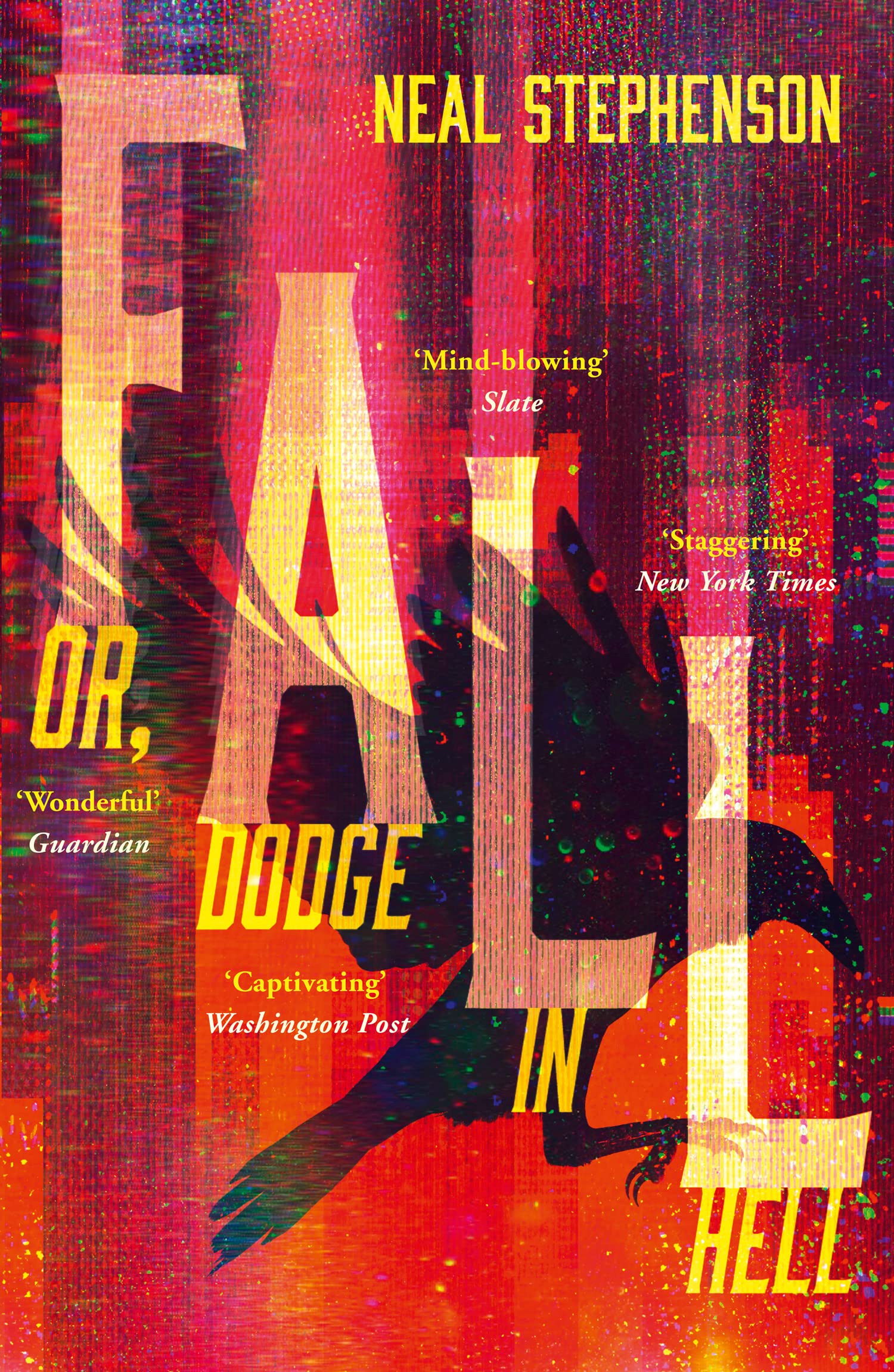
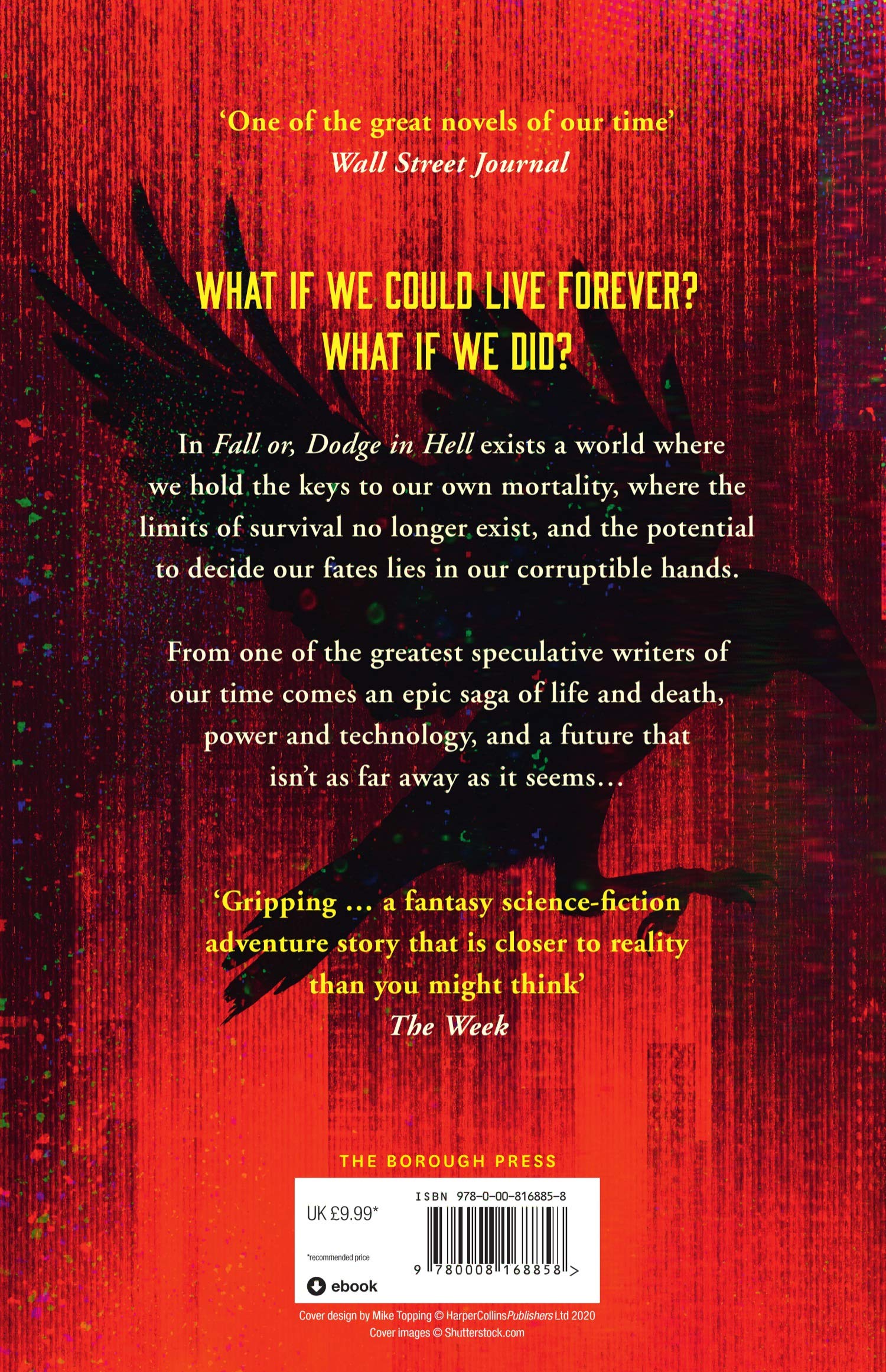

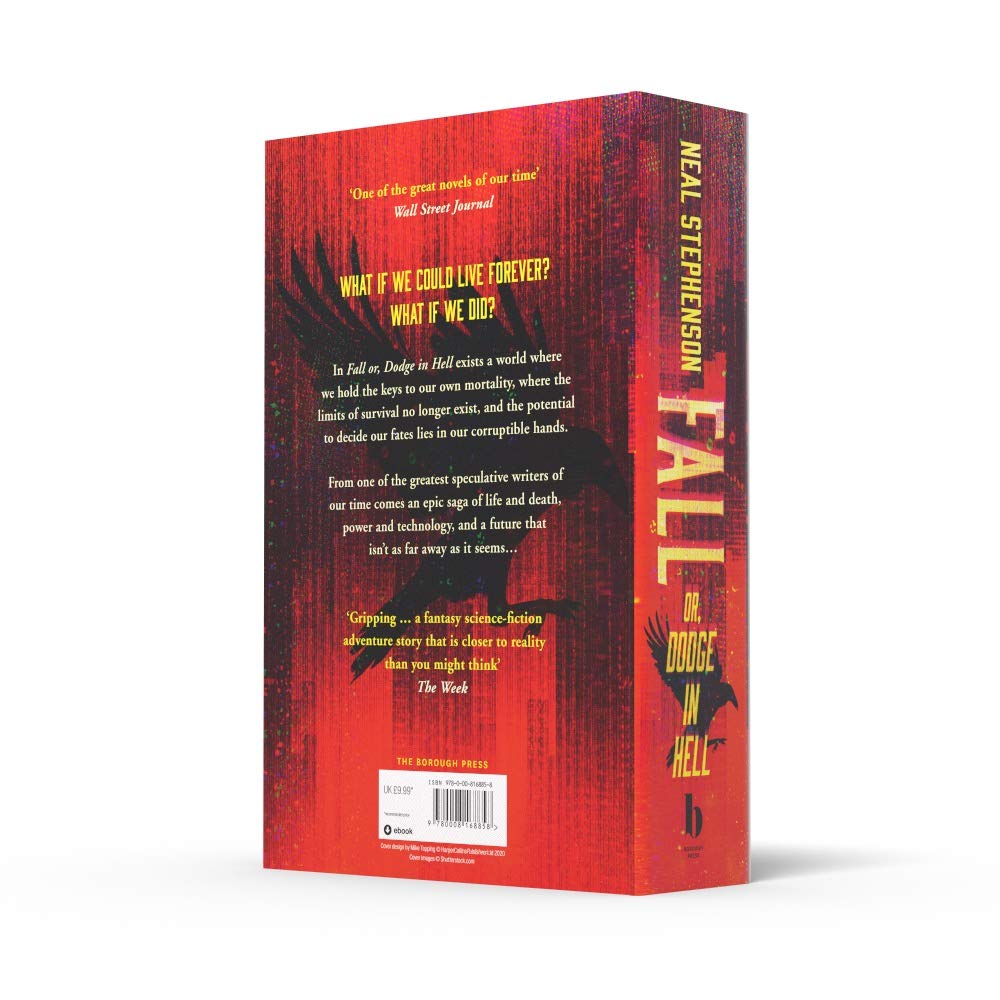
Fall or, Dodge in Hell : Stephenson, Neal: desertcart.ae: Books Review: As always with Neal Stephenson books, this one is immensely difficult to describe. But this one is also incredibly difficult to rate, as it is really two distinct narratives, one wrapped within the other, with shifting emphasis throughout the book from the one to the other as the latter develops. Despite the latter occupying the majority of the book, I'll refer to it as the "secondary" narrative as it takes place within a construct of the "primary" narrative. Effectively, this is a book dealing with death and the ability for technology to simulate consciousness to provide a simulacrum of a life after death. The primary narrative involves the world of earth and the figures central to the scanning, digitizing, and decoding of dead human forms to code digital consciousnesses that maintain traits of the original individual. Along the way in this primary narrative are lots of twists and turns, relating to our current socio-technological relationship (including large, and fascinating extrapolations of algorithmic content generation, fake news, human susceptibility/gullibility, stimulus echo chambers, religious evolution in techno-secular world, class division in America, the influence of access to information on education especially in an ever-present IT age, mythology, history, cryptography, etc.), and, per usual with Stephenson, does a spectacular job of not only creating something believably tangible, but encompassing it with such detail and richness as to feel real, and delivered enough through dialogue and characters' own learnings along with the reader as to make it easily digestible and feeling like a progressive journey. The secondary narrative is the creation of universe of the digital world of the dead, and the experiences of those within it. This begins with the creation of the first sentient "being" (God metaphor) who shapes the universe through to a time period roughly equivalent to the Middle Ages but with, at the same time, loads of deviations from our true history. There are creation myths explored (and much of the book explores mythology - both in our real world and the fabricated "mythologies" that arise in this world of the dead) with allusions pervasive throughout (in both narratives) to our own conceptions of existence. While the second narrative begins with a truly philosophically provocative depiction of the first being "waking up" with no concept of time, existence, or self - a horrifying depiction of a potential hell - and then dedicates an immense number of pages to the evolution from sentient nothingness to established world, then to borrowed myths, then to alternate history, it finally concludes (at which point the primary narrative is largely abandoned) with a fantasy-novel-esque journey/quest. This journey is by no means bad - it was some of the most entertaining, page-turning content in the book - but rather that it lacked the depth, complexity, and provocation seen in the main story. Aside from the immensely detailed construction of that world, and the depth of history provided, it was not a particularly special quest story - whereas the rest of this, and most other Stephenson writings, offer something more. What's more, so much of that historical context-setting seemed perhaps overly detailed in retrospect. Or perhaps not, because it added a lot of considerations regarding philosophy, society building, history, and religion/mythology - relevant to the reader's world and in the world of the secondary narrative. All of this did make for a more interesting world, but so many characters to which many, many pages were afforded came and went without much consequence (surely in part to demonstrate the amounts of time passed) or ultimately played little role. Others seemingly sprung up without much introduction to become pivotal. At roughly 900 pages long, I found that it could have cut 100+ pages (especially from the Adam and Eve narrative which, beyond making readers question what it may have been like to be Adam and Eve, didn't offer much in my view) without much loss. And yet, at the same time, I wished the story would continue. The climax and falling action happened so quickly, especially contrasted with how many pages and how many details were dedicated to their build-up. The conclusion did fit fairly well within the universe constructed, it's more just that I wanted more, given how much the story had been giving up to that point - it kind of fell flat by comparison. And it's also just that I wanted the story to keep going. The universes (for at that point, we briefly jump back to the primary narrative one last time, which is also quite far into the future) are so compelling and well made that I wanted to get to keep experiencing them. As always, Stephenson delivers something that is both weightily thought-provoking and extremely entertaining. Despite its being almost 900 pages, and my exceptionally slow reading rate, I finished this in under 2 weeks, unable, for the most part, to put it down. The first 400 or so pages were and incredible mix of provocative, societally reflective, and entertaining. The next maybe 200-300 were a mix of dense but provocative, and fairly dull, but stage setting. The final 200-ish were mostly just entertaining (albeit fairly shallow and generic, lacking much of the depth that typically makes Stephenson stand out to me as an author). All in all, a dynamic and excellent book that borrows bits and pieces of its structure from Stephenson's Anathem (multiple dimensions and a quest) and Snow Crash (considerations for technology's ability to augment existence and how the human condition/human society may adapt and evolve in due course), while taking on altogether fresh subject matter, adding its own twists, and intermingling so many disparate concepts and knowledge subject areas - in a manner only Stephenson seems capable of doing - as to leave me struggling to describe everything the book explores and encompasses. Review: Eigentlich hätte ich Fachbüher lesen sollen, und nix sonst, aber als Stephenson-Fannin entschied ich mich, wenigstens das neue Buch zu bestellen, um es anzuschauen, wenn schon keine Zeit zum Lesen. Erstaunlich, wo man überall Lesezeit herauskitzeln kann, wenn man das Buch gar nicht mehr aufgeben kann ... Ich mag die Geschichte generell sehr, ich finde sie sehr gut erzählt, mit einer guten Mischung aus informativen Schilderungen und Zukunftsfakten, die die Phantasie anregen, mir gefällt auch der Stil - leicht nerdy, aber auch warm und attraktiv. Gegen Ende wollte ich wirklich rausfinden, wie das Abenteuer endet, also habe ich zwischendurch meine Fachbücher vor mir versteckt und das hier verschlungen. Ich werde demnächst noch die paar älteren Bücher von Neal Stephenson bestellen, die ich noch nicht gelesen habe. Spätestens als Rentnerin hätte ich dann Zeit dafür...
| Best Sellers Rank | #187,474 in Books ( See Top 100 in Books ) #142 in Cyberpunk Science Fiction #166 in Hard Science Fiction #376 in Space Operas |
| Customer reviews | 4.1 4.1 out of 5 stars (544) |
| Dimensions | 12.9 x 4.9 x 19.8 cm |
| Edition | Standard Edition |
| ISBN-10 | 0008168857 |
| ISBN-13 | 978-0008168858 |
| Item weight | 1.05 Kilograms |
| Language | English |
| Print length | 720 pages |
| Publication date | 20 February 2020 |
| Publisher | The Borough Press |
C**N
As always with Neal Stephenson books, this one is immensely difficult to describe. But this one is also incredibly difficult to rate, as it is really two distinct narratives, one wrapped within the other, with shifting emphasis throughout the book from the one to the other as the latter develops. Despite the latter occupying the majority of the book, I'll refer to it as the "secondary" narrative as it takes place within a construct of the "primary" narrative. Effectively, this is a book dealing with death and the ability for technology to simulate consciousness to provide a simulacrum of a life after death. The primary narrative involves the world of earth and the figures central to the scanning, digitizing, and decoding of dead human forms to code digital consciousnesses that maintain traits of the original individual. Along the way in this primary narrative are lots of twists and turns, relating to our current socio-technological relationship (including large, and fascinating extrapolations of algorithmic content generation, fake news, human susceptibility/gullibility, stimulus echo chambers, religious evolution in techno-secular world, class division in America, the influence of access to information on education especially in an ever-present IT age, mythology, history, cryptography, etc.), and, per usual with Stephenson, does a spectacular job of not only creating something believably tangible, but encompassing it with such detail and richness as to feel real, and delivered enough through dialogue and characters' own learnings along with the reader as to make it easily digestible and feeling like a progressive journey. The secondary narrative is the creation of universe of the digital world of the dead, and the experiences of those within it. This begins with the creation of the first sentient "being" (God metaphor) who shapes the universe through to a time period roughly equivalent to the Middle Ages but with, at the same time, loads of deviations from our true history. There are creation myths explored (and much of the book explores mythology - both in our real world and the fabricated "mythologies" that arise in this world of the dead) with allusions pervasive throughout (in both narratives) to our own conceptions of existence. While the second narrative begins with a truly philosophically provocative depiction of the first being "waking up" with no concept of time, existence, or self - a horrifying depiction of a potential hell - and then dedicates an immense number of pages to the evolution from sentient nothingness to established world, then to borrowed myths, then to alternate history, it finally concludes (at which point the primary narrative is largely abandoned) with a fantasy-novel-esque journey/quest. This journey is by no means bad - it was some of the most entertaining, page-turning content in the book - but rather that it lacked the depth, complexity, and provocation seen in the main story. Aside from the immensely detailed construction of that world, and the depth of history provided, it was not a particularly special quest story - whereas the rest of this, and most other Stephenson writings, offer something more. What's more, so much of that historical context-setting seemed perhaps overly detailed in retrospect. Or perhaps not, because it added a lot of considerations regarding philosophy, society building, history, and religion/mythology - relevant to the reader's world and in the world of the secondary narrative. All of this did make for a more interesting world, but so many characters to which many, many pages were afforded came and went without much consequence (surely in part to demonstrate the amounts of time passed) or ultimately played little role. Others seemingly sprung up without much introduction to become pivotal. At roughly 900 pages long, I found that it could have cut 100+ pages (especially from the Adam and Eve narrative which, beyond making readers question what it may have been like to be Adam and Eve, didn't offer much in my view) without much loss. And yet, at the same time, I wished the story would continue. The climax and falling action happened so quickly, especially contrasted with how many pages and how many details were dedicated to their build-up. The conclusion did fit fairly well within the universe constructed, it's more just that I wanted more, given how much the story had been giving up to that point - it kind of fell flat by comparison. And it's also just that I wanted the story to keep going. The universes (for at that point, we briefly jump back to the primary narrative one last time, which is also quite far into the future) are so compelling and well made that I wanted to get to keep experiencing them. As always, Stephenson delivers something that is both weightily thought-provoking and extremely entertaining. Despite its being almost 900 pages, and my exceptionally slow reading rate, I finished this in under 2 weeks, unable, for the most part, to put it down. The first 400 or so pages were and incredible mix of provocative, societally reflective, and entertaining. The next maybe 200-300 were a mix of dense but provocative, and fairly dull, but stage setting. The final 200-ish were mostly just entertaining (albeit fairly shallow and generic, lacking much of the depth that typically makes Stephenson stand out to me as an author). All in all, a dynamic and excellent book that borrows bits and pieces of its structure from Stephenson's Anathem (multiple dimensions and a quest) and Snow Crash (considerations for technology's ability to augment existence and how the human condition/human society may adapt and evolve in due course), while taking on altogether fresh subject matter, adding its own twists, and intermingling so many disparate concepts and knowledge subject areas - in a manner only Stephenson seems capable of doing - as to leave me struggling to describe everything the book explores and encompasses.
L**E
Eigentlich hätte ich Fachbüher lesen sollen, und nix sonst, aber als Stephenson-Fannin entschied ich mich, wenigstens das neue Buch zu bestellen, um es anzuschauen, wenn schon keine Zeit zum Lesen. Erstaunlich, wo man überall Lesezeit herauskitzeln kann, wenn man das Buch gar nicht mehr aufgeben kann ... Ich mag die Geschichte generell sehr, ich finde sie sehr gut erzählt, mit einer guten Mischung aus informativen Schilderungen und Zukunftsfakten, die die Phantasie anregen, mir gefällt auch der Stil - leicht nerdy, aber auch warm und attraktiv. Gegen Ende wollte ich wirklich rausfinden, wie das Abenteuer endet, also habe ich zwischendurch meine Fachbücher vor mir versteckt und das hier verschlungen. Ich werde demnächst noch die paar älteren Bücher von Neal Stephenson bestellen, die ich noch nicht gelesen habe. Spätestens als Rentnerin hätte ich dann Zeit dafür...
J**N
For a long time now, I've looked forward to each new book from Neal Stephenson. Seveneves, the story he wrote prior to this one, depicted what happened to the Earth and its peoples after it was suddenly transformed by an unpredictable, extraordinary event - a scenario which has echoes of what we're all currently living through with Covid-19. In a similar way (and like all great science fiction), elements of this book ring bells in different aspects of our present world, or perhaps the world of tomorrow: an internet which is out of control, reduced to a "torrent of porn, propaganda and death threats, 99.9 percent of which [are] algorithmically generated" [p200], a culture of disinformation in which the destruction of a small town by a nuclear weapon is faked, but still believed in by the credulous, eager to disregard proof in the miasma of conspiracy theories and fake news, a Christian sect focussed on the book of Leviticus which is eager to stone transgressors and is armed to the teeth, because "a gun is just a modern labour-saving device to throw [...] little rocks really fast" [p189], self-driving cars, a minimisation of colleagues physically working together, and an all-pervasive augmented reality. The latter is memorably depicted in the apposite observation "In old movies sometimes you could see apparently sophisticated characters saying things like [...] "I'm surfing the Internet", which must have seemed cool at the time, but now it was [...] as if someone, in the middle of an otherwise normal conversation, suddenly announced, '"I'm breathing air"" [p197]. But - of course with a Neal Stephenson novel - that's only a small fraction of what the book's about, if something so unwieldy and wide-ranging can be reduced to a single topic. Each one of Stephenson's novels always seems to enough plot, ideas or characters for half-a-dozen books. In part this is due to their heft (this one has 883 pages, which makes it somewhat shorter than many of his more recent books), but its mostly because of the wild (almost untrammelled) exhuberance of the author's imagination. One of the threads running through this narrative is the notion of life after death: how it could be achieved technologically, what it would be like, and what it would mean. The latter comes under the heading of eschatology - i.e., the part of theology concerned with the final destiny of the soul. That gets discussed in this story, along with the technology of brain-scanning which constructs a digital representation of the brain's neural connections, thereby enabling a person (or soul, as they're invariably referred to here) to make the transition from a world in which they're embodied in atoms (i.e. this one, called - unflatteringly - Meatspace) to Bitworld, a digital platform where souls are just beginning to come into existence. That brings in a Genesis-type story of the Creation and the Fall in Bitworld (other points of reference are Paradise Lost, and Greek and Norse myth). This breadth and ambition gives you some idea of the scope of the story, but we're still not done: the final quarter of the book is devoted to a Tolkienesque quest which has some links to what's gone before, but by no means resolves all the issues and questions raised in the course of the tale. I finished the book in a sort of daze, dazzled - as ever - by the reckless fecundity of the author's imagination, giddy from the ease with which he'd been able to transport me to the extraordinary world of his making. Strongly recommended.
D**K
Sure, he goes on for ages about details that might bore some readers. But, who cares? If you like NS, you'll like this. It's simply his manner, to expand widely on topics. It's like having a good friend who is wordy -- who cares, since you enjoy the conversation? He has lots of interesting ideas and he is able to expand upon them engagingly, so the story is enjoyable on several levels. As always, his research is up-to-date. This is not up to the standards of Anathem (my favourite of his novels) and perhaps not of Seveneves, either, but it is still engaging and well worth purchasing. As I said, if you've read any of his other books, you'll want to read this as well. Recommended.
R**E
This would be 4.5 stars if I could give halves. I have enjoyed most of Neal Stephenson's novels, and this takes some of the characters from Reamde, which was one of my favourites. You don't need to have read Reamde first - it makes little difference. The novel is in two distinctive parts, which is difficult to describe without spoilers. The first is completely successful, set in the USA in the not very distant future. The second part imagines a world that arises from attempts to save people's consciousness after death. It is ambitious and intriguing. It makes demands of the reader's memory, and I wish I'd taken notes - or perhaps read on a Kindle, where I could have easily looked back. This second part is perhaps too long.
Trustpilot
3 weeks ago
2 months ago