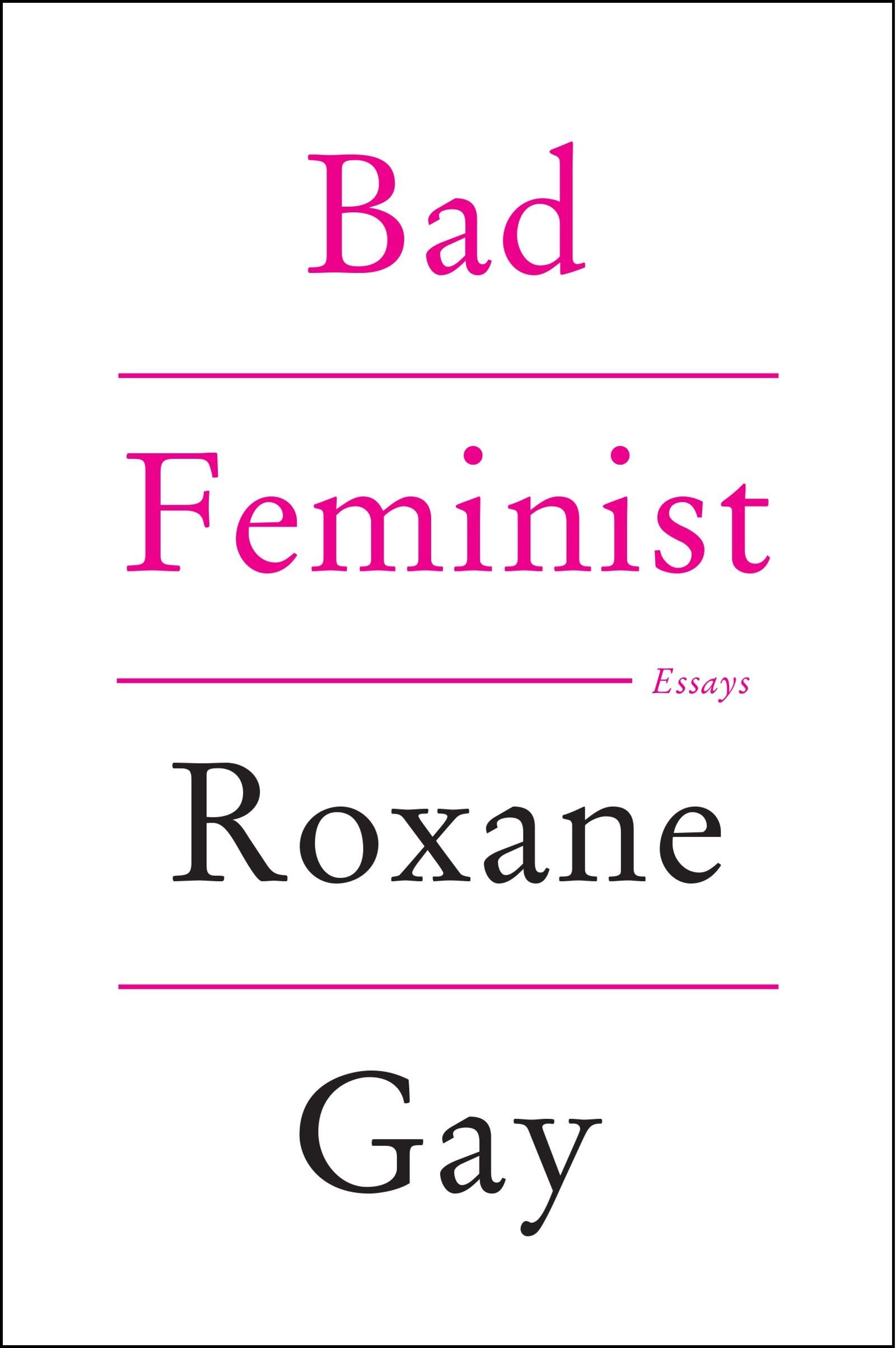

Bad Feminist: Essays [Gay, Roxane] on desertcart.com. *FREE* shipping on qualifying offers. Bad Feminist: Essays Review: Feminism, Racism and Scrabble. - Roxanne Gay is a good writer. The book is well written and, for the first half and the final couple of chapters, highly entertaining. The middle and later chapters drag somewhat as she deviates from discussing feminism to dealing with her issues around race, in particular, black racism. However, my dissatisfaction with these chapters may be more my fault than hers. I bought the book thinking it dealt exclusively with feminism. I guess that just because the word feminist is in the title doesn’t necessary guarantee that only feminism is discussed. Strictly speaking the title of the book describes the writer, not the subject matter. Throughout the book the writer refers to a feminist as being someone who advocates for the equality of men and women. Since the writer refers to herself as a bad feminist one is left wondering what she herself wants. Inequality? It isn’t until the final chapter that the writer explains why she thinks of herself as a bad feminist and, perhaps inadvertently, provides us with a fuller, more comprehensive definition of the feminist ideal. According to the writer, a bad feminist is a woman who (a) likes men, (b) wants to be taken care of and have someone to come home to, (c) believes in gender specific domestic chores, (d) loves babies, (e) makes career sacrifices to raise children, (f) shaves her legs, (g) enjoys pretty shoes and purses and matching outfits, and (h) likes pink and reads Vogue. I gather from this that a good feminist would hate all these things. It’s a peek behind the curtain; probably the most honest definition of feminism I’ve seen in print. The writer devotes one chapter of her book to “Women’s Fiction” and how it is not valued as much as fiction written by men. She points out, correctly, that women read books written by men, but men seldom read books written by women. Her proposed solution requires “men (readers, critics, and editors)... to start to bear the responsibility for becoming better, broader readers.” Incredibly, she states that it is the fault of men that women’s fiction is not more popular and proposes an affirmative action program for women writers. I’m a moderately heavy reader. I read perhaps 40 or 50 books a year. I can honestly say that I’ve never read a book, or even considered reading or not reading a book, based on the sex of the author. That being said, all the books I have read, except for books dealing with feminism and feminist issues, have been written by men. I’ve read a couple of dozen books on feminism and all of those were written by women. In general though, I read books based on interest and nothing else. If some books don’t appeal to me I can’t help that. The fact that they are written by women is irrelevant. To paraphrase the writer, maybe women need to become better, broader writers if they seek success equal to men. Finally, there’s the inevitable chapter on women’s reproductive rights and abortion. There are many mentions of “men trying to control women’s bodies.” The writer frames the abortion debate as men against women. I know this to be a distortion and blatantly incorrect so I looked up the facts. The Pew Research Center study into public opinion on abortion found that 60 percent of women and 61 percent of men believe that abortion should be legal. 38 percent of women and 38 percent of men believe it should be illegal. A Gallup poll on abortion trends (1975 - 2019) found similar results and essentially no change in opinion over the 44 year period that the poll has been conducted. Gallup found that 50 percent of women and 56 percent of men believe that abortion should be legal under all circumstances. 24 percent of women and 25 percent of men believe that abortion should be legal under certain circumstances, and 24 percent of women and just 18 percent of men believe abortion should be illegal. Abortion is a religious issue, not a gendered issue. The writer mentions none of this, presumably because it doesn’t fit her world view of women as victims of male oppression. Male politicians represent their voters and this writer uses their actions as an example of men trying to control women’s bodies. Her argument is dishonest and contrived. My overall impression of the book is positive, with reservations. The author admits to often feeling angry, even wanting to slap and punch people for their views on more than one occasion, and this anger comes across in the writing. However, amusing anecdotes provide some relief and, for me, were enough to hold my interest to the end. Review: Great Intro to Feminism - Bad Feminist by Roxane Gay is a New York Times bestseller for a reason. It came out in 2014, so some of the media topics are outdated but the points made about these topics are timeless. Gay’s essays have a down to earth quality to them. She often wonders if she is a bad feminist, which is very relatable for me. I highly recommend this to anyone who wants to learn what feminism is about or even people who want to better critique and analyze media. The second to last essay in this book, “Bad Feminist: Take One”, is very emblematic of Roxane Gay as a writer. In it, she discusses essentialist feminism. People in the feminist community heavily criticize each other citing that “this is what a real feminist is” when in reality there is immense discourse within the community and no one could represent everyone perfectly. Despite this, we hold feminists to high standards. Women are expected to speak to and for all women of a different class, race, ability, and sexuality. This isn’t impossible but it's very unrealistic. The essay “Peculiar Benefits” is one that I wish everyone could read in this current political climate. In it, she explains privilege and how to react when it's pointed out. “We tend to believe that accusations of privilege imply we have it easy, which we resent because life is hard for nearly everyone.”(17). She also discusses the game of privilege aka the privilege Olympics. Where people seemingly battle to see who is the most privileged and the winners' opinions are invalidated because of it. This behavior is childish and unhelpful to the community as a whole. The essay "The Trouble with Prince Charming, or He Who Trespassed Against Us" is my favorite chapter regarding media critique and analysis. I have my biases though; Gay is criticizing Fifty Shades of Grey, which has been my punching bag since its publication. Her main point is that, in romance, women have to make immense sacrifices to get there prince charming. “The thing about fairy tales is that the princess finds her prince, but there's usually a price to pay. A compromise is required for happily ever after. The woman in the fairy tale is generally the one who pays the price.”(193). For example, if Anastasia Steele wants her prince charming she has to go completely go out of her sexual comfort zone. It’s a fascinating point that I never would have noticed reading fairy tales myself as a kid.


| Best Sellers Rank | #63,543 in Books ( See Top 100 in Books ) #99 in Feminist Theory (Books) #278 in Sociology Reference #1,436 in Memoirs (Books) |
| Customer Reviews | 4.4 out of 5 stars 5,360 Reviews |
W**S
Feminism, Racism and Scrabble.
Roxanne Gay is a good writer. The book is well written and, for the first half and the final couple of chapters, highly entertaining. The middle and later chapters drag somewhat as she deviates from discussing feminism to dealing with her issues around race, in particular, black racism. However, my dissatisfaction with these chapters may be more my fault than hers. I bought the book thinking it dealt exclusively with feminism. I guess that just because the word feminist is in the title doesn’t necessary guarantee that only feminism is discussed. Strictly speaking the title of the book describes the writer, not the subject matter. Throughout the book the writer refers to a feminist as being someone who advocates for the equality of men and women. Since the writer refers to herself as a bad feminist one is left wondering what she herself wants. Inequality? It isn’t until the final chapter that the writer explains why she thinks of herself as a bad feminist and, perhaps inadvertently, provides us with a fuller, more comprehensive definition of the feminist ideal. According to the writer, a bad feminist is a woman who (a) likes men, (b) wants to be taken care of and have someone to come home to, (c) believes in gender specific domestic chores, (d) loves babies, (e) makes career sacrifices to raise children, (f) shaves her legs, (g) enjoys pretty shoes and purses and matching outfits, and (h) likes pink and reads Vogue. I gather from this that a good feminist would hate all these things. It’s a peek behind the curtain; probably the most honest definition of feminism I’ve seen in print. The writer devotes one chapter of her book to “Women’s Fiction” and how it is not valued as much as fiction written by men. She points out, correctly, that women read books written by men, but men seldom read books written by women. Her proposed solution requires “men (readers, critics, and editors)... to start to bear the responsibility for becoming better, broader readers.” Incredibly, she states that it is the fault of men that women’s fiction is not more popular and proposes an affirmative action program for women writers. I’m a moderately heavy reader. I read perhaps 40 or 50 books a year. I can honestly say that I’ve never read a book, or even considered reading or not reading a book, based on the sex of the author. That being said, all the books I have read, except for books dealing with feminism and feminist issues, have been written by men. I’ve read a couple of dozen books on feminism and all of those were written by women. In general though, I read books based on interest and nothing else. If some books don’t appeal to me I can’t help that. The fact that they are written by women is irrelevant. To paraphrase the writer, maybe women need to become better, broader writers if they seek success equal to men. Finally, there’s the inevitable chapter on women’s reproductive rights and abortion. There are many mentions of “men trying to control women’s bodies.” The writer frames the abortion debate as men against women. I know this to be a distortion and blatantly incorrect so I looked up the facts. The Pew Research Center study into public opinion on abortion found that 60 percent of women and 61 percent of men believe that abortion should be legal. 38 percent of women and 38 percent of men believe it should be illegal. A Gallup poll on abortion trends (1975 - 2019) found similar results and essentially no change in opinion over the 44 year period that the poll has been conducted. Gallup found that 50 percent of women and 56 percent of men believe that abortion should be legal under all circumstances. 24 percent of women and 25 percent of men believe that abortion should be legal under certain circumstances, and 24 percent of women and just 18 percent of men believe abortion should be illegal. Abortion is a religious issue, not a gendered issue. The writer mentions none of this, presumably because it doesn’t fit her world view of women as victims of male oppression. Male politicians represent their voters and this writer uses their actions as an example of men trying to control women’s bodies. Her argument is dishonest and contrived. My overall impression of the book is positive, with reservations. The author admits to often feeling angry, even wanting to slap and punch people for their views on more than one occasion, and this anger comes across in the writing. However, amusing anecdotes provide some relief and, for me, were enough to hold my interest to the end.
J**N
Great Intro to Feminism
Bad Feminist by Roxane Gay is a New York Times bestseller for a reason. It came out in 2014, so some of the media topics are outdated but the points made about these topics are timeless. Gay’s essays have a down to earth quality to them. She often wonders if she is a bad feminist, which is very relatable for me. I highly recommend this to anyone who wants to learn what feminism is about or even people who want to better critique and analyze media. The second to last essay in this book, “Bad Feminist: Take One”, is very emblematic of Roxane Gay as a writer. In it, she discusses essentialist feminism. People in the feminist community heavily criticize each other citing that “this is what a real feminist is” when in reality there is immense discourse within the community and no one could represent everyone perfectly. Despite this, we hold feminists to high standards. Women are expected to speak to and for all women of a different class, race, ability, and sexuality. This isn’t impossible but it's very unrealistic. The essay “Peculiar Benefits” is one that I wish everyone could read in this current political climate. In it, she explains privilege and how to react when it's pointed out. “We tend to believe that accusations of privilege imply we have it easy, which we resent because life is hard for nearly everyone.”(17). She also discusses the game of privilege aka the privilege Olympics. Where people seemingly battle to see who is the most privileged and the winners' opinions are invalidated because of it. This behavior is childish and unhelpful to the community as a whole. The essay "The Trouble with Prince Charming, or He Who Trespassed Against Us" is my favorite chapter regarding media critique and analysis. I have my biases though; Gay is criticizing Fifty Shades of Grey, which has been my punching bag since its publication. Her main point is that, in romance, women have to make immense sacrifices to get there prince charming. “The thing about fairy tales is that the princess finds her prince, but there's usually a price to pay. A compromise is required for happily ever after. The woman in the fairy tale is generally the one who pays the price.”(193). For example, if Anastasia Steele wants her prince charming she has to go completely go out of her sexual comfort zone. It’s a fascinating point that I never would have noticed reading fairy tales myself as a kid.
T**S
BEST BOOK ON FEMINISM
In the book “Bad Feminist: Essays”, written by Roxane Gay, we discover many of the ways that women are portrayed in the media as well as most other sources and how this connects back to feminism and the way it is viewed in today’s society views. Throughout the book, I would say that Gay takes a positive stance as a feminist, but in a way keeps it realistic than that we fantasize about. Just as the title states, Gay explains the new type of feminists that exist in today’s society. Feminism carries a negative connotation in which we use to shame each other, therefore we have bad feminists. Bad feminists are simply feminists that will claim themselves as a feminist but will not meet all of the requirements a “feminist” should meet. After reading this book, one can learn that there is not just plain white or black view on feminism, that’s one of the biggest reasons why I would advise others to read this book. One can say that it refreshes our ideas on feminism and allows us to take a step back and look at the whole picture in today’s world. A chapter that I would recommend to read would be “Bad Feminist: Take Two”, in which Gay states “ I want to be in charge and respected and in control, but I want to surrender, completely, in certain aspects of my life. Who wants to grow up?” (314). After reading this line I could feel her frustration and this big weight on her shoulders that previous feminists have placed on her in order to carry that identity. This connection can be made with many of those that aspire to be feminists, but cannot fully commit because they are scared that they will not be able to fulfill that role. One of the best eye-opener chapters in this book was “When Less Is More”, Gay states “the women of color don’t have the privilege of inhabiting their own solar systems” (252). From this line, we notice the intersection between feminists and feminists of color. When we take a look at the term intersectionality, one can say that there are many different scenarios for all kinds of different people and therefore we should not place white people as the model for all of us. Some might say that it makes little difference between the two, but in fact, there is a big difference since our nation has been developed around white supremacy. Lastly, chapter “The Trouble with Prince Charming, or He Who Trespassed Against Us” features some examples from the novel “Fifty Shades of Grey” to demonstrate the motive for feminism. In this chapter, Gay demonstrates how women are viewed as objects of pleasure for men; “... in a very dramatic scene where he grabs her by the wrist and leads her to his bedroom to properly deflower her” (195). This is the biggest desire for feminism, to view both genders with equality, not one above or in control of the other. This book definitely takes the best approach to give the audience the idea of a new way for feminists. Feminism brings up many stereotypical ideas that are brought up by our cultures, Gay does a great job of bringing all of these examples that we are blind to and how there is a major problem with gender inequality. With that said, she also makes great consideration in bringing in intersections between feminists and comparing them. Many other books will only state their view on feminism and the way one should execute in order to become the ideal feminist with no imperfections. On the other hand, Gay examines her flaws as a feminist but does not draw away from the general idea of what feminism stands for. Roxane Gay plays a role model for upcoming feminists in our society. I would agree that Gay’s feminist ways work the best in our present time in history than that compared to other activists. We need to take into account all of these harsh conditions that are here and that will never go away whether that is racism, financial discrimination, or others. After hearing from so many other activists, Gay’s approach seems the most authentic and realistic to herself, unlike others that simply wear the mask of a feminist.
F**L
What you need to know? Bad feminist
Have you ever been in a position where the word Feminist is something unknown for yourself? Well, Roxane Gay's Bad Feminist is a reliable book for understanding what is considered in society being a bad feminist. Roxane Gay is a famous American writer, professor, editor, and commentator in relation to women’s injustices. The genre of this book is nonfiction and it provides critical thinking about culture and varies observations throughout her deeply critics in the book. There are many topics such as privilege, prejudice, and gender equality. In her collection of short essays, privilege in her definition is a form of benefit that some races take as an advantage to acquire their own purposes. For example, in her chapter “Peculiar Benefits” Gays establish that “ Look at white men when they are accused of having privilege, they tend to be immediately defensive, they say ‘it’s not my fault I am a white man’, instead of simply accepting that, in this regard, yes, they benefit from certain privileges others do not” (Gay 17). This evidence shows that in our society white supremacy is around the world where white people obtain most of their power by implementing norms and rules. There is no equal treatment for other ethnicities in a society where skin color matters more than values. Gays empathize with the unequal balance that our society has to follow through to raise their own status quo. Furthermore, another theme that Roxane Gays highlights is prejudice, but more specific is misogyny against women. In the chapter “Blurred Lines, Indeed”, discusses the role that women play in society explaining that “In truth, this is all a symptom of much more virulent cultural sickness- one where women exist to satisfy the whims of men, one where a woman’s worth is consistently diminished or entirely ignored” (Gay 189). This quote illustrates the women are misrepresented and seen more as the complement of men. Lighting up that women do not have that equal value as men do, instead women are objectified and mistreated by men. Overall, the book focuses on many relevant aspects that place in modern times. I felt that feminism is a broad theme that sometimes can be complicated to understand. Perhaps, Gays does an acceptable work demonstrating some social issues that we may face on a daily basis. As a reader, I recommend this book to anyone that wants to develop a better sense of how is to live in an unequal society such as America. I also believe that her main points are solid and concrete, where each of them are back up with evidence analyzing the effects that our society has taken for many years. Lastly, Gay writes about gender equality emphasizing the stuggles that many feminist and women have to overcome. In her chapter “Bad Feminist: Take Two” argues that “ I want to be strong and professional, but I resent how hard I have to work to be taken seriously, to receive a fraction of the consideration I might otherwise receive. Sometimes I feel an overwhelming need to cry at work, so I close my office door and lose it” ( Gay 314). This evidence reveals Bad Feminist as a working guide for how to treat women in an America where most part is dominated by men. I hope readers throughout the book achieve that knowledge and wisdom from a talented person.
K**R
Worth reading, but not a perfect work
First off, I want to establish the definition of feminism as I understand it: "The belief that men and women should have equal rights and opportunities." Nothing more, nothing less. Therefore, my first criticism of this book begins with the title. To me, one either believes the above statement or one does not. It's a yes or no thing, and there are no degrees, like "good" or "bad." While the title is provocative, it is not technically accurate. I think Gay is a feminist, by the way, but while she is bold in declaring other deeply-held beliefs, she seems hesitant to admit she is a feminist and feels she has to apologize for not quite hitting the mark. She likes men, the color pink and fashion, and shaves her legs. She's not an angry feminist. Fine. She claims: "I am failing as a woman. I am failing as a feminist. To freely accept the feminist label would not be fair to good feminists." I think statements like these do a bit of a disservice to the feminist cause, which desperately needs a boost these days. It's not about being perfect. It's about believing men and women should have the same rights and opportunities. Gay discloses up front that she is no great scholar on feminist history. However, despite her admitted lack of deep knowledge on the subject, what I would have like to have seen in the book was a lot more on feminism and less on racism. She may not be a feminist scholar, but what about more of her personal experiences with gender-based discrimination? And while I understand the author has personal experience as a black woman, it is not everyone's experience, and there is no indication from the title that half of the book is going to be devoted to racial issues. That's a fine topic to discuss, and Gay brings up some salient points, but it seemed as if there was a large chunk of real estate devoted to racial issues vs. feminist issues. Another critique: The format of the book — essays on popular culture — may be interesting in 2014 or 2015, but what about in 5 or 10 years? Will anyone remember some of these TV shows, songs or books? Maybe, maybe not, and this makes the book a little less effective as a work that can be referenced in years to come. What the book does right is call out a lot of the injustices about being a woman in today's world: the "rape culture" prevalent in conservative politics and entertainment, the attack on women's reproductive freedoms, and a general lack of fairness when it comes to the issue of birth control. These are important issues that threaten to undermine our society, and they deserve examination. And I think Gay hits the mark in understanding the status of women in the 21st century: "We live in a strange and terrible time to be a woman," and "Better is not good enough, and it's a shame that anyone would be willing to settle for so little." But while overall "Bad Feminist" is a worthy read, it is not a mind-blowingly groundbreaking work in the area of feminist scholarship.
D**A
Bad Feminist
An author, activist and commentator, Roxane Gay has been well recognized for publishing fiction and non-fiction books. Gay is also known for her New York best seller Bad Feminist, a collection of essays which focus on politics and feminism. While reading Bad Feminist, I was drawn to three of her essays. What we hunger for, Blurred Lines indeed, and The last day of a young black man. In this memoir of What We Hunger For Gay speaks about her weight, almost being raped and her struggles with her private identities. She has struggled tremendously with her life traumas and some I can definitely relate to like dealing with being overweight and depression. It is an easy book to read but also very captivating in the sense that it makes you view people differently. Especially how you view overweight women and the struggles they may be encountering.“The Hunger Games trilogy is dark and brutal, but in the end, the books also offer hope-for a better world and a better people and, for one woman, a better life, a life she can share with a man who understands her strength and doesn’t expect her to compromise that strength...and love her through the darkest of her memories, the worst of her damage” (146). When I first listened to blurred lines, I found the beat to be catchy. As so did Gay, however, after throughly analyzing the lyrics I realized that this song was in fact shaming women. You began to think what these feminists think about this type of music and what you should do.“Lighten up. Men want what they want. Sometimes they make their desires plain with music to which I can’t help but sing along. Blurred Lines, indeed” (191). These songs make you want to dance but once in a while it would be nice to have a more respectful experience. Like listening to a song about empowering women instead of degrading women. Many of the movies written about black people tend to consist of pure violence or gang affiliated. Gay, a Haitian American and myslef a Mexican American can relate to the racism and stereotypes that latin and black movies put out. Many movies that have to do with the black community tend to show them as the bad ones, the ones who walk past you at night and make you hold your purse tight. I believe movies matter just like Gay said, “ movies matter. But still, there is this painful reality” (249). The painful reality is that society has placed the black community as well as the mexican one to be violent or up to no good. Bad feminist consists of many essays relating to politics, criticism, and femenism which are personal to Roxane Gay and her work over the years. Not only does this book challenge your presumptions, it also keeps you entertained with her different experiences. Gay gives a different perspective about womens experiences espeially those of a black women. Which made this book very interesting to read.
J**.
Review
Roxane Gay, is an American author, professor, feminist, and social activist. Gay has addressed race, class, and gender in education, art, history, sexuality, mass media, and feminism. I thoroughly enjoyed Roxane's raw perspective on feminism. She accurately describes the delicate and complex balance of living in this country as a strong, educated, opinionated, self identifying feminist while also struggling with all the negative press that comes along with identifying as such. Everyone has a different opinion on what feminism is and many are quick to tell you what is or isn't aligned with their idealism and how you are or aren't successful at it. It would be nice to say that equality is simple, but it is anything but that. Roxane covers a wide range of complications and subject that, on one hand can be considered feminist, but don't be fooled, this book is not just about gender and equality. This thought provoking and evocative compilation critically analyzes our culture on a multitude of complex issues that are relevant for all humans of all races. After reading “Peculiar Benefits” one quote that really stood out to me was when Gay said “ It was hard for a child to begin to grasp the contrast of such inescapable poverty alongside almost repulsive luxury, and then the United States” (15). This quote really impacted me it reminded when I was ten years old going to visit Tijuana, Mexico for the very first time with my aunt. Growing up I didn’t have much but to see worse it is for other people in a different country really made me feel more privilege than ever before and me feel guilty. Another, quote that caught my attention was when Gay said “nearly everyone particulary in the develpoed world, has something someone else doesn’t, something someone else wants for” (16). This quote really had me thinking and seemed very true to me because in my personal experience my friend Edgar has a Mazda 6 which is a car that I’ve been wanting for a long time. Last quote from this chapter that caught my eye was when Gay said “you need to understand the extent of your privilege…. And remain aware that people who are different from you move through and experience the world in many ways you might never know anything about” (17). This quote made me take a step back and made me realize how far people come from their struggles to get where they’re now. Finally, after reading this chapter it made me realize I’m more privilege than ever before and never take it for granted. Reading the chapter “The Last Day of a Young Black Man” Gay talks about Fruitvale station as I got into reading I recalled watching the movie a few times a couple years ago.I remember watching watching the movie and how every scene I wanted to see more and more like couldn’t. The movie leads to chronicle events that leads to a young black gentlemen who bruitaly was killed by white police men on New Years Eve. One quote that really caught my attention was when Gay said “ oftentimes you’ve got to be different people just to stay alive” (245). This quote really stood out to me because in the movie it showed Oscar having different personalities in order to get by a tough neighborhood. This movie shows how some men are forced to decide to sell drugs to support their family in this case Oscar throws a large bag of marijuana into the bay hoping to get his life back on track for his family. While not all of the essays resonated with me, the collection is well worth reading. Especially for those who are looking to understand feminism from a slightly different angle than the stereotypical one. The takeaway from Gay is that your view of being a feminist can be your own and still be valid. Especially for those who are looking to understand feminism from a slightly different point of view than the stereotypical one. The takeaway from Gay is that your view of being a feminist can be your own and still be valid. Overall I highly recommend this book despite its flaws, “Bad Feminist” signals an important contribution to the complicated terrain of gender politics. From the book’s beginning to its end, Gay struggles to define the parameters of the very movement she claims to eschew by being “bad” or contrary to and within it. In a personal and political way, the book tracks one woman’s journey to avoid categorization in any form, all the while knowing this is impossible.
K**R
"I like you even though you are very mean."
Amazon made me read this book. It kept showing up in suggestions, and it is an editor's pick. Then Huffington Post chose it as the book they are talking about this week. I was in a grumpy mood about it since the blurb didn't invite my interest. Collections of essays so often are an excuse to show the author as witty and relevant. So the first essay of this book is self deprecating and explained the title. Gay is a bad feminist; she often does not aspire to the politically correct stance and can, at time, act as a girly girl. (gasp) Still I was not in love. But the book was creeping on me. I love this book. Interestingly the final sell was the chapter on likability in literature and in life. In taking issue with literary criticism that pans a book for unlikable characters, Gay put into words an idea that had been brewing in my own mind. She is a fan of the flawed character. She cares about the person who risks not meeting the standards of a the good girl, and she champions the authors who craft these women. The writing is unpretentious but literary and smart. In adding an essay about her own experiences of being a professional who risks her popularity to be herself, Gay rounded a well spoken discussion with humanity. Gay is dignified in her defiance, and like all my favorite writers, she struggles to be objective on her own short comings. I mean, the woman loves Scrabble. I am also a fan of Gay's approach to how society views women in general. She uses literature with a well balanced hand. I especially appreciate her mix of classic and contemporary fiction in her critiques. Some of the books are not high literature, and I appreciate this. While many of us would like to be seen as citizens of the literary world, I would guess that most people are like Gay is and like I am. I read junk sometimes. I share her guilty pleasure: reality TV. But I really laud the objective stance she takes with these pleasures and how she explores the picture of women that emerges. Gay widens her dissuasion with an exposition of how we portray our villains and victims. What does it mean that the Boston Marathon bomber was viewed with such empathy in Rolling Stone while the same magazine spent not a word on the black victim of the George Zimmerman shooting? It's a good question. So in summary, thank you to the critics that nagged me into reading this book. I hope you add my voice to your consideration and read it yourself.
Trustpilot
4 days ago
1 week ago