
DOWNLOAD THE APP


Customer Services
Copyright © 2025 Desertcart Holdings Limited
DOWNLOAD THE APP
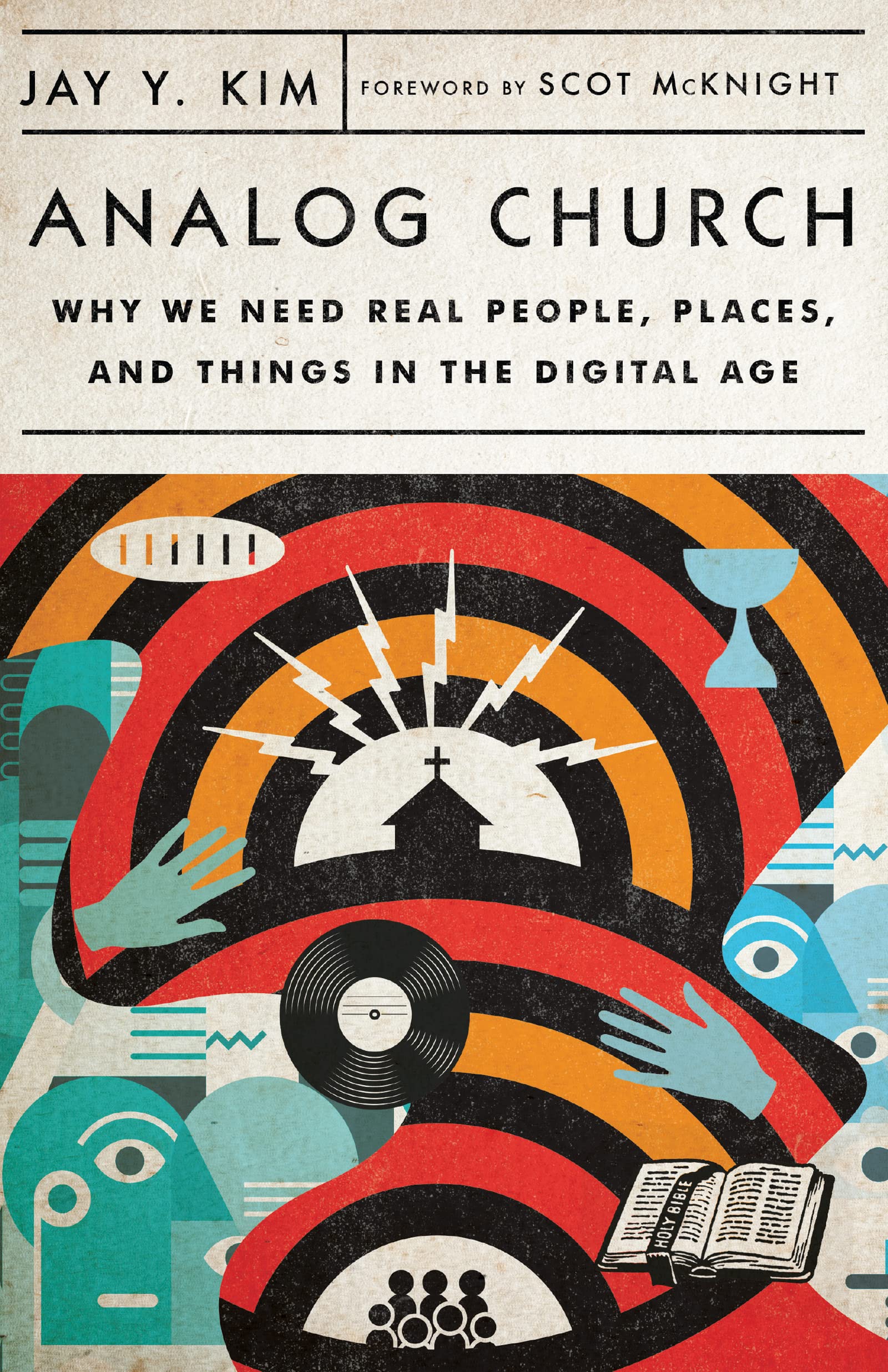
Analog Church: Why We Need Real People, Places, and Things in the Digital Age [Kim, Jay Y., McKnight, Scot, McKnight, Scot, Kim, Jay Y.] on desertcart.com. *FREE* shipping on qualifying offers. Analog Church: Why We Need Real People, Places, and Things in the Digital Age Review: Timely - Scott McKnight in the foreward writes: "There’s a theology behind what Jay Kim very helpfully calls Analog Church, and it’s the incarnation. God became one of us." There are three parts to this book, worship, community, and Scripture. Through out this work Jay Y. Kim establishes the need for the Church to be incarnational in all three areas. He points out that in our digital world the Church has frequently "adapted and acquiesced to the prevailing culture." In our rush to relevance we have have lost sight of the need to be steadfast and have unquestionably brought the technology of Silicon Valley into the Church without considering the consequences of such. Jay writes: "Our unchecked pursuit of relevance isn’t only affecting the way we gather to worship. It’s also changing our understanding of what it means to be a community. As more and more churches push headlong into online spaces, people are being asked not only to communicate but also to commune on digital platforms. The Bible, too, is being affected by the digital age, as we turn the grand narrative of Scripture into a series of easily digestible, bite-sized tidbits for personal encouragement and self-help– style motivation. We’re changing the church experience from an extended meal at a dining table into a truncated series of tweets, and we’re losing our aptitude for nuance, generosity, and engagement." The responsiblity of the Church is engage and witness and digital technology may assist us in that, but it cannot take the place of human contact. We as the Church have been most effective when has lived and presented the counter culture of the gospel message and when we point to transcedence. Christianity overtook the Roman Empire in what Jay Kim refers to as the Analog Church. In its transcendent message it was relevant and challenged the dominant culture. It is to this we must return as Christianity's message is relevant to the needs and longings of humanity. In the last chapter Jay Kim writes about the Meal at the center of history, ". . . Jesus ate with people who had no business eating with him. And in doing so, even before his final meal, he redefined what it means to be the people of God around himself. He made a way for everyone— Jews and Gentiles— to belong. This is why eating and drinking this meal still matters: because in doing so, we are eating and drinking our way back into an awareness of our place at God’s table. Slowly but surely, we recognize that we are feasting with family, dining among a people to whom we eternally belong. I don’t mean that this meal is some sort of golden ticket for salvation. But I also do not mean that it’s just an optional, helpful practice. It’s not. It’s an undeniable and irresistible invitation to all those who belong to the body of Christ." This is a book that needed to be written, and I highly recommend it.. My prayer is that it will read by many in the Church. Review: Must read for ministry leaders - I’m reading this book at home, during the Covid-19 Pandemic. Before today I would have said going to church online was a convenient way to stay connected when travel or work make Sunday mornings hard to get to. Now that online Church has been my only option for nearly a month I know it is Not. The. Same. But it was hard to put my finger on why...or put words to exactly what I was missing. This book gives language for that, and casts a vision for the best way we can all experience Church as it was meant to be. I love how this book is NOT about how to be relevant digitally- it’s about how the church can be relevant for people. I really appreciate how balanced and realistic this book is, it’s not saying “technology is bad” it’s all about thoughtfully considering what you’re actually trying to do and the best role technology could play. A must read for anyone considering a strategy for digital in their ministries OR making sense of what the church means to them. Highly recommend.


| Best Sellers Rank | #576,524 in Books ( See Top 100 in Books ) #289 in Social Aspects of Technology #670 in Ritual Religious Practices #1,491 in Christian Pastoral Resources (Books) |
| Customer Reviews | 4.6 4.6 out of 5 stars (218) |
| Dimensions | 5.5 x 0.7 x 8.5 inches |
| ISBN-10 | 083084158X |
| ISBN-13 | 978-0830841585 |
| Item Weight | 2.31 pounds |
| Language | English |
| Print length | 216 pages |
| Publication date | March 31, 2020 |
| Publisher | IVP |
D**N
Timely
Scott McKnight in the foreward writes: "There’s a theology behind what Jay Kim very helpfully calls Analog Church, and it’s the incarnation. God became one of us." There are three parts to this book, worship, community, and Scripture. Through out this work Jay Y. Kim establishes the need for the Church to be incarnational in all three areas. He points out that in our digital world the Church has frequently "adapted and acquiesced to the prevailing culture." In our rush to relevance we have have lost sight of the need to be steadfast and have unquestionably brought the technology of Silicon Valley into the Church without considering the consequences of such. Jay writes: "Our unchecked pursuit of relevance isn’t only affecting the way we gather to worship. It’s also changing our understanding of what it means to be a community. As more and more churches push headlong into online spaces, people are being asked not only to communicate but also to commune on digital platforms. The Bible, too, is being affected by the digital age, as we turn the grand narrative of Scripture into a series of easily digestible, bite-sized tidbits for personal encouragement and self-help– style motivation. We’re changing the church experience from an extended meal at a dining table into a truncated series of tweets, and we’re losing our aptitude for nuance, generosity, and engagement." The responsiblity of the Church is engage and witness and digital technology may assist us in that, but it cannot take the place of human contact. We as the Church have been most effective when has lived and presented the counter culture of the gospel message and when we point to transcedence. Christianity overtook the Roman Empire in what Jay Kim refers to as the Analog Church. In its transcendent message it was relevant and challenged the dominant culture. It is to this we must return as Christianity's message is relevant to the needs and longings of humanity. In the last chapter Jay Kim writes about the Meal at the center of history, ". . . Jesus ate with people who had no business eating with him. And in doing so, even before his final meal, he redefined what it means to be the people of God around himself. He made a way for everyone— Jews and Gentiles— to belong. This is why eating and drinking this meal still matters: because in doing so, we are eating and drinking our way back into an awareness of our place at God’s table. Slowly but surely, we recognize that we are feasting with family, dining among a people to whom we eternally belong. I don’t mean that this meal is some sort of golden ticket for salvation. But I also do not mean that it’s just an optional, helpful practice. It’s not. It’s an undeniable and irresistible invitation to all those who belong to the body of Christ." This is a book that needed to be written, and I highly recommend it.. My prayer is that it will read by many in the Church.
L**Y
Must read for ministry leaders
I’m reading this book at home, during the Covid-19 Pandemic. Before today I would have said going to church online was a convenient way to stay connected when travel or work make Sunday mornings hard to get to. Now that online Church has been my only option for nearly a month I know it is Not. The. Same. But it was hard to put my finger on why...or put words to exactly what I was missing. This book gives language for that, and casts a vision for the best way we can all experience Church as it was meant to be. I love how this book is NOT about how to be relevant digitally- it’s about how the church can be relevant for people. I really appreciate how balanced and realistic this book is, it’s not saying “technology is bad” it’s all about thoughtfully considering what you’re actually trying to do and the best role technology could play. A must read for anyone considering a strategy for digital in their ministries OR making sense of what the church means to them. Highly recommend.
K**1
Good thought provoker
It was hard to get into the book as the tone seemed pretty negative and seemed to be pointing lots of fingers. Tho that is the nature of this type of book, so if you can get over that and use it for reflection and processing its worth the read for sure. Has nice reflection questions as well.
K**S
Read it!
After leaving a cultish church, I am very hesitant to join a community again. I would much rather sit at home and try to watch a church service. I feel the isolation and loneliness deeply. I don't think I have fully healed, but this book helps me not give up on community. Its fundamental idea, as the title suggests, is that church only truly works in the presence of human beings and not from the distance of the digital. Christianity is an embodied religion, and the author urges us not to settle for the digital as a substitute for the real. I thoroughly enjoyed this book and hope everyone gets a chance to read it.
E**.
From Weakness to Health
This was probably the best book I read in 2020. I shared it with staff at our church, who in turn also said it was great. Mr. Kim speaks to the reader of many ways the American chuch is weak, and encourages us toward strength and health. This was well worth reading.
H**H
Yes, but...
I listened to this on audiobook (via Scribd so I probably won’t come up as a verified purchase). Honestly I could get behind 90% of what he said. But I couldn’t get behind his tone. And the author narrated the book, so he got to give his content the tone he intended. I really do agree with so much of what he said. But he’s not very gracious with churches that are trying to figure out the best way to use technology to engage the unchurched. No one has this figured out. It’s all new. He also attacks really odd things, like speed reading courses. There is a lot of research showing that, done right, speed reading can yield high comprehension rates. I don’t believe for a moment that the Bible should be speed read. It should be savored and pondered. We should meditate upon it. But why on earthy couldn’t I speed read a secular book in productivity? What’s wrong with short blogs that simply use language well (another medium he diminishes)? What makes lengthier writings more profound than shorter ones? Jesus told a number of very brief parables (See the parable of the mustard seed - should Jesus have been wordier?) In short, I think he has a lot of value to contribute to this conversation. I also think he takes a number of stands based on personal opinion - not based on biblical evidence.
M**R
Good and thoughtful
This is a timely book. As our congregation struggled with its digital foot print in the Covid-19 shut down, we also had to struggle with how much do we continue on the digital platform. This book really helped me to get my head around the digital and analog worship.
E**L
While this book is about analog versus digital church, it is more about reminding ourselves of the principles that must be at the root of our ecclesiology. This book gave me vocabulary to describe what I am feeling and thinking as we consider where the church may be headed on the other side of COVID-19.
A**N
This is written with both theological and cultural sensitivity. Every pastor and ministry leader should read this in our digital world, especially in anticipation of a post-Covid, "new normal" era!
Trustpilot
4 days ago
1 month ago