

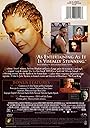
Titus
Product ID: 13816567
Details
- FormatColor Multiple
- GenreAction &
- LanguageEnglish
- Runtime2 hours and 42
Desertcart purchases this item on your behalf and handles shipping, customs, and support to Netherlands.
Titus is a noble Roman general whose spoils of war include Tamora, Queen of the Goths, and her three sons. But when Titus sacrifices his eldest to appease the gods, he sets in motion an escalating chain of savage reprisals that will ultimately consume them all. Review: Taymor Makes It Accessible - William Shakespeare's tragedy "Titus Andronicus" gets something of a Baz Luhrmann "Romeo & Juliet" style treatment from director Julie Taymor, in her visionary film adaptation of the play, "Titus," starring Anthony Hopkins and Jessica Lange. It's one of the more brutal and disturbing offerings from the bard, who seeks to expose the myriad chambers of darkness that can be found within the human psyche, which Taymor (who also wrote the screenplay) ferrets out and presents to optimum-- if often disconcerting-- effect. It's a tale of revenge and madness; of revenge born of grief, and madness born of sorrows layered upon sorrows that are simply beyond the endurance of mortal man, the attendant emotions of which Taymor captures in a tapestry of images plaited throughout this blood stirring drama, making it-- for better or worse (as this is one that's definitely going to "stay" with you awhile)-- an altogether unforgettable motion picture experience. A soldier for forty years, General Titus Andronicus (Hopkins) has commanded the Roman legions to countless victories on the field of battle, and along with his army is just returned home from their latest conquest. Once in Rome, Titus will oversee the ceremonial salute to the fallen and the burial of those who died in battle; then he will attend to his prisoners, the Queen of the Goths, Tamora (Lange) and her three sons. For Titus, life is in order and all is well; but though he doesn't realize it yet, all of that is about to change. Titus has four sons, but it is his only daughter, the beautiful Lavinia (Laura Fraser), who will play a leading role in the drama that is about to unfold, which begins with the untimely death of Caesar. Though it is but an opinion, when Titus is asked which of Caesar's son's he favors for succession, Saturninus (Alan Cumming) or Bassianus (James Frain), his choice holds sway, and subsequently triggers an irreversible chain of events which ultimately beget the final tragedy of the story. Before the end, however, Titus Andronicus will suffer the agonies of hell; but into that dark night, he will not go quietly. Within the first few minutes of a film, a good director will let you know what you're in for, and Taymor succeeds in doing so here. The riveting opening sequence, in which Titus and his soldiers march in hypnotic cadence into Rome, sets the style and tone for all that follows. Taymor's staging and choreography are brilliant; orchestrated to draw in the audience and hold them, and she does, in absolutely mesmerizing fashion. Set in ancient Rome, Taymor nevertheless refuses to be bound by the parameters of "era," going "out of the box" to draw upon and blend time periods in an effort to realize her personal vision and bring her imaginative presentation of the play to fruition. There are microphones, for example, in front of the Capitol; and in procession through the streets of Rome, chariots are preceded and/or followed by automobiles and motorcycles. All of which is played out against a rhythm of excitement that effectively impacts the drama, bringing it all so vibrantly to life. To find the true pulse of the story, Taymor evokes a sense of Olivier/Welles/Branagh and fuses it with a combination of Luhrmann and "West Side Story," which makes her film not only emotionally involving and compelling, but visually stunning as well. And though she draws upon the best of the best to make her film all that it can be, what you see on the screen it pure Taymor; the expression of a unique and inimitable artistic genius. As Titus, Anthony Hopkins gives a solid, if not his best, performance. His portrayal is thoroughly convincing (which goes without saying, of course, with Hopkins), but the usual pure and resonant timbre of his voice occasionally and quite noticeably falters, though his elocution remains a study in perfection. An actor who can play any role, Hopkins may always be remembered as Hannibal in "Silence of the Lambs," but without question, he was born to play Shakespeare. One would think, in fact, that his resume would be filled with cinematic adaptations of such; curiously, however, it is not. And while his Titus may be comparatively sub-standard "Hopkins," in the end, he manages to make the role his own with yet another memorable performance. Initially, casting Jessica Lange as Tamora seems an odd choice, inasmuch as this is her first foray into the Shakespearian arena. In the final analysis, however, it is very much in keeping with the less than conventional approach Taymor employs here, and Lange comports herself well with her portrayal of the malevolent Queen of the Goths. She lends a definitive physical countenance to the role, and in her eyes you can discern the shadows that plague her soul and the fire that sparks her quest for revenge. It's a performance that goes far in demonstrating that Lange is, indeed, a consummate actor, with a range that substantiates her stature as an Oscar winner. Also turning in performances of note are Cumming, who is deliciously loathsome as Saturninus; Fraser, whose Lavinia is endearingly fragile and vulnerable; and Harry J. Lennix as the manipulative, despicable Moor, Aaron. The supporting cast includes Colm Feore (Marcus Andronicus), Angus MacFadyen (Lucius), Osheen Jones (Young Lucius), Jonathan Rhys-Meyers (Chiron), Matthew Rhys (Demetrius), Kenny Doughty (Quintus), Blake Ritson (Mutius), Colin Wells (Martius), Raz Degan (Alarbus), Ettore Geri (Priest) and Constantine Gregory (Aemelius). There's no escaping the fact that the story of "Titus" is gruesome, to say the least. Many will find it offensive, even insufferable, especially the ending, which is a sordid business no matter how you slice it. But the vigor and vision of Taymor's production makes it engrossing, stimulating entertainment that is entirely accessible and will appeal to an audience that transcends hard core Shakespeare aficionados. If not madness, there is definitely magic in her method, which is more than evident on the screen. And that's the magic of the movies. Review: Amazing - I actually saw this movie 4 times when it was in theaters in 1999. Some have made comments that all the good Shakespeare roles were taken and that Anthony Hopkins got stuck with Titus. I have to question if they actually understood the movie. Julie Taymor, perhaps one of the least appreciated directors of our time, picked Shakespeare's "Titus Andronicus" was one of The Bard's first works to be published around 1594 and may be his earliest tragedy. The story revolves around the fall of a Roman general (Titus) and the series of events set in motion by his enemy Tamora, The Queen of the Goths (played to perfection by Jessica Lang) and her sons Chiron and Demetrius (Johnathan Rhys-Myers and Matthew Rhys respectively.) Aided by Aaron the Moor (Harry Lennix), one of Tamora's lovers and the newly crowned Emperor of Rome, Saturninus (Alan Cumming), Tamora extracts her revenge on Titus in a brutal and vile manner. There are decapitations, drug use, rape, cannibalism and nudity throughout the movie so it isn't for everyone. The play itself was labeled as Shakespeare's gruesome work. It is a difficult film to watch at times because of the pure hate the brews within some of the characters and the depravity of their souls. A stellar cast that includes Colm Feore ("Chicago," "24" and 2011's "Thor") and Angus Macfadyen ("Alias," "Saw 3,4 and 5" and "Californiacation,") "Titus" is a definite must see for movies that march to a different beat. Director Julie Taymor (perhaps one of the least appreciated directors of our time) first came to fame with her elaborate and creative staging the "The Lion King" on Broadway which made history when Taymor won the Tony for Best Director of a Musical, something a woman had not accomplished prior. She is currently working with U2's Bono and The Edge on the stage musical "Spider-Man:Turn off the Dark." She has also directed the films "Frida" with Salma Hayek and "Across the Universe," a musical set to songs written by The Beatles. The next film up for Taymor is another of Shakespeare's works, "The Tempest" which stars Alfred Molina, Alan Cumming, Russell Brand and Helen Mirren. "Titus" is good, very good. But like I said before, it's not for everyone. Just be patient with the film. Like Baz Luhrmann's 1996 film "Romeo + Juilet," "Titus" is Shakespeare like you've never seen before.
| Contributor | Angus Macfadyen, Anthony Hopkins, Blake Ritson, Colin Wells, Dario D'Ambrosi, Harry Lennix, Jessica Lange, Jonathan Rhys Meyers, Julie Taymor, Kenny Doughty, Matthew Rhys, Osheen Jones, Raz Degan, William Shakespeare Contributor Angus Macfadyen, Anthony Hopkins, Blake Ritson, Colin Wells, Dario D'Ambrosi, Harry Lennix, Jessica Lange, Jonathan Rhys Meyers, Julie Taymor, Kenny Doughty, Matthew Rhys, Osheen Jones, Raz Degan, William Shakespeare See more |
| Customer Reviews | 4.6 out of 5 stars 681 Reviews |
| Format | Closed-captioned, Color, Multiple Formats, NTSC, Special Edition |
| Genre | Action & Adventure |
| Language | English |
| Runtime | 2 hours and 42 minutes |
R**R
Taymor Makes It Accessible
William Shakespeare's tragedy "Titus Andronicus" gets something of a Baz Luhrmann "Romeo & Juliet" style treatment from director Julie Taymor, in her visionary film adaptation of the play, "Titus," starring Anthony Hopkins and Jessica Lange. It's one of the more brutal and disturbing offerings from the bard, who seeks to expose the myriad chambers of darkness that can be found within the human psyche, which Taymor (who also wrote the screenplay) ferrets out and presents to optimum-- if often disconcerting-- effect. It's a tale of revenge and madness; of revenge born of grief, and madness born of sorrows layered upon sorrows that are simply beyond the endurance of mortal man, the attendant emotions of which Taymor captures in a tapestry of images plaited throughout this blood stirring drama, making it-- for better or worse (as this is one that's definitely going to "stay" with you awhile)-- an altogether unforgettable motion picture experience. A soldier for forty years, General Titus Andronicus (Hopkins) has commanded the Roman legions to countless victories on the field of battle, and along with his army is just returned home from their latest conquest. Once in Rome, Titus will oversee the ceremonial salute to the fallen and the burial of those who died in battle; then he will attend to his prisoners, the Queen of the Goths, Tamora (Lange) and her three sons. For Titus, life is in order and all is well; but though he doesn't realize it yet, all of that is about to change. Titus has four sons, but it is his only daughter, the beautiful Lavinia (Laura Fraser), who will play a leading role in the drama that is about to unfold, which begins with the untimely death of Caesar. Though it is but an opinion, when Titus is asked which of Caesar's son's he favors for succession, Saturninus (Alan Cumming) or Bassianus (James Frain), his choice holds sway, and subsequently triggers an irreversible chain of events which ultimately beget the final tragedy of the story. Before the end, however, Titus Andronicus will suffer the agonies of hell; but into that dark night, he will not go quietly. Within the first few minutes of a film, a good director will let you know what you're in for, and Taymor succeeds in doing so here. The riveting opening sequence, in which Titus and his soldiers march in hypnotic cadence into Rome, sets the style and tone for all that follows. Taymor's staging and choreography are brilliant; orchestrated to draw in the audience and hold them, and she does, in absolutely mesmerizing fashion. Set in ancient Rome, Taymor nevertheless refuses to be bound by the parameters of "era," going "out of the box" to draw upon and blend time periods in an effort to realize her personal vision and bring her imaginative presentation of the play to fruition. There are microphones, for example, in front of the Capitol; and in procession through the streets of Rome, chariots are preceded and/or followed by automobiles and motorcycles. All of which is played out against a rhythm of excitement that effectively impacts the drama, bringing it all so vibrantly to life. To find the true pulse of the story, Taymor evokes a sense of Olivier/Welles/Branagh and fuses it with a combination of Luhrmann and "West Side Story," which makes her film not only emotionally involving and compelling, but visually stunning as well. And though she draws upon the best of the best to make her film all that it can be, what you see on the screen it pure Taymor; the expression of a unique and inimitable artistic genius. As Titus, Anthony Hopkins gives a solid, if not his best, performance. His portrayal is thoroughly convincing (which goes without saying, of course, with Hopkins), but the usual pure and resonant timbre of his voice occasionally and quite noticeably falters, though his elocution remains a study in perfection. An actor who can play any role, Hopkins may always be remembered as Hannibal in "Silence of the Lambs," but without question, he was born to play Shakespeare. One would think, in fact, that his resume would be filled with cinematic adaptations of such; curiously, however, it is not. And while his Titus may be comparatively sub-standard "Hopkins," in the end, he manages to make the role his own with yet another memorable performance. Initially, casting Jessica Lange as Tamora seems an odd choice, inasmuch as this is her first foray into the Shakespearian arena. In the final analysis, however, it is very much in keeping with the less than conventional approach Taymor employs here, and Lange comports herself well with her portrayal of the malevolent Queen of the Goths. She lends a definitive physical countenance to the role, and in her eyes you can discern the shadows that plague her soul and the fire that sparks her quest for revenge. It's a performance that goes far in demonstrating that Lange is, indeed, a consummate actor, with a range that substantiates her stature as an Oscar winner. Also turning in performances of note are Cumming, who is deliciously loathsome as Saturninus; Fraser, whose Lavinia is endearingly fragile and vulnerable; and Harry J. Lennix as the manipulative, despicable Moor, Aaron. The supporting cast includes Colm Feore (Marcus Andronicus), Angus MacFadyen (Lucius), Osheen Jones (Young Lucius), Jonathan Rhys-Meyers (Chiron), Matthew Rhys (Demetrius), Kenny Doughty (Quintus), Blake Ritson (Mutius), Colin Wells (Martius), Raz Degan (Alarbus), Ettore Geri (Priest) and Constantine Gregory (Aemelius). There's no escaping the fact that the story of "Titus" is gruesome, to say the least. Many will find it offensive, even insufferable, especially the ending, which is a sordid business no matter how you slice it. But the vigor and vision of Taymor's production makes it engrossing, stimulating entertainment that is entirely accessible and will appeal to an audience that transcends hard core Shakespeare aficionados. If not madness, there is definitely magic in her method, which is more than evident on the screen. And that's the magic of the movies.
N**.
Amazing
I actually saw this movie 4 times when it was in theaters in 1999. Some have made comments that all the good Shakespeare roles were taken and that Anthony Hopkins got stuck with Titus. I have to question if they actually understood the movie. Julie Taymor, perhaps one of the least appreciated directors of our time, picked Shakespeare's "Titus Andronicus" was one of The Bard's first works to be published around 1594 and may be his earliest tragedy. The story revolves around the fall of a Roman general (Titus) and the series of events set in motion by his enemy Tamora, The Queen of the Goths (played to perfection by Jessica Lang) and her sons Chiron and Demetrius (Johnathan Rhys-Myers and Matthew Rhys respectively.) Aided by Aaron the Moor (Harry Lennix), one of Tamora's lovers and the newly crowned Emperor of Rome, Saturninus (Alan Cumming), Tamora extracts her revenge on Titus in a brutal and vile manner. There are decapitations, drug use, rape, cannibalism and nudity throughout the movie so it isn't for everyone. The play itself was labeled as Shakespeare's gruesome work. It is a difficult film to watch at times because of the pure hate the brews within some of the characters and the depravity of their souls. A stellar cast that includes Colm Feore ("Chicago," "24" and 2011's "Thor") and Angus Macfadyen ("Alias," "Saw 3,4 and 5" and "Californiacation,") "Titus" is a definite must see for movies that march to a different beat. Director Julie Taymor (perhaps one of the least appreciated directors of our time) first came to fame with her elaborate and creative staging the "The Lion King" on Broadway which made history when Taymor won the Tony for Best Director of a Musical, something a woman had not accomplished prior. She is currently working with U2's Bono and The Edge on the stage musical "Spider-Man:Turn off the Dark." She has also directed the films "Frida" with Salma Hayek and "Across the Universe," a musical set to songs written by The Beatles. The next film up for Taymor is another of Shakespeare's works, "The Tempest" which stars Alfred Molina, Alan Cumming, Russell Brand and Helen Mirren. "Titus" is good, very good. But like I said before, it's not for everyone. Just be patient with the film. Like Baz Luhrmann's 1996 film "Romeo + Juilet," "Titus" is Shakespeare like you've never seen before.
C**S
Over the top production of an over the top drama
The critics have historically rated Titus Andronicus as a weak early work of the great Shakespeare. Yet Julie Taymor's film interpretation is startling in its presentation, challenging the viewer with visually shocking scenes and superb acting so as to allow the viewer to reconsider this work. Even though I found the play to be blood thirsty and cruel with rash behaviors contrasted against devious and evil plots, the quality of the acting propels the film forward and the unique set designs and costumes continually keep the eye amused even when the plot becomes preposterous. The storyline is centered around the mindless violence that humans inflict upon other humans, the desire for revenge which can take on a drive like thirst or hunger, the nature of sarcastic cruelty that objectifies another human being and thus makes it permissible to torture them. It is about power, the consequences for rejecting power, and the consequences of confronting power. Titus is a man who makes many mistakes. He is superbly played by Anthony Hopkins. He makes a series of mistakes that set the world against him. He selects to make a human sacrifice of the eldest son of the Goth Queen Tamora, setting her on a path of vengeance that does not end. He kills one of his own sons for disobeying him when the sons were making decisions based on genuine regard for the wellbeing of their sister whereas Titus had begun to make decisions in the rare air of honorable loyalty to an Emperor who did not deserve the crown. He is offered the throne by the Senate and yet he gives it to the decadent eldest son of the emperor rather than to his upright younger brother and beloved of Titus' daughter Lavinia. He makes a series of terrible judgments and brings terrible ruin upon his family and himself. The emotions of Titus are not predictable or stereotypical. For he laughs at the death of his sons as he contemplates their severed heads. He is cold matter-of-fact when he encounters the vile tortures inflicted on his beloved daughter. He rashly trades one of his hands in a bad deal that he foolishly and emotionally falls into. But the redeeming aspect of the story is that finally Titus gets smart. He finally becomes cunning and acts like he has gone insane. He finally learns to control and hide his emotions and his revenge becomes as sweet and terrible upon Tamora as her cruelty had been to him. In his final scenes, Hopkins gleefully dances in his revenge as he watches Tamora eat a meat pie made from her two younger sons. And then we see the coldest of calculations as he breaks the neck of his poor tortured daughter whom he knows he can not longer protect. Jessica Lange is wonderful as Tamora, the Goth Queen, who rises from a poor and dirty political prisoner of Titus, to the wife of the Emperor and thus in a position to carefully plot and execute revenge on Titus and his family for the death of her elder son. Tamora is a wonderful character with an outstanding wide range of emotions displayed. She is the cunning advisor to the foolish young Emperor and seductress to the handsome black slave, Aaron the Moor. I found some of her strongest scenes to be when she begs for the life of her eldest son and when she must deny Lavinia assistance as Tamora's two younger sons rape Lavinia, cut out her tongue, and cut off her hands. Tamora's handsome black lover, Aaron the Moor, is a fascinating character for he is a slave taken from his people, and having a brilliant and wicked mind, he plots great evil deeds and pits the two warring families together like a master chess player. He finds most of the people in either family to be highly suggestible fools. Harry Lennix is a fantastic actor in a chilling role. I understand that this may be the first black character in English drama. How wonderful that he is a character of shrewd cunning cruelty. The scene where he tricks Titus into cutting off his hand, the scene where he kills the nurse who brings him his illegitimate newborn son, and the scene where he negotiates for his son's life by confessing all his deeds are all three totally superb chilling acting. All the cast were powerful. Laura Fraser is fragile and beautiful as Lavinia. Michael Gross was outstanding as Marcus, the brother of Titus. Angus McFadyen is masterful and believable as Lucius, the elder son of Titus. Jonathan Rhys Meyers and Matthew Rhys play the parts of the queen's two younger sons, totally wild and decadent and cruel. Alan Cumming's was good as he Emperor Saturnalis, but he screams many of his lines. This tale of dismemberment, torture, cannibalism, and revenge is blazing hot in this interpretation.
C**Z
Ambitious Shakespeare Adaptation
● DVD looks & sounds great ● ▪︎ All the disc specifications including art, extras and special features are exactly as listed.
L**T
Awesome movie !!!!
I always prefer adaptions of Shakespeare's works to be as close to there time period's as possible. It is never a easy task to adapt Shakespeare to T.V. or the Big Screen, because of time constraints generally half of his words must be edited & this must be compensated with great cinematography, actors & musical scores! While I don't like the alternate universe this film is set in , it is visually striking & the musical score accentuates the mood very well. The acting is top notch by all involved! Julie Taymor did a great job directing this but even with the changing of Prospero to a woman I liked where she took "The Tempest" better than "Titus". This is because of my personal quirk of wanting the works of Shakespeare to be as close to the time frame as possible & if not in the same time period at least the same universe. I think she would have scored a much better adaptation using the wild music & beautiful color palate but leaving the story in ancient Greece. I do find it interesting that she directed one of Shakespeare's first & last story's. This is the only movie adaptation I could find of Titus & it is a very dynamic adaptation & for the price I got it for a happy addition to my William Shakespeare movie adaptations. I am a huge William Shakespeare fan & have been since I was 12. When I was 12 I loved his rhythm & word play at 50 I am falling in love all over again appreciating how masterfully he is able to capture the full range of human emotions! I also am one of those that believe "William Shakespeare" was a pen name used by the 17th Earl of Oxford Edward De Vere.
C**E
Stunning, devastating.
I viewed this film before reading Titus Andronicus by Shakespeare, and I'm glad I did. The cast, setting and art direction bring the play to life in a manner that I think is completely new: mixing modern and ancient elements in sets and staging, this viewer was immediately engaged with the juxtaposition of ancient culture and modern sensibilities. Without resorting to spoilers, I encourage viewers to see the film as it is, and appreciate first the story line, and then review it to analyze the ways it relates to Greek tragedy, politics, and the unintended consequences of a collision of virtue and vice. I think this is one of Anthony Hopkins' very best performances -- without any intention of downplaying the rest of the cast who - equally - shine. This is not a film for children; parents take warning; not for sexuality, but the depravity of some of the characters. If your teen is studying Titus in the course of high school literature, perhaps preview, and if you decide they have the maturity to understand it, watch WITH them and discuss it after. Then ---- go shoot some hoops together.
A**S
An under appreciated film gets a great DVD
Julie Taymor's interpretation of the play Titus was not what I was expecting. From the opening all the way to the ending this film never ceased to shock and amaze me. It took several viewings to take it all in. This tragic story follows the descent of a Roman General (Titus) at the deceitfulness of the Queen of the Goths (Tamora) and Aaron the Moor. The performances in this are quite exceptional. Anthony Hopkins is extraordinarily powerful in his role as Titus. Jessica Lange shocked me at how well she can perform Shakespeare. And Harry Lennix stole every seen he was in as the ruthless and truly evil Aaron the Moor. This film however is not for everyone, so buy with caution. The DVD itself is quite impressive. The video is simply put very good with only a few artifacts here and there. The sound is equally impressive with Elliot Goldenthal's impressive score coming through all channels. The special features are quite extensive also. There are two audio commentaries one with Julie Taymor and the other with Anthony Hopkins and Harry Lennix. Also included is an Isolated Score with comments by the composer. Worthwhile mention must go to Fox for including the two extensive documentaries. The Q & A session with Julie Taymor at the university was fascinating and gave a real insight into filmmaking. Also the "Making Of" Documentary provided an interesting look into how the film was made (especially interesting was the rehearsal process). Fox has given the DVD public a great 2 Disc Set. The movie deserves to be experienced by as many people as possible as it a gripping adaptation of one of Shakespeare's most controversial plays.
C**S
Well-done adaptation of raw, terrifying play
I began watching this DVD with dread, because I knew what was coming in the form of violence and brutality between the players in Titus Andronicus. The movie adaptation is very good. It stylishly and artfully brings to the screen the evil, violence, vanity and sorrows of humanity illustrated in Shakespeare's play. The acting is absolutely superb on all counts...I could not imagine it being better. The creative theatrics are interesting and soften the brutality of the play. The meshing of different eras helps to span the gap of time from the Roman empire to today and make this relevant to our time. This is Shakespeare's raw tragedy, unrefined by the divine eloquence of Hamlet or Macbeth. Even Richard III cannot measure up to the corrupting evil nature of Aaron and the Goths. Still, the verses are profound and measured to stir the heart of listeners. This is not for the squeamish and I would recommend reading the play prior to watching the movie so you know somewhat what to expect in action and plot. Craig Stephans, author of Shakespeare On Spirituality: Life-Changing Wisdom from Shakespeare's Plays
C**N
uno dei film più belli degli ultimi anni
non sono affatto sorpreso che questo film non abbia avuto il meritato risalto nella cinematografia shakespeariana degli utlmi decenni, stante il conformismo ignorante della critica innanzitutto statunitense. Nella recitazione siamo ai livelli del Giulio Cesare del Makiewicz del 53, e come trasposizione postmoderna rasentiamo il capolavoro visionario. Un film da avere assolutamente in videoteca.
E**R
Extraordinaire
Création esthétique et psychologique troublante, Shakespeare au plus haut et au plus sombre. La mise en scène heurtera peut-être des spectateurs trop habitués à des formats dirigés, mais rien de foufou non plus, c'est simplement créatif, un peu dans la même veine qu'Edward aux mains d'argents. Anthony Hopkins est dans son éléments, les autres acteurs ne sont pas en reste et j'ai été psychologiquement perturbé les 3 jours qui suivaient. C'est aussi la marque d'une oeuvre artistique réussie : vous toucher, que vous le vouliez ou non. Vous êtes prévenus...
G**L
Wow!
Don't remember this if and when it came to theatres but this was an amazing movie! I love Shakespeare and this was one of the best interpretations of any of his plays, I have ever seen . The scenery, costumes, and music are a marvelous dance of time periods, quite surprising, but well suited to the action. Anthony Hopkins and Jessica Lang give outstanding performances as do all the other actors. The bonus features and interviews with the director are just as facinating. I only takes a little while to get into the swing of Shakespeare's English and Julie Taymor does an exceptional job of helping the audience understand. This timeless story of revenge and it's consequences has us actually cheering for Titus even as he turns barbaric. I would recommend this to all. Even if you are not a big fan of Shakespeare, this may make one of you.
W**.
Brilliant!
A truly wonderful production that leaves the awful “recent” I’ll judged RSC version standing in the dark. The brilliant actors and intelligent director elucidate a difficult play and show both its true quality and contemporary relevance. Highly recommended.
S**K
fesselnde, blutrünstige Fehde - Guten Appetit
Ich habe 5 Sterne gewählt, weil ich mich sehr unterhalten gefühlt habe, von einem Intrigenspektakel, dass voller Phantasie ist. Es hat mir gefallen: Die Blutrünstigkeit legt die menschlichen Schwächen sehr schön offen, die barbarischen Szenen sind kunstvoll inszeniert, die Schauspieler überzeugen in den allermeisten Szenen, der Film hat vieles von einem Erwachsenen Märchen, die Protagonisten sind alle sehr unterhaltsam eiskalt und skrupellos. Insgesamt eine professionell in Szene gesetzte Gewaltorgie. Es hat glaube ich nicht viel gefehlt für eine FSK18 Einstufung. Was mir nicht gefallen hat: Ich fand Jessica Lange in der Bankett Szene mittelmäßig. Ich hätte aus dem Stoff eine FSK18 Sache gemacht, um kompromissloser die Geschichte zu erzählen. Ich empfehle den Film jedem, der eine phantasievolle, faszinierende, teilweise erheiternde Gewaltorgie einer Fehde sehen will und dabei intelligente Dialoge nicht scheut.
Trustpilot
3 weeks ago
1 month ago