Some deliveries may take a little longer than usual due to regional shipping conditions.

DOWNLOAD DE APP


Klantenservice
Copyright © 2025 Desertcart Holdings Limited
DOWNLOAD DE APP
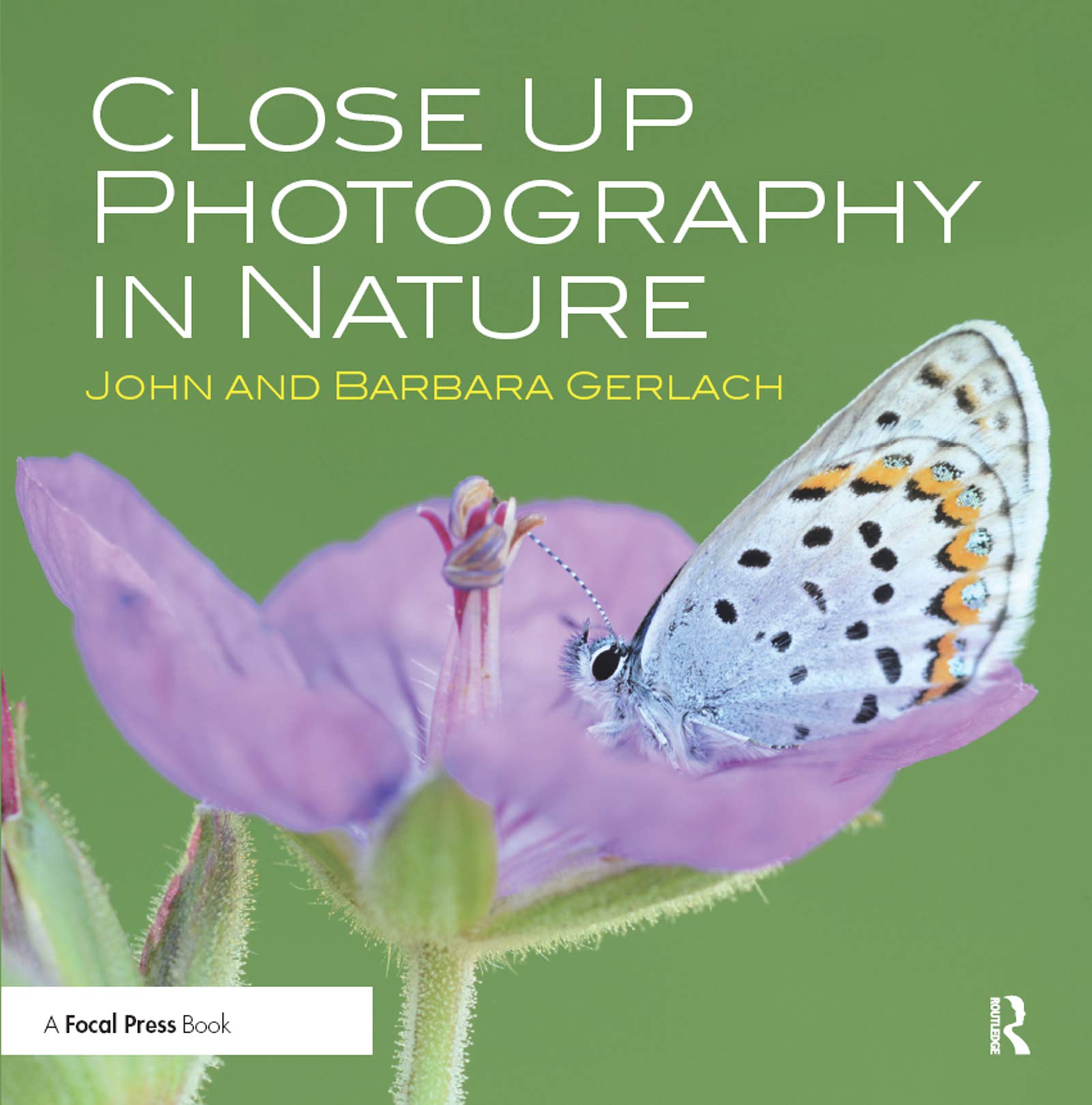
desertcart.com: Close Up Photography in Nature: 9780415835893: Gerlach, John and Barbara: Books Review: Best book ever on close up and macro photography techniques. - The Gerlachs' pictures and explanations are very clear and concise. This is one of the best written books on photography I have read. In terms of a beginning close up and macro photographer, I doubt you could find a better book with explicit recommendations and great recommendations regarding technique. This would be an excellent text in a photo course in closeup photography or a supplementary book for a general class in photography. (I used to be in charge of textbook selection as Associate Superintendent of an urban school district.) Their photo examples include all the camera data. This is rare in most photo books. One of the many instructional positives of their book is that it includes photo examples (always with data) to illustrate differences in settings for the same subject. In these photos you can see the differences between possibly acceptable and wonderful pictures. It appears that all of the pictures are taken by John and Barbara. There is a mountain of information in the pictures. In other words, the pictures amplify the text. The chapters often reinforce learning in previous chapters. This is a great way to learn and maintain the information. The first chapter, the shortest chapter, deals with equipment. The specific camera equipment they talk about using is Canon and Nikon (Barbara/Nikon and John/Canon). Though they use high end full frame cameras, it is refreshing to see they do not put down crop cameras and even say for most of us they will work fine.. Some of their recommendations are rarely seen in other photo books. For example, one should really use an L bracket and a Plamp (clamp-like device to steady plants from wind movement) . The chapters on exposure and flash provide some of the best information and examples I have seen on use of the histogram in taking pictures. You will understand histograms and how useful they are in taking any pictures, let alone close up pictures. This book is a classroom in a book and you get the impression the teacher is with you as you read the paragraphs. This book has an excellent index. It will be a book you will want to keep and recommend to others. If it wasn't for ethical and legal problems, I could imagine photo instructors plagiarizing this book and making money conducting classes and/or workshops solely using Gerlachs' material. In my opinion, it is that outstanding. This is based on my experience reviewing and selecting textbooks for a school district and having taught photography for one year in a high school. Terry Sandlin Review: Excellent Intro - I found the book very useful in identifying the concepts and techniques which make for good macro and close-up photography. It opened my eyes to the use of light, ambient, reflected, diffused and flashed. They describe the main ways to use light. It identifies useful equipment including cheaper alternatives if you can’t afford huge lenses. I.e., you will need a tripod much of the time. It covers exposure strategies to make better photos and is aimed at those who shoot outdoors, not in studios. When technical terms are used, they are defined, but the author has made an effort to keep the text flowing and readable. And I liked the way he clarified terms such as “flash” and “speedlight”. A few problems: many of the photos in the book are not themselves of excellent quality and seem to have also lost a lot in the reproduction process. Too much reliance has been placed on textual description: some diagrams would have made a nice break in the text to illustrate certain concepts. I would have also appreciated less space on the page given to chatty asides and much more given to breaking techniques down into step-by-step lists, separated graphically by spacing and indentation. Final gripe: the index is in such a small, faint font as to be nearly illegible. Nonetheless, this is an excellent intro to the subject. If possible, read it before you buy a lot of expensive equipment so you have a better idea what you need. I liked the chapters on “Cameras and Lenses” and “What’s in Our Bags”, which list and discuss their equipment choices including accessories. There are many, many “product placements” for a certain brands throughout the book, but I didn’t much mind. If you own or are about to acquire a camera with good manual controls, this book is for you. Won’t work for point-and-shoot cameras. I watched many YouTube vids on this subject, before buying this book, but learned much, much more from this book.
| Best Sellers Rank | #687,729 in Books ( See Top 100 in Books ) #464 in Plant & Animal Photography #497 in Photography Reference (Books) #571 in Digital Photography (Books) |
| Customer Reviews | 4.7 4.7 out of 5 stars (122) |
| Dimensions | 8.75 x 0.75 x 8.75 inches |
| Edition | 1st |
| ISBN-10 | 0415835895 |
| ISBN-13 | 978-0415835893 |
| Item Weight | 2.31 pounds |
| Language | English |
| Print length | 214 pages |
| Publication date | September 23, 2014 |
| Publisher | Routledge |
A**R
Best book ever on close up and macro photography techniques.
The Gerlachs' pictures and explanations are very clear and concise. This is one of the best written books on photography I have read. In terms of a beginning close up and macro photographer, I doubt you could find a better book with explicit recommendations and great recommendations regarding technique. This would be an excellent text in a photo course in closeup photography or a supplementary book for a general class in photography. (I used to be in charge of textbook selection as Associate Superintendent of an urban school district.) Their photo examples include all the camera data. This is rare in most photo books. One of the many instructional positives of their book is that it includes photo examples (always with data) to illustrate differences in settings for the same subject. In these photos you can see the differences between possibly acceptable and wonderful pictures. It appears that all of the pictures are taken by John and Barbara. There is a mountain of information in the pictures. In other words, the pictures amplify the text. The chapters often reinforce learning in previous chapters. This is a great way to learn and maintain the information. The first chapter, the shortest chapter, deals with equipment. The specific camera equipment they talk about using is Canon and Nikon (Barbara/Nikon and John/Canon). Though they use high end full frame cameras, it is refreshing to see they do not put down crop cameras and even say for most of us they will work fine.. Some of their recommendations are rarely seen in other photo books. For example, one should really use an L bracket and a Plamp (clamp-like device to steady plants from wind movement) . The chapters on exposure and flash provide some of the best information and examples I have seen on use of the histogram in taking pictures. You will understand histograms and how useful they are in taking any pictures, let alone close up pictures. This book is a classroom in a book and you get the impression the teacher is with you as you read the paragraphs. This book has an excellent index. It will be a book you will want to keep and recommend to others. If it wasn't for ethical and legal problems, I could imagine photo instructors plagiarizing this book and making money conducting classes and/or workshops solely using Gerlachs' material. In my opinion, it is that outstanding. This is based on my experience reviewing and selecting textbooks for a school district and having taught photography for one year in a high school. Terry Sandlin
D**.
Excellent Intro
I found the book very useful in identifying the concepts and techniques which make for good macro and close-up photography. It opened my eyes to the use of light, ambient, reflected, diffused and flashed. They describe the main ways to use light. It identifies useful equipment including cheaper alternatives if you can’t afford huge lenses. I.e., you will need a tripod much of the time. It covers exposure strategies to make better photos and is aimed at those who shoot outdoors, not in studios. When technical terms are used, they are defined, but the author has made an effort to keep the text flowing and readable. And I liked the way he clarified terms such as “flash” and “speedlight”. A few problems: many of the photos in the book are not themselves of excellent quality and seem to have also lost a lot in the reproduction process. Too much reliance has been placed on textual description: some diagrams would have made a nice break in the text to illustrate certain concepts. I would have also appreciated less space on the page given to chatty asides and much more given to breaking techniques down into step-by-step lists, separated graphically by spacing and indentation. Final gripe: the index is in such a small, faint font as to be nearly illegible. Nonetheless, this is an excellent intro to the subject. If possible, read it before you buy a lot of expensive equipment so you have a better idea what you need. I liked the chapters on “Cameras and Lenses” and “What’s in Our Bags”, which list and discuss their equipment choices including accessories. There are many, many “product placements” for a certain brands throughout the book, but I didn’t much mind. If you own or are about to acquire a camera with good manual controls, this book is for you. Won’t work for point-and-shoot cameras. I watched many YouTube vids on this subject, before buying this book, but learned much, much more from this book.
R**E
Easy read
Just got started in macro photography and this book gives you a better understanding of equipment, lighting and how to set up for different types of subjects.
J**Y
Superb by great teachers!
Buy this one! If you only have one close up photography book, get this one. All skill levels of photographers will find many, many useful tips and instructions. You will want to read and reread this book many times. It is that good! Instead of some books wishy-washy _ "You could do this, or you could do that," or "Watch me. This is how you do it." like some authors, the Gerlachs TEACH, take a stand, like "Do it this way for good results, based upon our experience.". Great tips on everything from how to set up you camera, to all the variations of how to use flash effectively - AND they take time to explain WHY this or that technique works better than some other technique. There are also lots of useful tips about equipment, too. As I said, they are teachers - Tell, Show, invite to Do, and Review before moving on to the next subject. Just excellent!. Overall, I found this to be one of the best and most useful photography books that I have yet found. I highly recommend it. It should be on every photographer's bookshelf.
D**R
Beautiful and Useful
John and Barbara Gerlach's latest book is as beautiful as it is useful - worth owning just for the images, but immensely valuable as it leads beginning and experienced photographers into the world of close-up photography. As a relatively inexperienced photographer, I was especially grateful for the suggestions about equipment and how to use it. I also appreciate how what could be technically overwhelming is made approachable and clear to the non-techie. I gave the book to a bird-photographer friend, and after a couple of days he is shopping for his first macro lens.
J**H
I am delighted with this book. It is a comfortable size and weight to curl up with and browse through. The pages lie flat when you open the book, and it stays open. Inside , there is a wealth of information for the beginning and intermediate photographer. As a person fairly comfortable with close-up work, I still found a lot here to interest and challenge me. Lots of information on using RGB histograms. I am used to black and white histograms, but have never explored or understood the use of RGB ones. Included in this book is a chapter on using flash techniques while outdoors. Focus stacking techniques are provided in detail and several software programs are recommended for the reader to choose from. The authors discuss equipment options such as focusing rails, plamps, reflectors and diffusers, as well as the pros and cons of different focal lengths of various macro lenses. In addition to all of this there is a lengthy chapter on techniques for photographing dragonflies and butterflies . So much information to absorb ! I love this book, and would recommend it to anyone who is enthused about close-up and macro photography.
U**I
I found it very useful. (I use a colour tablet to read all my books) These colour photos might not look as good on a normal kindle reader.
M**M
Fantastico libro, scritto con il cuore. Ottimi spunti per chi ama la macro fotografia della natura sia sul campo che in studio. Appassiona
M**N
I have done a lot of macro photography in the last ten years. Occasionally I search for a book that might give me new insight or better ideas or simply help with new techniques. I brought this small book on that idea and started to read cover to cover. Within a few pages I had ordered extras, and found ways of using flash with insects that had (sadly) never occurred to me. The book is also written in a down to earth humours way that gets across new ideas really well. Very impressed with this book. If you are doing macro then go for it, if you learn just one new idea it will have paid for itself.
M**H
I read the reviews before I purchased this book and they are correct. This is an excellent book for the nature photographer wanting to learn about macro techniques. Written by a husband & wife pair of professional photographers, this book is full of solid information on how to do plant and wildlife macro well. Good advice covering photographic technique and advising on good quality practical equipment. This book does indeed deserve its 5 star rating.
Trustpilot
1 week geleden
3 dagen geleden