
DOWNLOAD DE APP


Klantenservice
Copyright © 2025 Desertcart Holdings Limited
DOWNLOAD DE APP

🌐 Power your outdoor Wi-Fi like a pro—coverage that commands attention!
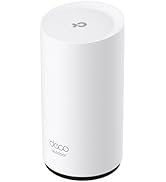
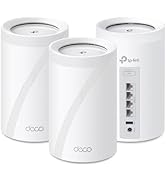
The TP-Link EAP110-Outdoor V3 is a robust, weatherproof wireless access point delivering up to 300Mbps speed with 2x2 MIMO technology. Designed for outdoor use, it offers long-range Wi-Fi coverage up to 200 meters, enterprise-level security, and flexible deployment with passive PoE and a free PoE injector. Integrated with Omada Cloud and app management, it enables centralized control of multiple devices, making it ideal for professionals seeking reliable, scalable outdoor networking solutions.











| ASIN | B07CG3YRTR |
| Best Sellers Rank | #5 in Computer Networking Wireless Access Points |
| Brand | TP-Link |
| Color | White |
| Customer Reviews | 4.2 4.2 out of 5 stars (4,300) |
| Date First Available | March 31, 2017 |
| Hardware Platform | Windows;Linux |
| Is Discontinued By Manufacturer | No |
| Item Dimensions LxWxH | 3.7 x 8.2 x 1.7 inches |
| Item Weight | 4.2 ounces |
| Item model number | EAP110-Outdoor V3 |
| Manufacturer | TP-Link |
| Operating System | Microsoft Windows XP, Vista, Windows 7, Windows 8, Windows10 |
| Product Dimensions | 3.7 x 8.2 x 1.7 inches |
| Series | EAP110-Outdoor |
| Voltage | 48 Volts (DC) |
| Wireless Type | 802.11bgn |
D**J
Excellent AP for the price
If your home has ethernet in it (or MOCA), don't bother with mesh wi-fi. Instead, get an access point like this one, and set it up in a dead zone, or a place where your wi-fi signal is weak, AND where you have an ethernet wire that runs back to your primary router/gateway. (Often called "wired backhaul"). The instructions are unclear and missing a few steps. I followed them precisely but it wasn't setting up, so I took matters into my own hands. Here's how I did it, if you are trying to set this up in ACCESS POINT MODE (which they claim is the default mode): 1. Plug the provided ethernet chord DIRECTLY into a PC that's already on your network (wired or wi-fi, doesn't matter), and plug the other end into the access point. 2. Plug in the access point's power, and wait a minute or two for the lights on the front to light up and stay on. 3. Go to your computer and log in to your EXISTING router/gateway (NOT the access point), and in there, you should see some sort of "discovery" or "show all devices on network" button somewhere. Every router/gateway is different, so that's about as specific as I can be. 4. Once all connected devices are showing, you should see a new device, this access point - you can recognize it by its MAC address (12 characters, without the dashes or colons), listed on the decal on the bottom of the access point. Get the access point's IP address (usually starts with 192.168 or 10.0.0 depending on what type of network protocol you're running) and write it down. While you're in there, you can reserve an IP address for your access point so it never changes again if you want to, but I don't think it's necessary or anything. (I reserve IP address to anything I can log into, like this access point, but that's a personal preference). 5. Next, log out of your existing router/gateway, and in Chrome (Edge didn't work for me, but Chrome did), type in the address you wrote above, and hit Enter. It should load a generic splash screen about logging into the access point, showing a field for a username, and a password. On the bottom of the gateway is a decal with the user name (usually "admin") and password to log into it. (I always take a picture of these labels with my phone in case I ever need them again). 6. Once you're in, change the password and/or user ID so it's not the default, for security purposes. From here, what I did was I changed the default SSID and password to match my gateway (and the rest of my network), so that when the access point is set up, it matches. This way, your devices can roam about your house and will choose this access point if it's the strongest one, and if you roam back to where your gateway/router is strongest, it will hop off of the access point and join up with that one, all seamlessly in the background. You can still use different SSID and passwords on the access point if you want, but I find the "hop" between access points is faster if they all have the same SSID and password. 7. Save everything and log out of the access point, unplug it, take out the ethernet cable, and now to go the ethernet jack where you want your access point set up permanently. Plug the access point into the ethernet jack and plug in the power brick and then test using a smartphone (I like the Android app "Wi-fi Man") that the access point is on and giving a signal. Mine worked on the first try. FYI, this thing also works with a MOCA setup (in case you can't run ethernet in your house, you can instead use existing cable coax as a "network"), but setting that up is its own set of instructions not relevant here. Hope this helps.
H**D
Very strong signal!
My ultimate goal is to put this outside near the edge of our property to get a signal where it is now very weak. Currently the mesh network inside our house barely reaches the device I have out there and so it drops off regularly. Since it's quite cold out, for the time being I've done some other testing. Set up is quick and straightforward. I had it configured and working in under 15 minutes. I hooked it up indoors, in my computer room a couple feet away from my primary mesh node. I plugged it directly in to my switch, just like the mesh node. I then ran speedtest from my phone, once with the mesh network and once with the EAP110. The results were shocking! The EAP was getting 50 Mbs while the mesh network was getting 40 Mbps. I then went to different locations inside the house, in different rooms. We have two other mesh nodes in the house providing full coverage. To my phone, the signal from the EAP was as strong or stronger than the mesh signals in most locations. Being extremely happy with these results, I moved the EAP into my garage, and pointed one of the antennas in the direction of the device with the weak signal I was ultimately trying to reach. Again, the signal strength was stronger than what it had been receiving from the closest indoor mesh node. This should be good enough until the weather gets warmer and I can move it outdoors closer to the device and set it up as I intended. Also note, I'm using some bigger high gain antennas that I had. Update 6/2/2025 So, after a year and a half, I finally moved it out of the garage to the outdoor location I had originally intended. I am even more impressed with it now, as the signal range I am getting across my ~4 acre property is astounding. If you have line of sight, you can go very far from it and still have a good signal and decent bandwidth. As you can see in my photos, the final location is atop my very old C-Band dish that I've repurposed as a huge monopod which has 2 Tapo cameras, an air quality monitor, and now the Omada Access Point. All of my cables, power, and network devices are in a weatherproof box buried at the base of the dish. Since these are so inexpensive, I just purchased another to install on the other side of our property so we can be bathed with a strong wifi signal no matter where we are outdoors. I couldn't be more happy with this device. The bang for the buck is off the charts. I may need to buy a third one, just to keep as a spare.
R**R
Solid Access Point with One Quirk
This is a great little unit — reliable, easy to set up, and performs well as a WiFi access point. I gave it 4 stars instead of 5 due to one design limitation: although it supports passive PoE, it doesn’t work directly with a standard PoE switch. Instead, it requires its own included adapter, which you have to insert inline with the Ethernet cable and power separately using a dedicated power supply. That means two outlets are needed — one for the switch and one for the adapter — which adds a bit of clutter and complexity to the setup. Aside from that, it’s a solid performer and a good value for the price. Just be aware of the power setup if you're expecting true plug-and-play PoE.
M**A
Proprio quello che cercavo, funziona molto bene, ha fatto gli aggiornamenti firmware appena collegato, supporta il multi ssid sia a 2,4 che a 5 ghz tramite vlan, ottimo per la sicurezza, unica pecca forse è che non si può impostare indirizzo ip statico. Soddisfatto
S**V
J'ai acheté ce répétiteur pour avec la wifi en extérieur et également pour des caméras de surveillance extérieure. J'en suis très satisfait.
J**R
Werkt heel goed
R**N
Excellent item delivered very quickly. Very easy to set up.
G**0
a much cheaper product wr840n does a better job, same transmit power with additional AP capabilities, DHCP etc, just install it in a weather proof box and it becomes OUTDOOR
Trustpilot
1 week geleden
2 dagen geleden