We remain fully operational. Our teams are working around the clock to ensure your deliveries continue safely.

DOWNLOAD DE APP


Klantenservice
Copyright © 2025 Desertcart Holdings Limited
DOWNLOAD DE APP
Full description not available
C**N
Good introduction to generative modeling
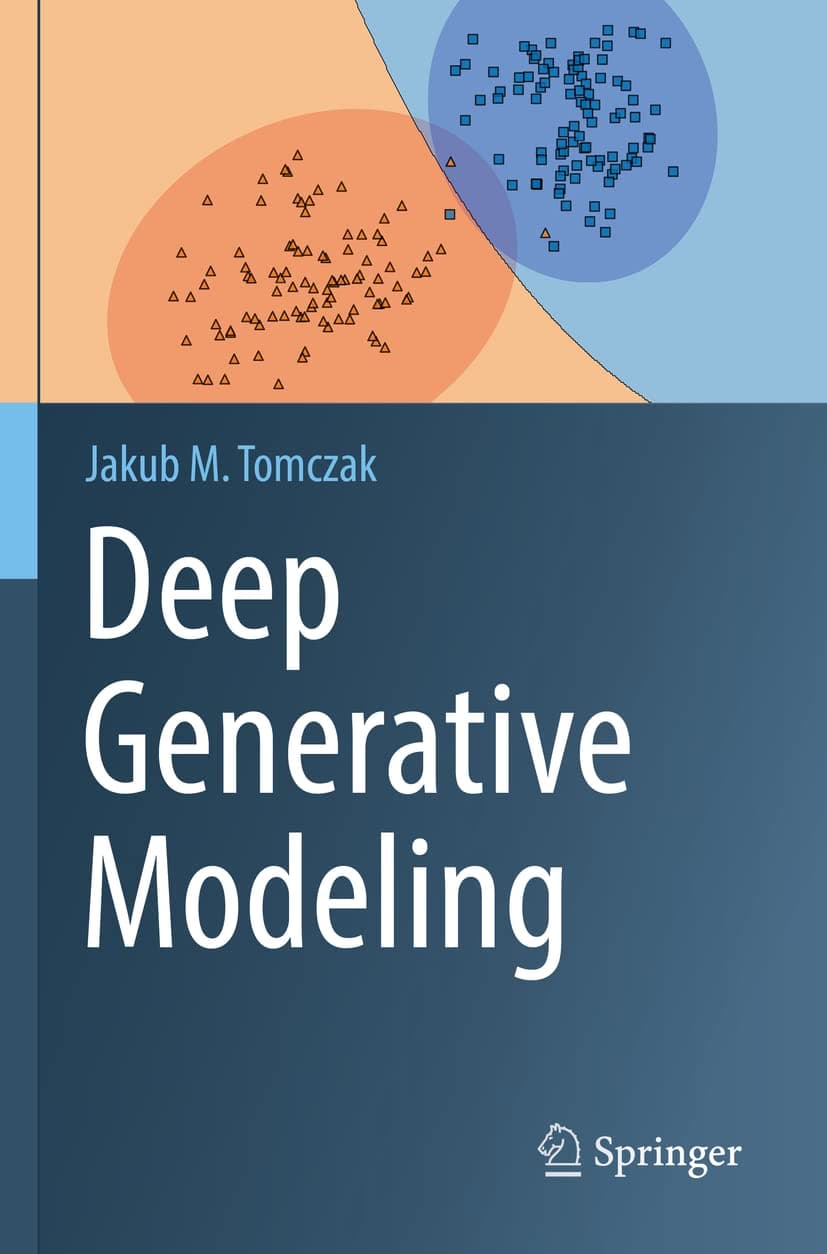
This is a clear, concise introduction to generative modeling with many useful figures. The print edition is about 200 pages and gives a surprising amount of information. It covers various types of generative models such as Autoregressive models (WaveNet), Normalizing flows, VAEs, and GANs. Normalizing flows are probably not as well known as others and its good to have them in one place. The book also covers some interesting applications such as neural compression. It's not a book of recipe's and the examples are simple, generally from Sklearn digits data set. They're meant to be run on a CPU so more people can try them. However the author does provide some insight into the models and gives several useful references. You do have to know some probability, calculus to follow along but the equations are generally clearly written without much clutter. The Pytorch code is available and can be good starter code to build your own models. If you're just beginning, it will probably not be the only book you get but is definitely a good addition.
A**R
Disappointing
This is a slim book. The best I can say for it is it's a pretty book. Most of the descriptions are too short for deep understanding, and the code that's given (and that occupies way too much of the real estate in the book, considering that it's available online) gives you rather basic and rough-looking results. You won't be generating pictures, texts or music, mainly just the digits from 1-10. GANS occupy less than 10% of the book -- including code snippets and bibliography.Since this book is from Springer, I was hoping for something more mathematical than a usual "how to" book. There is math -- you'll need to know vector calculus, and some statistical mechanics wouldn't hurt -- but mostly it's extremely concise, and not conducive to a practical understanding of the algorithm. There are insufficient illustrations to help the reader digest the pretty hairy integral equations, logarithmic equations, equations with 7 index summations, etc. which are presented in a rather dump-and-run style. Not sure why the author believed a reader with such sophisticated math skills would be satisfied with the extremely rudimentary capabilities of the code. David Foster's Generative Deep Learning: Teaching Machines to Paint, Write, Compose and Play (O'Reilly Media) is light years better than this, on every dimension.
Trustpilot
3 weken geleden
2 maanden geleden