We remain fully operational. Our teams are working around the clock to ensure your deliveries continue safely.

DOWNLOAD DE APP


Klantenservice
Copyright © 2025 Desertcart Holdings Limited
DOWNLOAD DE APP


Buy anything from 5,000+ international stores. One checkout price. No surprise fees. Join 2M+ shoppers on Desertcart.
Desertcart purchases this item on your behalf and handles shipping, customs, and support to Netherlands.
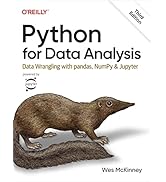
Python for Data Analysis: Data Wrangling with Pandas, NumPy, and IPython: 9781449319793: Computer Science Books @ desertcart.com Review: End of 2013 Kindle Update - End of 2013 Kindle Update--> Many ebooks (not just Kindle) have problems with math formulas in LaTex. Others (like this) have code or pseudocode, and lots of tables, which are problematic at times. IF you get this book for Kindle in 2014 or late 13, you are in for a treat: not only the online goodies, but the entire ebook itself has been extensively revised for Kindle, including code and tables. They are outstanding! Our previous Kindle edition wasn't awful, but this is just awesome now. If you're tired of R glitches and complexity, consider the many new (and FREE) features Wes details in this fine text, especially tips for free libraries and APIs, including of course NumPy and others that used to require a lot more math than they do today. Wes even has many plug and plays, and if you have even beginning skills in any oop (Java/C#), this will be easier than starting R from scratch. It has "nearly" the stats of R, and much more on all kinds of big data, not just research data. Highly recommended for my fellow kindlers. The native object- recursion in Python apis is alone worth this compared to R functional workarounds, even though I use both. Prior to this book, you'd be spending a LOTof time putting all this together visiting forums, libraries and APIs online. IMPORTANT NOTE on previous negative reviews: This new update not only fixes many issues with the tables for Kindle, but as you probably know if you're a Panda person, the online functional documentation for the library has been massively updated between late '12 and late '13. The author (the creator of the API) takes advantage of this with the kindle links. This makes this book a MUCH better reference than the last edition, part due to the new update and part to the value of the community work on functions, types and methods, which of course this author often leads. SO, even if you have an older version of print, many of the deficiencies (that frankly were not this author's fault!) are gone there too, because the links are still active and much better for configuring your code than before. This still isn't meant to be a "documentation" book, but, with the newly updated links, there are few programs you can't build now, including a LOT more detail on the functions themselves, with good keywords to augment the already fine examples and exercises here. Also, much less "heavy" from a programming view than most O'reilly tomes-- this author obviously understands beginners, and though this is not a how to learn Python book, it IS now a much better how to pick up DA, including pandas, numpy and other plug ins. Review: A great introduction to Python's data analysis libraries - Wes McKinney provides an introduction to the most popular and critical libraries for doing data analysis with the Python language. The book does not delve into much for advanced data analysis (statistical methods for example), but provides an excellent starting point for understanding the main tools and a strong tour to what can be done with Python in the data analysis field. The text focuses strongly on the pandas library which is used for the actual data manipulation, but provides a strong introduction to NumPy, matplotlib, and the IPython environment which is used by most of the Python data analysis community. I would have liked to see stronger coverage of SciPy and at least a chapter devoted to the statsmodels library, both of which are mentioned, but not discussed in great detail. These libraries deal with statistical methods and advanced analysis, whereas the focus of this text seems to be more on preparing data for these sorts of topics. A sequel covering these advanced topics would be greatly welcome, whereas they are probably beyond the scope of this particular text, and would add too much length. There have been some api changes since the book was published which do affect some of the examples provided but they all seem to be identified in the book's errata. The only issue that I didn't find identified is a change in how pandas' DataFrame objects are displayed in an interactive environment. This means that some of the outputs will look different than what is shown in the book, but pandas does provide an option to restore the older behavior shown. Readers should already be familiar with the Python language. Some negative reviews stress that the book does not teach Python, but that is not really it's intent. An appendix introducing the Python language is provided, but the language cannot be taught in that short of space. The purpose of the text is to introduce the reader to a specific use of Python, and does well in that case. This text was my first introduction to these libraries and I have always used R for any data analysis work. I was impressed with how similar these are to using R, and many of the libraries feel strongly like R written in Python. Readers already familiar with R will have no problem following along in the examples and will likely pick up the material very quickly. For readers new to data analysis there will likely be a steeper learning curve, but McKinney does provide excellent and detailed examples that should allow those readers to pick up the material quickly as well. Other than the api changes, which always will present an unavoidable issue with any text in the subject (especially as pandas seems to be evolving very quickly), and the lack of coverage of some essential data analysis libraries, the book is strongly recommended for anyone wishing to start using the Python language for data analysis. (I received an electronic copy of the book as part of the O'Reilly reader review program, but was impressed enough to purchase a printed copy.)



| Best Sellers Rank | #869,289 in Books ( See Top 100 in Books ) #373 in Data Processing #703 in Computer Programming Languages #712 in Python Programming |
| Customer Reviews | 4.3 4.3 out of 5 stars (336) |
| Dimensions | 7 x 0.9 x 9.19 inches |
| Edition | 1st |
| ISBN-10 | 1449319793 |
| ISBN-13 | 978-1449319793 |
| Item Weight | 1.76 pounds |
| Language | English |
| Print length | 463 pages |
| Publication date | November 27, 2012 |
| Publisher | O'Reilly Media |
P**Z
End of 2013 Kindle Update
End of 2013 Kindle Update--> Many ebooks (not just Kindle) have problems with math formulas in LaTex. Others (like this) have code or pseudocode, and lots of tables, which are problematic at times. IF you get this book for Kindle in 2014 or late 13, you are in for a treat: not only the online goodies, but the entire ebook itself has been extensively revised for Kindle, including code and tables. They are outstanding! Our previous Kindle edition wasn't awful, but this is just awesome now. If you're tired of R glitches and complexity, consider the many new (and FREE) features Wes details in this fine text, especially tips for free libraries and APIs, including of course NumPy and others that used to require a lot more math than they do today. Wes even has many plug and plays, and if you have even beginning skills in any oop (Java/C#), this will be easier than starting R from scratch. It has "nearly" the stats of R, and much more on all kinds of big data, not just research data. Highly recommended for my fellow kindlers. The native object- recursion in Python apis is alone worth this compared to R functional workarounds, even though I use both. Prior to this book, you'd be spending a LOTof time putting all this together visiting forums, libraries and APIs online. IMPORTANT NOTE on previous negative reviews: This new update not only fixes many issues with the tables for Kindle, but as you probably know if you're a Panda person, the online functional documentation for the library has been massively updated between late '12 and late '13. The author (the creator of the API) takes advantage of this with the kindle links. This makes this book a MUCH better reference than the last edition, part due to the new update and part to the value of the community work on functions, types and methods, which of course this author often leads. SO, even if you have an older version of print, many of the deficiencies (that frankly were not this author's fault!) are gone there too, because the links are still active and much better for configuring your code than before. This still isn't meant to be a "documentation" book, but, with the newly updated links, there are few programs you can't build now, including a LOT more detail on the functions themselves, with good keywords to augment the already fine examples and exercises here. Also, much less "heavy" from a programming view than most O'reilly tomes-- this author obviously understands beginners, and though this is not a how to learn Python book, it IS now a much better how to pick up DA, including pandas, numpy and other plug ins.
M**W
A great introduction to Python's data analysis libraries
Wes McKinney provides an introduction to the most popular and critical libraries for doing data analysis with the Python language. The book does not delve into much for advanced data analysis (statistical methods for example), but provides an excellent starting point for understanding the main tools and a strong tour to what can be done with Python in the data analysis field. The text focuses strongly on the pandas library which is used for the actual data manipulation, but provides a strong introduction to NumPy, matplotlib, and the IPython environment which is used by most of the Python data analysis community. I would have liked to see stronger coverage of SciPy and at least a chapter devoted to the statsmodels library, both of which are mentioned, but not discussed in great detail. These libraries deal with statistical methods and advanced analysis, whereas the focus of this text seems to be more on preparing data for these sorts of topics. A sequel covering these advanced topics would be greatly welcome, whereas they are probably beyond the scope of this particular text, and would add too much length. There have been some api changes since the book was published which do affect some of the examples provided but they all seem to be identified in the book's errata. The only issue that I didn't find identified is a change in how pandas' DataFrame objects are displayed in an interactive environment. This means that some of the outputs will look different than what is shown in the book, but pandas does provide an option to restore the older behavior shown. Readers should already be familiar with the Python language. Some negative reviews stress that the book does not teach Python, but that is not really it's intent. An appendix introducing the Python language is provided, but the language cannot be taught in that short of space. The purpose of the text is to introduce the reader to a specific use of Python, and does well in that case. This text was my first introduction to these libraries and I have always used R for any data analysis work. I was impressed with how similar these are to using R, and many of the libraries feel strongly like R written in Python. Readers already familiar with R will have no problem following along in the examples and will likely pick up the material very quickly. For readers new to data analysis there will likely be a steeper learning curve, but McKinney does provide excellent and detailed examples that should allow those readers to pick up the material quickly as well. Other than the api changes, which always will present an unavoidable issue with any text in the subject (especially as pandas seems to be evolving very quickly), and the lack of coverage of some essential data analysis libraries, the book is strongly recommended for anyone wishing to start using the Python language for data analysis. (I received an electronic copy of the book as part of the O'Reilly reader review program, but was impressed enough to purchase a printed copy.)
D**C
FOR ANYONE WHO HAS TO MINE DATA
I had to learn Python quickly for a project that involved reading data from databases and web services and manipulating it and eventually storing it. This book saved me by introducing me to pandas. I fell in love immediately and ended up doing the project in Python using SQL Alchemy and pandas Data Frames. Since pandas also relies on SQL Alchemy, I suspect I could have done it with pandas alone. Wes McKinney is clearly a data geek. His examples are a bit harder to follow than those of other writers, but the depth of his knowledge -- both in problem solving and using Python to do it -- makes taking the effort to follow worth it a thousand fold. He covers everything from accessing data from numerous types of sources and walks you through solving really nasty data problems using simple tools. I found his writing clear, though probably not concise. No matter, he quickly gave me what I needed.
S**H
If you needed one book to guide you through pandas for data analysis and also the underlying numpy (and more), this is it. While reading the book you cannot help but admire the comprehensive way in which the author guides you through the tool and the problems that it solves. Also thanks to the author for creating this wonderful tool!
O**D
Meine bisherige Erfahrung mit O'Reilly Büchern war eher durchwachsen: Oft werden entweder sehr starke Grundlagen vorausgesetzt oder es geschehen Sprünge zwischen Kapiteln die kaum nachzuvollziehen sind. Nicht so in diesem Buch. Wes McKinney hat es wirklich geschafft einen sorgfältigen Aufbau ohne Lücken zu Papier zu bringen, ohne dabei in Details unterzugehen. Das Buch beginnt mit NumPy um Grundlagen zu schaffen, erklärt sehr sorgfältig die Datenformate wie Dataframes und arbeitet sich langsam aber sicher zu recht komplexen Themengebieten hoch. Kann das Buch wirklich nur empfehlen - auch als Nachschlagewerk.
A**X
Presenta les estructures Panda, que están molt bé, però el libre es perd masa explican arrays i a l'hora d'entrar en matèria amb els Pandas es queda un xic curt.
L**N
This book has taught me a lot. I always find better answers to my problems in here than in all the stack overflow posts I've come across. Very well written and informative. Joy to read.
M**C
A nice and quite complete introduction to Pandas Analysis and all the goodies it provides. It also provides tricks for data mining.
Trustpilot
1 maand geleden
3 dagen geleden