🌙 Sleep smarter, not harder — wake up refreshed and ready to conquer!
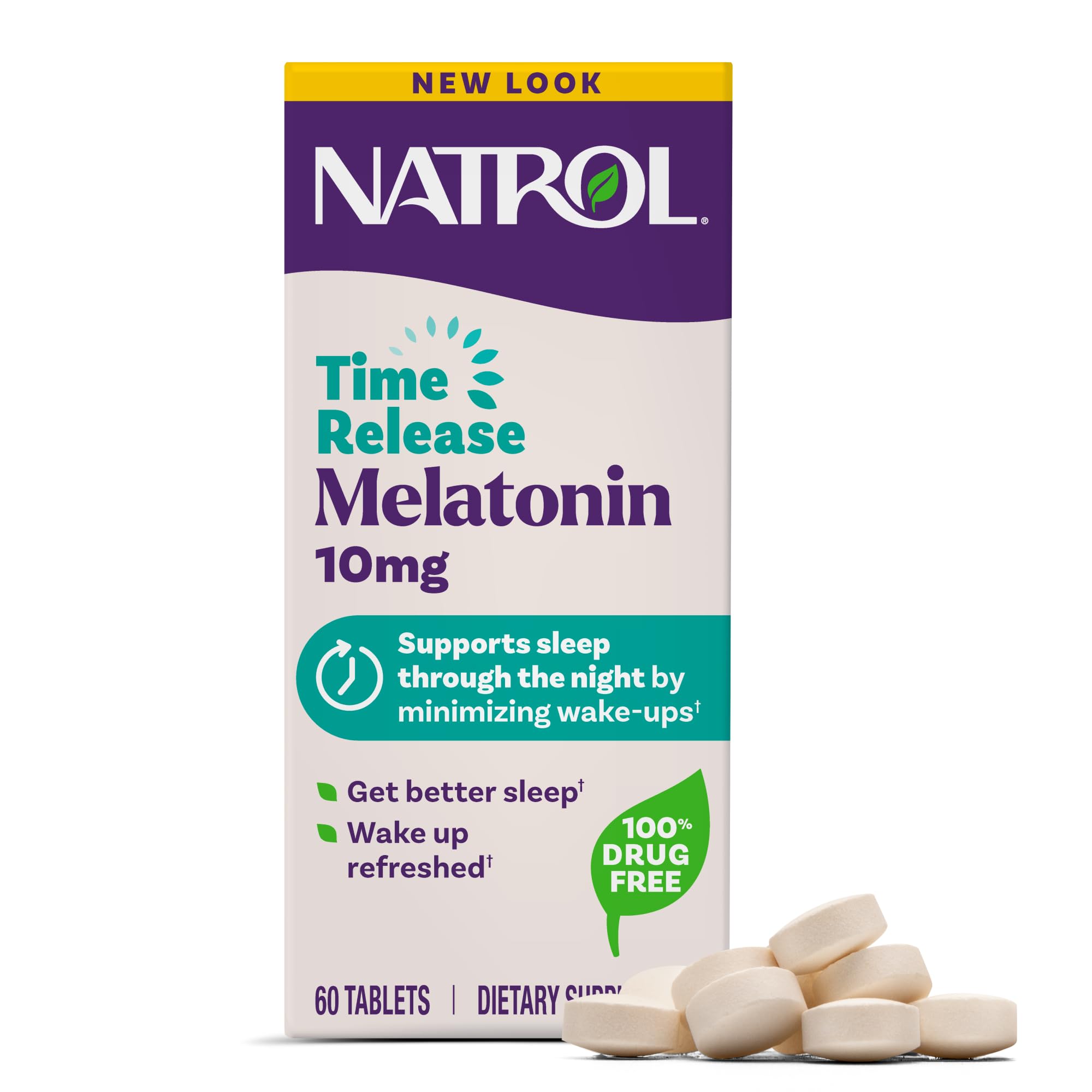
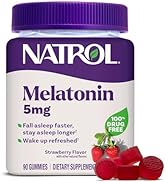
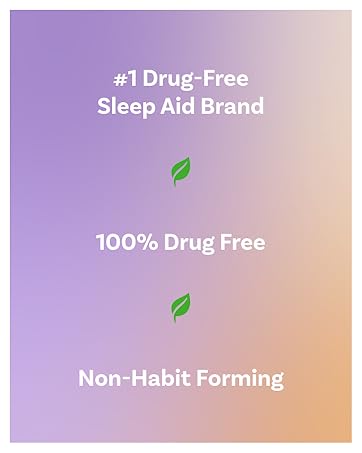
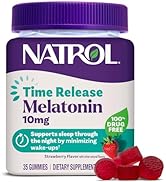
Natrol Melatonin 10mg Time Release Tablets deliver a scientifically designed dual-layer formula that promotes faster sleep onset and sustained rest throughout the night. With 60 tablets per bottle, this drug-free, non-habit forming supplement supports natural sleep-wake cycles enhanced by Vitamin B6 and Calcium. Ideal for busy professionals seeking reliable, long-lasting sleep aid without compromising their health or lifestyle.

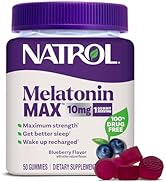
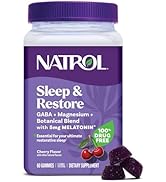
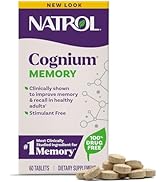

| ASIN | B004FPTQCO |
| Best Sellers Rank | #12,629 in Health & Household ( See Top 100 in Health & Household ) #123 in Sleep & Snoring Aids #148 in Herbal & Nutritional Sleep Supplements #1,294 in Sales & Deals |
| Customer Reviews | 4.5 4.5 out of 5 stars (3,986) |
| Date First Available | December 9, 2010 |
| Department | Health and Beauty>Health and Wellness |
| Is Discontinued By Manufacturer | No |
| Item model number | 6324.946 |
| Manufacturer | Natrol |
| Product Dimensions | 2 x 2 x 5.7 inches; 0.96 ounces |
E**T
Getting to sleep on time is more work than I ever figured
Melatonin changes your circadian rhythm. It does not make you sleep. Your body does that. According to my doctor, you need to give any natural supplement like melatonin time to work. If you want something that works faster, then try Silexan - this is a purified extract from lavender oil. It works by relieving tension and anxiety allowing you to fall asleep. Assuming it works (it's pretty mild), it will work on the first or second pill. I tried Integrative Therapeutics and it was very effective putting me to sleep but it didn't keep me asleep. Melatonin is synthesized from serotonin, so if you are depressed/anxious then odds are good that your serotonin levels are low and you have very little melatonin. If this is so, then the odds that melatonin pills will work are pretty good. Of course, if it ain't so, then it could be something else completely. For example, my cortisol (stress hormone) levels are upside down - low in the morning and very high in the evening. It just keeps rising as the night advances and I get livelier. In order for the melatonin to work, first I had to control the cortisol levels. I did this by taking ashwagandha supplements. I attended a tutorial for MD's taught by Dr. Low Dog. She is an herbalist, MD, faculty at the Univ. of Arizona program in Integrative Medicine. She also started and Chaired the US government committee which reviews herbal supplements and safety. According to Dr. Low Dog, ashwagandha will reverse this odd cortisol pattern but you have to take it 24/7 for at least four weeks. I've been taking it for 6 weeks and I think it's finally working. I'm getting sleepy at night instead of running around in circles faster and faster. Of course, I'm still going to bed at 2 AM. So, I ordered some melatonin. Because Dr. Low Dog also had a lecture on melatonin and it's very, very beneficial even if it doesn't make you sleepy. It's a powerful antioxidant and I notice the price is way lower than many other powerful antioxidants. Took melatonin 2 hours before desired bedtime Day one - worked as if it were a knockout pill - slept 12 hours Days 2-4 - no apparent effect Days 5 - very similar to day one Repeat days 2-5 After two weeks: bedtime is changing to desired bedtime but sleep cycle is still 12 hours one night followed by nights of short sleep with no apparent early sleepiness. Also, cycles of short vs. long nights of sleep is getting shorter. In a fit of frustration, I took the melatonin AND the silexan together. I slept for 12 hours and then spent 3 hours flopping around in bed, grunting and trying to wake up enough to haul myself out. Only for the desperate. In the middle of the two weeks, I realized the chemical connection between melatonin and serotonin. I am bipolar and a known under producer of serotonin. I went and ate some inositol - this is vitamin B8 normally produced by the probiotics in your gut but I'm also being treated for a gut infection. Inositol is required for the production of serotonin along with a few other ingredients. The inositol usually controls my panic attacks, anxiety and depression but those symptoms seem to be under control. Sure enough, for about 2-4 days after I took the inositol, my sleep improved dramatically. Looks like you need serotonin and melatonin to stay calm enough to sleep and to stay asleep. If you don't want to tinker with your serotonin levels (an activity not without danger), Dr. Low Dog recommends either chamomile or lemon balm tea. Both are calming, simple, effective and inexpensive (she likes inexpensive, the first MD I've ever heard praise a $3 box of medicine in teabags). The trick is to drink 3-4 cups throughout the day, every day, to get the effect. Remember to give it some time to get going. Also, both lemon balm and chamomile have no known safety issues with other herbs, supplements or medications. What about inositol? Well, if you are the wrong kind of bipolar genetics ( the over-methylators = 30% of bipolars respond poorly. Bipolars are 2% of the population, so about 0.6% of the general population responds poorly. I don't know about other genetic conditions that might be sensitive ) then it might make you manic in high doses. Conclusion; the melatonin is working great but I'm afraid to take it because I might sleep 12 hours. It's most likely much too strong especially the time-release portion. Time to order some more melatonin and try again. And if the melatonin never really works? I'm still taking it. It's MUCH less expensive than other antioxidants and I'm a big believer in protecting my mitochondria. I've had my mitochondria taken out before and it's simply awful. Please don't start taking any of these supplements without getting more background first. There are side effects. Update: It turns out it's best to start melatonin at a lower level (3 mg was right for me), then after a few months you can increase the level as you build up a small tolerance. I've settled on 5 mg quick release. My friend and I both had this reaction.
E**D
Helps you sleep
Excellent for sleeping. No adverse side effects.
K**I
Works well
These work well with helping to fall asleep. Easy to swallow and they’re a really great price. My doctor recommended this specific brand. Only con is I sometimes wake up feeling a little drowsy and I don’t like that.
M**E
Stands the test of time
I was skeptical at first, but I found this to be quite effective. I’ve been using it for over a year and still I’m getting this results.
K**.
I can finally sleep!
I've had insomnia since I was 9. This actually makes me fall asleep and stay asleep longer than with meds alone. I don't feel groggy in the morning either
J**.
Not worth the extra cost
The product seems to work, but is too expensive for the presumed added value of time release (the value of time release being difficult to evaluate objectively). I have switched to using non-time release melatonin.
J**Y
A good way to consistent 90 plus sleep scores !!!
fantastic product to help you stay asleep and avoid the early mid-morning wake-up and trouble falling back down !!!
K**R
awesome job.
Awesome job.
Trustpilot
1 maand geleden
2 weken geleden