We remain fully operational. Our teams are working around the clock to ensure your deliveries continue safely.

DOWNLOAD DE APP


Klantenservice
Copyright © 2025 Desertcart Holdings Limited
DOWNLOAD DE APP
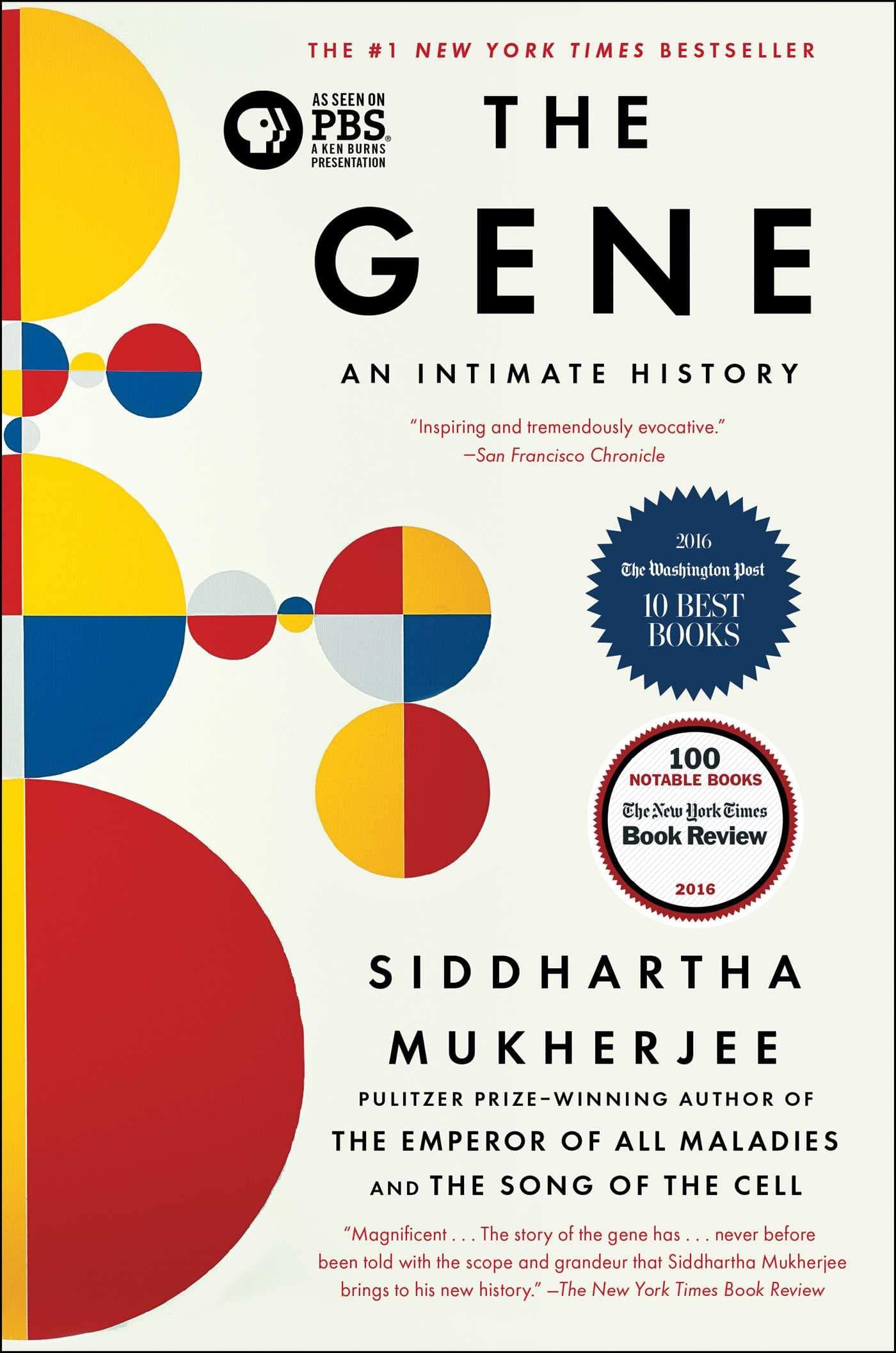
Buy The Gene: An Intimate History Reprint by Siddhartha Mukherjee (ISBN: 9781476733524) from desertcart's Book Store. Everyday low prices and free delivery on eligible orders. Review: Fascinating book - 10% absolutely fascinating 90% above my head. Well worth the effort. Review: Comprehensive history of the gene - powerful evaluation of the future. - The book begins as an intimate history of genetics but develops into the intimate future of one of the most powerful and dangerous ideas in the history of science: the gene, the fundamental unit of hereditary and the basic unit of all biological information. The power of the idea can be seen today in the way personal genomics is revolutionising drug development, therapy and precision oncology – preventing and treating diseases taking into account individual variability in genes , environment and lifestyle. Genomics is being combined with Artificial Intelligence to mine vast amounts of genetic information for new clues about disease, diagnosis or treatment and combining the amazing potential in AI and genetics for opening new horizons in healthcare. Why is the idea dangerous? Because like the other two profoundly destabilising scientific ideas of the atom and the byte that richochet through the 20th century, the gene has transformed culture, society, politics and language. Mukhergee goes right back to the first steps in understanding the mechanism and influence of genes with Mendel and Darwin and roller coasters through the 20th century. The scientific progress falls into 4 stages ; the establishment of the cellular basis of heredity: the chromosomes; the molecular basis of hereditary :the double helix; the informational basis : the genetic code and sequencing of the human genome; and finally the era of genomics: the deciphering, reading and understanding the human genome and developing medical applications. He tells history is told in an extremely personal and readable way describing how scientists built on each others’ contribution with accelerating progress. The book is full of detective stories – for example how it had taken Morgan and his team three decades to collect fifty fly mutants in New England. Then one night in 1926 Muller discovered the effects of radiation and mutated half that number in a single night. Or for example, the detective work of Watson and Crick in discovering the double helix structure of DNA following the groundbreaking work of Linus Pauling, Robert Corey, Maurice Wilkins and Rosalind Franklin. There is a feeling of balance in Mukhergee’s account of the race for sequencing the human genome, once Muller had discovered the way to copy a human gene in a test tube. The US National Institute of Health (NIH) was chosen as the lead agency to sequence the entire human genome with the US’s DOE and the UK’s Medical Research Council and Wellcome Trust joining the effort. However a little known, pugnacious, single minded neurobiologist at the NIH, Craig Venter, proposed a shortcut to genome sequencing. James Watson and the NIH were appalled at not only at Venter’s technique but at his proposal to patent genes. Scientists at Stanford had patented methods to recombine pieces of DNA to create genetic chimeras, Genetech had patented processes to express proteins such as insulin, Amgen had filed a patent for isolation of erythropoietin using recombinant DNA but nobody had patented a gene or piece of genetic information for its own sake. The race between the US and UK’s public agencies and Craig Venter’s privately funded company Celera was on. The Wellcome Trust doubled its funding and congress threw open the slices of federal funding. But a kind of truce was struck and in 2001 the Human Genome Project and Celera both published their results of the sequencing of the human genome marking the start of the era of genomics. But the history of the gene is told not just from the angle of scientific discoveries. The social effects of the development of the genetics are explored. The history of eugenics and its misuse widely in the USA for sterilising imbeciles to improve human intelligence is shown to be based on a totally fallacious theory of hereditary. The Nazi eugenic experiments and the holocaust gruesomely exposed the danger of false science. The Asilomar meeting in 1973 of leading virologists, genetiscists, biochemists and microbiologists addressed the growing concerns about gene – manipulation techniques. Asilomar II in 1975 got unanimous support for ranking the biohazard risks of genetic recombination. This has resulted until recently in three unspoken principles which guide the arena of genetic diagnosis and intervention. Firstly diagnostic tests have been restricted to gene variants that are singularly powerful determinants of illness – for examplehighly penetrant mutations like Downs syndrome and cystic fibrosis. Secondly, the diseases caused by these mutations have generally involved extraordinary suffering. Thirdly justifiable interventions have been defined by social and medical consensus, and all interventions have been governed by complete freedom of choice. But these boundaries could be loosening from these originals - of high penetrance genes, extraordinary suffering and justifiable interventions - to genotype-driven social engineering. Mukherjee provides examples of genetic diagnosis being transformed into clinical and personal realities. Individuals are inspired to get our personal human genome mapped which could lead to determining genetic fitness. Individuals are not so easily governed by guiding principles. Evidence of the influence this book has had on me is that I have now set out to get my personal genome sequenced!
| Best Sellers Rank | 1,908,174 in Books ( See Top 100 in Books ) 1 in Medical Genetics 79 in Scientific History & Philosophy 259 in General Medical Issues Guides |
| Customer reviews | 4.6 4.6 out of 5 stars (7,458) |
| Dimensions | 15.56 x 3.81 x 23.5 cm |
| Edition | Reprint |
| ISBN-10 | 147673352X |
| ISBN-13 | 978-1476733524 |
| Item weight | 612 g |
| Language | English |
| Print length | 608 pages |
| Publication date | 2 May 2017 |
| Publisher | Scribner Book Company |
D**N
Fascinating book
10% absolutely fascinating 90% above my head. Well worth the effort.
M**N
Comprehensive history of the gene - powerful evaluation of the future.
The book begins as an intimate history of genetics but develops into the intimate future of one of the most powerful and dangerous ideas in the history of science: the gene, the fundamental unit of hereditary and the basic unit of all biological information. The power of the idea can be seen today in the way personal genomics is revolutionising drug development, therapy and precision oncology – preventing and treating diseases taking into account individual variability in genes , environment and lifestyle. Genomics is being combined with Artificial Intelligence to mine vast amounts of genetic information for new clues about disease, diagnosis or treatment and combining the amazing potential in AI and genetics for opening new horizons in healthcare. Why is the idea dangerous? Because like the other two profoundly destabilising scientific ideas of the atom and the byte that richochet through the 20th century, the gene has transformed culture, society, politics and language. Mukhergee goes right back to the first steps in understanding the mechanism and influence of genes with Mendel and Darwin and roller coasters through the 20th century. The scientific progress falls into 4 stages ; the establishment of the cellular basis of heredity: the chromosomes; the molecular basis of hereditary :the double helix; the informational basis : the genetic code and sequencing of the human genome; and finally the era of genomics: the deciphering, reading and understanding the human genome and developing medical applications. He tells history is told in an extremely personal and readable way describing how scientists built on each others’ contribution with accelerating progress. The book is full of detective stories – for example how it had taken Morgan and his team three decades to collect fifty fly mutants in New England. Then one night in 1926 Muller discovered the effects of radiation and mutated half that number in a single night. Or for example, the detective work of Watson and Crick in discovering the double helix structure of DNA following the groundbreaking work of Linus Pauling, Robert Corey, Maurice Wilkins and Rosalind Franklin. There is a feeling of balance in Mukhergee’s account of the race for sequencing the human genome, once Muller had discovered the way to copy a human gene in a test tube. The US National Institute of Health (NIH) was chosen as the lead agency to sequence the entire human genome with the US’s DOE and the UK’s Medical Research Council and Wellcome Trust joining the effort. However a little known, pugnacious, single minded neurobiologist at the NIH, Craig Venter, proposed a shortcut to genome sequencing. James Watson and the NIH were appalled at not only at Venter’s technique but at his proposal to patent genes. Scientists at Stanford had patented methods to recombine pieces of DNA to create genetic chimeras, Genetech had patented processes to express proteins such as insulin, Amgen had filed a patent for isolation of erythropoietin using recombinant DNA but nobody had patented a gene or piece of genetic information for its own sake. The race between the US and UK’s public agencies and Craig Venter’s privately funded company Celera was on. The Wellcome Trust doubled its funding and congress threw open the slices of federal funding. But a kind of truce was struck and in 2001 the Human Genome Project and Celera both published their results of the sequencing of the human genome marking the start of the era of genomics. But the history of the gene is told not just from the angle of scientific discoveries. The social effects of the development of the genetics are explored. The history of eugenics and its misuse widely in the USA for sterilising imbeciles to improve human intelligence is shown to be based on a totally fallacious theory of hereditary. The Nazi eugenic experiments and the holocaust gruesomely exposed the danger of false science. The Asilomar meeting in 1973 of leading virologists, genetiscists, biochemists and microbiologists addressed the growing concerns about gene – manipulation techniques. Asilomar II in 1975 got unanimous support for ranking the biohazard risks of genetic recombination. This has resulted until recently in three unspoken principles which guide the arena of genetic diagnosis and intervention. Firstly diagnostic tests have been restricted to gene variants that are singularly powerful determinants of illness – for examplehighly penetrant mutations like Downs syndrome and cystic fibrosis. Secondly, the diseases caused by these mutations have generally involved extraordinary suffering. Thirdly justifiable interventions have been defined by social and medical consensus, and all interventions have been governed by complete freedom of choice. But these boundaries could be loosening from these originals - of high penetrance genes, extraordinary suffering and justifiable interventions - to genotype-driven social engineering. Mukherjee provides examples of genetic diagnosis being transformed into clinical and personal realities. Individuals are inspired to get our personal human genome mapped which could lead to determining genetic fitness. Individuals are not so easily governed by guiding principles. Evidence of the influence this book has had on me is that I have now set out to get my personal genome sequenced!
J**Y
Understanding in-depth cell biology
It’s a in-depth read You need an understanding of human anatomy and mental health
B**N
Genetics: history, science, and its ethical questions.
In recent years there have been many excellent popular science books in the fields of biology and medicine. Some are short, often interweaving personal histories, such as ‘Do No Harm’ by the brain surgeon Henry Marsh; others attempt to cover much wider fields, such as the author’s previous blockbuster, ‘The Emperor of all Maladies’, a biography of cancer. ‘The Gene – an intimate history’ is definitely of the latter variety, weighing in at close to 600 pages. The approach is historical, starting with the modern origins of the subject in the pioneering work of Darwin and Mendel and proceeding through the rise of eugenics and its advocate Galton, the solution to the structure of DNA, gene splicing and the many discoveries thereafter. The work of Galton and his many followers is the darker side of the history of genetics. They thought they could fundamentally change nature by pseudo-scientific programmes, such as the attempts in America to eradicate ‘defective strains’ by forced sterilization and other means, which continued in some countries well into the 1970s. The most perverted and horrific use of genetics took place in Nazi Germany. There the misguided views of eugenics were closely link to race and led directly to the mass murder of ‘racially undesirables’, as well as the physically and mentally handicapped, in the mistaken belief that this would lead to a superior race. Conventional eugenics is now totally discredited, and in the West genetic experiments are subject to strict controls. Neverthess, it is legal to screen embryos for serious genetic conditions before implanting them in the wombs of women undergoing IVF treatment, and in some countries with weak supervision, experiments are being done to find methods of eradicating genes which have been linked to other diseases. While this may be laudable, what is next? Perhaps eradicating the genes for unsightly large noses? At what point would these procedures be ‘enhancement’ and eugenics by another name. Are we on the verge of ‘designer babies’? These ethical questions are re-examined throughout the book and become more focussed as technical improvements in genetics research presses steadily forward. The author has a particular interest in this because he comes from a family that has a history of serious mental illness, although I found his digressions about this a little distracting and added little to the story. As research has moved forward, the realization has emerged that genes are far more complex than previously thought and it is very rare for a single gene to be the sole ‘culprit’ for a particular disease. More often multiple genes are involved, working through complex interactions that are far from being totally understood, and moreover are also influenced by external factors, so that the final outcome is very difficult to predict. The role of these external influences is embedded in the relatively recent discovery of so-called ‘epigenes’, which appear to imply that genes may be responsive to environmental factors, raising yet again the old questions of eugenics, with its far-reaching ethical and social implications. Potential readers such as myself who read ‘The Emperor of all Maladies’ are faced with a daunting prospect, because like that book this one is not only long, but also contains much technical information about genetics. Don’t let this deter you. You may not fully follow all the scientific details (I certainly did not) but the writing is so beautifully clear that at the end of ‘difficult’ sections you will still have a good overview of the problems that the field has faced, or is still facing, and the arguments for and against different positions on important topics such as gene therapy. It is a book definitely well worth the effort of reading.
A**R
Awe-inspiring and fascinating popular science story
The Gene: An Intimate History is an epic story of how we have come to understand some of the fundamental building blocks of life on earth. From Mendel growing his peas via Darwin and the origin of species, eugenics and the Nazis, Crick and Watson discovering the double helix structure of DNA to the tantalising prospects of genome enhancement, Siddhartha Mukherjee takes us comprehensively through the whole history. It's a complex subject, but the writing is just the right level for someone (like me) with no biology or chemistry background at all to understand. He also covers the moral and ethical aspects of some of the research as well as the science. There's a lot to it, and it does take a while to read, but it's such a fascinating tale that it's well worth the effort. Awe-inspiring and downright mind-boggling in places, if popular science is your thing then you won't want to miss this one.
L**E
Understanding what the Gene is, and what it does.
I like the book because of the way it simplified the scientific understanding of what the gene is, and what it does. More so, that any alterations, even a "minor one" can result in a devastating consequence in the individual. It is also interesting to learn from this book that some common human diseases like sickle cell anaemia, hemophilia, as well as some psychiatric disorders like schizophrenia and others, are traceable to mutations of certain genes.
A**A
Eye-opening, well written and thought provoking book
H**O
Muy buen libro, explica de forma sencilla pero concisa conceptos importantes sobre genética y biotecnología, además que la forma de llevar la historia lo hace de acuerdo a los eventos más relevantes y en orden cronológico sobre dichas áreas.
S**E
Gründlich recherchiert, super geschrieben. Dr. Mukherjee ist ein begnadeter Erzähler, ebenso wie sein vorheriges Werk "The Emperor of all Maladies" ist auch "The Gene" absolut empfehlenswert. Auch für nicht-medizinisch / biochemisch vorgebildete Leser ist dieses Buch leicht verständlich und spannend geschrieben. Bezieht sich auf die englische Ausgabe (die ich auf Grund des feinen Erzählstils nur empfehlen kann, eine deutsche Übersetzung kann da nicht mithalten).
A**R
De schrijver, van oorsprong oncoloog, beschrijft zijn zoektocht naar de genetische informatie die van de chromosomen vanaf de moestuin in het klooster dat Mendel kan worden afgelezen. Met verbazing kijkt hij achterom en ziet de ongelooflijk secure wijze waarop de wetenschappers grip krijgen op de "zwarte materie"die zich in de celkern bevindt. Maar ook beschrijft hij de pseudowetenschappelijke eugenetica van het Duitse Rijk onder Hitler, die een voortzetting van de gedachtenexperimenten van o.a. Galton, de neef van Darwin bleken te zijn. Van de chromosomen en de genen dalen we af in de getordeerde wereld van het DNA en RNA met als bouwteen voor de informatie de vier welbekende aminozuren. Erfelijkheid is echter afhankelijk van de dubbel aanwezige genen en de genexpressie. De zoektocht naar de locatie van het gen voor homoseksualiteit (Mukherjee noemt alleen de mannelijke variant) is een schoolvoorbeeld van inductie vanuit de wereld van tweelingen. Harde conclusies zijn er niet. Fraai uitgewerkt is het epigenetische geheugen met het intron als essentieel onderdeel. De zoektocht naar gentherapie is aanvankelijk een onthutsende beschrijving van gedroomde resultaten op basis van onvoldoende geverifieerde inzichten. Het zal anders worden, wanneer het enzymmechanisme van het HIV-virus wordt gebruikt om de echte gentherapie te ontwikkelen. Dit alles is geschreven in prachtig Engels. Lezen, zou ik zeggen..
R**S
A very interesting introduction to the science behind genetics and genomics that reads like a thriller. Not a dry and uninteresting text book, but the sort of book you can't put down until the last page. Comprehensive and well written, with plenty of references to the original research documents quoted if you want to go deeper into the subject.
Trustpilot
1 maand geleden
2 maanden geleden