Some deliveries may take a little longer than usual due to regional shipping conditions.

DOWNLOAD DE APP


Klantenservice
Copyright © 2025 Desertcart Holdings Limited
DOWNLOAD DE APP
Full description not available
B**Y
Great book.
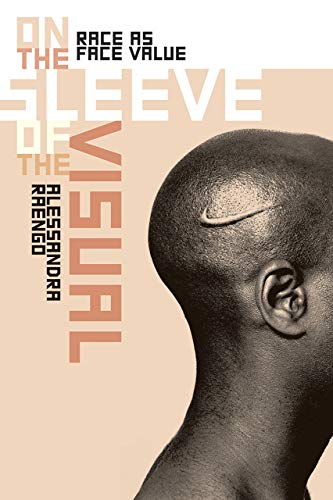
Allessandra Raengo begins with a lynching photo from the 1930’s, where the shadow of a hanging corpse falls over a White crowd. She writes of how this Black man, reduced to a shadow, has become a non-person whose life the crowd can disregard. Then she moves on to Richard Avedon’s 1963 portrait of a former slave. Is the man’s tight-lipped expression one of anger and defiance? Or is it tough resolve and perseverance? Are we mistaking the face of age for one of pain? Or vice versa? Another chapter discusses appearance versus reality, using the movie Precious as an example. The movie itself tries to get the audience to see beyond the overweight teenager and her troll of a mother, perhaps to show how and why they are so beaten down by life. The actress Gabourey Sidibe made it onto the cover of Ebony, but not Vanity Fair, and Raengo points out the same thing with the actor in The Blind Side, so maybe Hollywood has a prejudice against overweight people? On the flip side, size does make a positive difference in The Blind Side, because the character’s size makes him an asset on the football field. But in Precious, the character’s immense size has no redeeming value. Does this tell us something about society’s view on gender body image? In the chapter The Money of the Real, Raengo displays a picture postcard from the 1860’s of emancipated slaves. In the front row, the children stand in Napoleonic poses with their hands in their jackets (or maybe just to keep themselves steady during the long exposures.) Three of the children are light enough to pass for White, but the men and women in the back row are dark-skinned. Was the photo part of a ploy for donations to the school they attended? Was the children’s light skin supposed to be the abolitionists’ idea of progress? Kara Walker’s violent silhouettes, Spike Lee’s Bamboozled, and the lynching photos of the early 20th century, all convey the changing attitudes towards race, particularly in how it’s portrayed in art. Allessandra Raengo’s book explored race in the visual arts of the USA, with well-researched sources and scholarly discussions.
C**S
Image ontology made accessible
Raengo delivers a fascinating investigation of the ontological material and potential structures contained in images that primarily feature blackness or pivot on race. The objects she chooses to read offer fairly easy access into her mode of thought which she uses to excavate her objects and interrogate them to find out what they are made of and what is happening when they "are". The implications of the photochemical imagination and how she relates blackness to speculation are particularly intriguing. This book will probably resonate most with those interested image studies but Raengo delivers curious work in an unraveling and timely landscape of race and capital that all readers should be able to explore.
Trustpilot
1 week geleden
2 weken geleden